
Anchor Bolts 101: Key Considerations for Secure Pallet Racking Installations

Everything You Need to Know About Pallet Rack Anchor Bolts – From the Apex Pros
Securing pallet racks requires careful selection and installation of anchor bolts, as they play a critical role in ensuring the safety and stability of the storage system. Properly installed anchor bolts are essential to prevent accidents and enhance the long-term performance of a racking system. This blog explores the key considerations for pallet racking anchor bolts, including trusted manufacturers, anchor types, materials, installation processes, and inspection requirements—keep reading for a comprehensive guide to maintaining the safety and stability of your racking system.
Trusted Manufacturers of Pallet Racking Anchor Bolts
Several established manufacturers produce high-quality anchor bolts that meet the strict safety standards of the International Code Council (ICC) and the American Concrete Institute (ACI). The most commonly used Original Equipment Manufacturers (OEMs) include:
- Hilti (a Canadian company)
- Dewalt/Powers (a U.S. company)
- Simpson Strong-Tie (U.S.-based company)
These manufacturers provide products designed to meet rigorous structural concrete codes.
Common Anchor Types Used in Securing Pallet Racking
Pallet racking systems primarily rely on post-installed anchors to secure the racking to the concrete floor. There are several types commonly used, each with its own set of characteristics and benefits:
Mechanical Anchors
|
Adhesive Anchors (Chemical Anchors)
|
Drilling Down on Mechanical & Chemical Anchors
Mechanical Anchors
Typically made from durable materials like steel, these anchors withstand high loads and dynamic forces caused by equipment impacts, vibrations, or seismic activity. They come in various types, such as wedge anchors and concrete screws, each suited for specific load capacities and installation requirements.
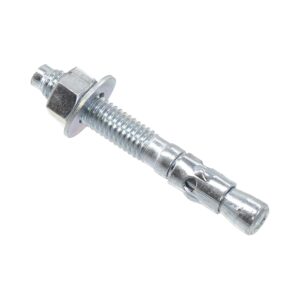
Types of Mechanical Anchors
1. Wedge Anchors
- Most commonly used in concrete
- Installed by inserting them into pre-drilled holes and tightening with an expanding wedge mechanism
- Frequently used for attaching items such as handrails and retaining walls
|
Pros:
|
Cons:
|

2. Screw Anchors
- Installed by pre-drilling holes and then screwing the anchor into the concrete
- Rarely used in racking systems
|
Pros:
|
Cons:
|
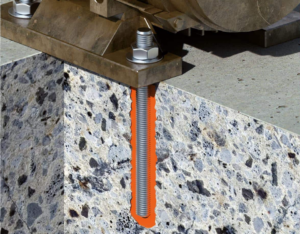 Chemical Anchors
Chemical anchors are used to securely fasten bolts and reinforcing bars into concrete and masonry substrates with specialized resin or epoxy. Once cured, these anchors offer superior holding power compared to traditional anchors, as they bond directly to the substrate without causing expansion, reducing the risk of cracking or damage.
Types of Chemical Anchors
- Capsule Anchors: Self-contained and mixed in the hole with the anchor in place using an impact-style drilling tool
- Injection Systems: Component cartridges mixed and placed using self-mixing nozzles
- Grouted or Dry Pack Anchors: Requires a pre-moistened hole, with grout needing to be non-shrink
|
Pros:
|
Cons:
|
Anchor Bolt Materials & Yield Points
The material chosen for anchor bolts plays a crucial role in their performance and longevity:
- Zinc-plated carbon steel: Lowest rust resistance, unsuitable for outdoor use
- Hot-dipped galvanized carbon steel: Moderate corrosion resistance, suitable for outdoor or humid conditions
- Stainless steel (303 and 304): Excellent corrosion resistance, ideal for corrosive environments, but more expensive
Understanding Anchor Strength
Anchor strength can vary, even for anchors of the same size. Factors influencing strength include:
- Type and quality of steel used
- Manufacturing process, including heat treating
- Physical design of the anchor
Testing anchor strength involves placing the anchor under stress (tension or shear). The anchor’s yield point is where it starts to deform or fail, and the maximum rating is typically 75% of the yield point.

Concrete Anchor Embedment
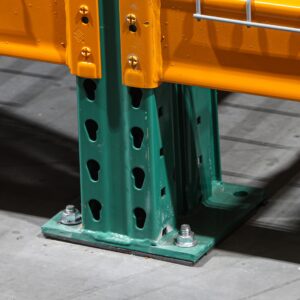
Wedge Anchor with Shimmed Column
Depth and Anchor Length
The embedment depth of an anchor is crucial for ensuring its effectiveness. It’s important to consult the OEM installation guide for specific depth minimums, as the anchor will rise slightly out of the slab when tightened. This is particularly important when using shims.
Concrete Interaction
Factors such as slab depth, strength, and tension influence the interaction between the anchor, slab, and baseplate. A deeper slab allows for greater embedment, increasing the anchor’s tension capacity. In weaker concrete, there’s a higher risk of anchor breakout.
Stressors like forklift interaction or seismic activity can create tension or shear forces on the anchors. Tension occurs when the rack attempts to lift, while shear happens when lateral forces shift the column. This can also occur in a single-row rack that exceeds the 6:1 top shelf-to-frame depth ratio.
Baseplates and Anchor Load Ratings
The design of the baseplate can influence how the anchor contributes to the load rating. In higher seismic zones (Seismic Design Category C or higher), anchors must be designed with an overstrength factor of 2, effectively doubling the tension force. This allows for the use of thinner baseplates that yield before the anchor fails.
Unique baseplate designs also help reduce interaction with forklifts and reach truck outriggers, while positioning anchors behind the column minimizes the risk of them being caught by pallets or trucks.
Structural Engineering: Soil & Slab
When performing structural engineering calculations, soil characteristics such as strength, type, and permeability are essential. The industry standard assumes a soil strength of 500 lbs per square foot, but factors like organic soil (which must be removed) and cohesive soils (which have low strength) can affect the design. Granular soils are easier to compact but have higher water permeability. A geotechnical report is often needed to determine actual soil-bearing pressure.
From a concrete perspective, the depth and strength of the slab influence how deeply an anchor can be embedded. A deeper slab allows for greater embedment, increasing the anchor’s tension capacity and slab strength. Preliminary engineering and calculations are typically done in-house, while final engineering, including stamped drawings, is handled by third-party firms like Epiq and Seizmic.
Anchor Selection and Installation Process
The process for selecting and installing anchors begins with preliminary engineering and calculations to determine the number and size required. Once finalized, the anchors are ordered from manufacturers such as Unarco, Frazier, or others.
Safety Note Re. Ordering Used Materials – When ordering used material, perform preliminary engineering and ensure that engineering reviews any anchors purchased outside the standard selection. The specified anchor manufacturer and type should not be modified, and no substitutions are allowed unless approved in writing by engineering.
Installation Steps:
- Drill a hole the same diameter as the bolt and slightly deeper than the length of the bolt –ensure at least 1” of concrete beneath the end of the anchor.
- Do not penetrate the subgrade, especially if there’s insulation, a moisture barrier, or other materials beneath the concrete slab.
- Clear debris from the hole with a wire brush or vacuum so the anchor can get a good grip.
- Slide the washer onto the anchor, thread the nut so it is flush with the top of the bolt, and insert the bolt into the hole.
- Drive it down until the nut touches the base plate.
- Tighten the nut to the appropriate torque specification.

Installation Issues:
What happens when you cannot get past rebar?
- Can use alternate anchor hole on the baseplate
- If you already have an old/unused anchor hole, the new anchor hole should be three or more bolt diameters (center to center) away from it
- If the old hole is filled with dry-pack mortar, you can insert new anchor 1.5 bolt diameters away
What happens if anchors cannot hold torque?
- If there’s a spare hole in the baseplate, you can use that
- Can supplement with epoxy/ chemical anchor
- Very case specific
Inspecting Pallet Racking Anchor Bolts
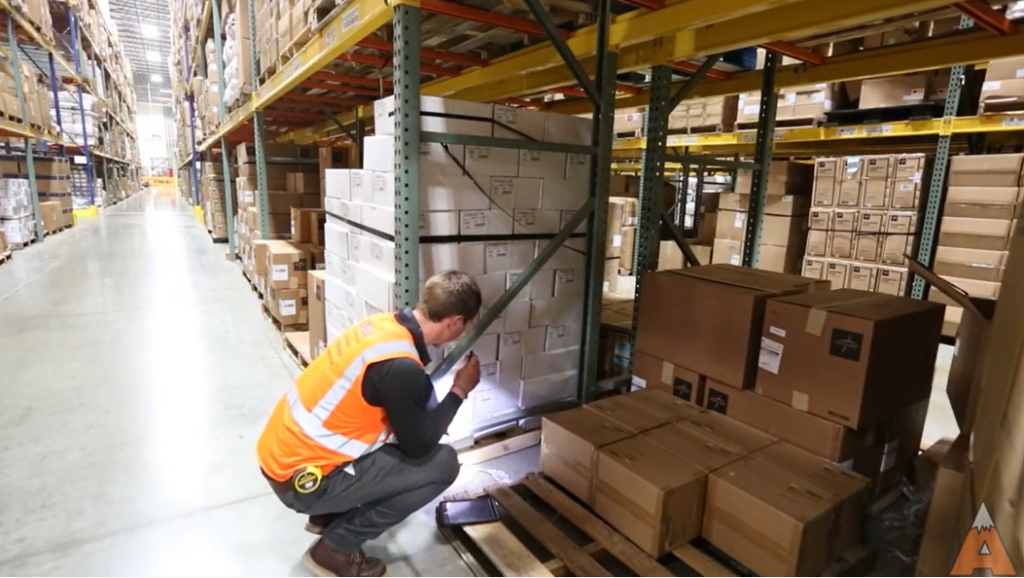
Anchor Inspections: When, Where, Why?
Anchor inspections are a crucial quality control measure to ensure the safe and proper installation of pallet racking systems, particularly in regions with high seismic activity or other challenging environmental factors. These inspections verify that anchors are installed according to engineering specifications and building codes, minimizing the risk of failure during operation.
The Process for Getting Anchor Inspections
The first step in initiating an anchor inspection is to find a company that specializes in racking and anchor inspections. After selecting the inspection company, you must check with the local municipality to confirm any testing requirements, including whether full or partial inspections are needed. Some municipalities may require the inspector to be present at the start of the drilling to ensure compliance with installation standards.
When Should Anchor Inspections Be Done?
Anchor inspections are generally more common in higher seismic areas where the risk of structural stress is greater. While the best-case scenario is to conduct a single inspection at the end of the installation, partial inspections can be performed during each phase of the project. This approach allows the project to progress, enabling customers to begin storing products before the entire system is completed.
Special Inspections Guidelines for Post-Installed Anchors

Post-installed anchor inspections verify proper anchor installation and satisfy engineering specifications. Inspections ensure compliance with the stamped engineering calculations for the racking system, verifying the anchor depth and installation process. Special inspection types include:
- Torque testing
- Proof loading
- Adhesive anchor testing
Types of Anchor Inspections
Anchor inspections generally fall into two categories: full and partial. The specific requirements may vary depending on the municipality’s guidelines and the nature of the racking system. Most facilities rarely need full inspections. Instead, they often perform partial inspections. Factors that influence this decision include racking height, the weight of stored items, and the type of materials involved.
Most anchor inspection companies prefer to be on-site when anchoring starts to observe the initial drilling and ensure compliance with anchor depth and positioning.
Testing Methods in Anchor Inspections
Three main testing methods for anchor inspections help verify proper installation:
- Torque Testing
Torque-controlled expansion anchors, such as wedge or sleeve anchors, are typically tested using a calibrated torque wrench. During installation, the minimum torque resistance must be achieved, and the maximum torque should not be exceeded. Additionally, the anchor must meet the required embedment depth to ensure it provides the proper hold.
- Proofloading / Pull Test
Proofloading involves applying a tension load or torque moment to the installed anchor to confirm the proper setting. The test ensures the anchor can withstand the required force without permanently deforming. While proof loading can confirm anchor integrity, it must be done with a load level high enough to ensure proper installation but not so high that it causes damage. Although proof loading is common in the western U.S. (particularly California), it is not considered a comprehensive test on its own for meeting special inspection requirements.
- Adhesive Anchor Testing
For chemical anchors, testing may involve verifying the adhesive bond and the proper curing process. Inspectors ensure that the hole is prepared and cleaned according to the manufacturer’s guidelines and that the adhesive is mixed, injected, and applied correctly for optimal bond strength.
Ensuring Long-Term Pallet Racking Safety and Stability
Pallet racking anchors are essential components of warehouse safety and efficiency. Choosing the right anchors, materials, and installation techniques ensures a stable, long-lasting racking system. Whether installing a new racking system or performing regular inspections, it’s crucial to understand the various anchor types and their applications, as well as the testing and inspection processes required for optimal safety and performance.
For professional pallet racking inspections, including anchor bolt evaluations and repairs, contact the Apex team to schedule your next inspection and stay ahead of costly repairs and downtime in 2025.
