
Pallet Rack Inspection Checklist | Apex Safety Spotlight

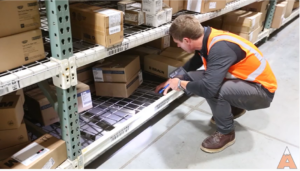
Pallet Rack Inspections
Pallet rack systems are very durable and carry significant load weights. However, they are vulnerable to accidental forklift strikes, which can cause damage severe enough to pose a warehouse safety threat. Conducting a regularly scheduled pallet rack inspection as well as examinations after a forklift strike is important to ensure a safe warehouse environment.
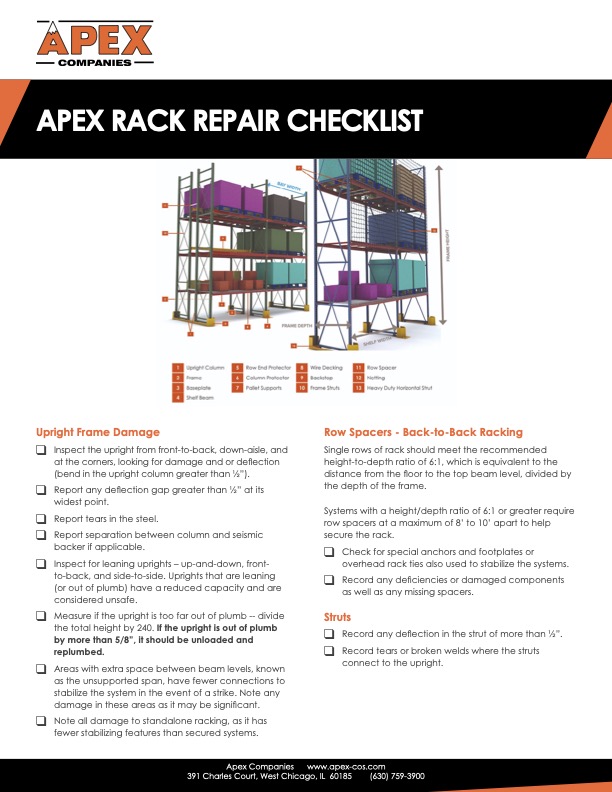
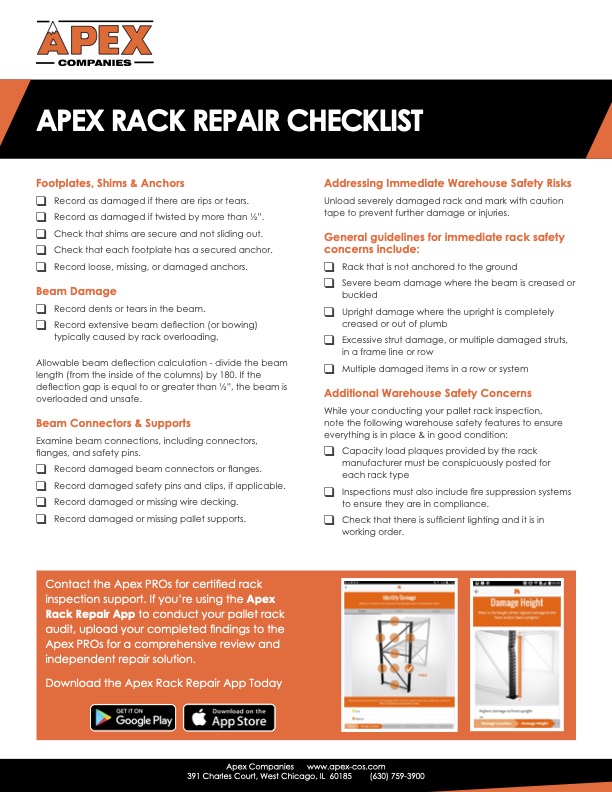
To help ensure that you cover all the vital areas of concern and potential safety risks, our Apex PROs rack inspection team is sharing their checklist. Click here for a PDF version that you can take with you on your inspections.
Check Out the Apex PROs Rack Inspection Checklist
 |
 |
Inspection Preparation
Be sure to have a tape measure, flashlight, and any required PPE pertaining to the workspace conditions. We also recommend downloading the Apex Rack Repair App –the easiest way to capture damage photos and system-specific details to facilitate quick, customized repair kit processing.
Inspection Tips
- Begin your pallet rack inspection at one end of the warehouse. Work your way to the opposite side in an organized manner to facilitate easier repairs later in the process.
- Examine uprights at the ends of the rows and beams within rack tunnels. These are prime areas for forklift damage as they are high-traffic thoroughfares. Also;
- As you enter the row, scan each side for damaged or sagging beams.
- As you make your way down the aisle, inspect each upright and beam. Use your flashlight to see imperfections in the steel.
- Note all damage or safety concerns, i.e., dents, broken connections, corrosion or rust, improper installation such as missing safety clips or anchors, pallets overhanging in front or rear flue space, or improperly placed pallets.
In addition to inspecting your rack, check the following warehouse safety tools to ensure everything is in place & in good condition:
- Capacity load plaques provided by the rack manufacturer must be conspicuously posted for each rack type
- Inspections must also include fire suppression systems to ensure they are in compliance.
- Check that there is sufficient lighting and it is in working order.
Upright Damage
▢ Inspect the upright from front-to-back, down-aisle, and at the corners, looking for damage and or deflection (bend in the upright column greater than ½”).
▢ Report any deflection gap greater than ½” at its widest point.
▢ Report tears in the steel.
▢ Report separation between column and seismic backer if applicable.
▢ Inspect for leaning uprights – up-and-down, front-to-back, and side-to-side. Uprights that are leaning (or out of plumb) have a reduced capacity and are considered unsafe.
▢ Measure if the upright is too far out of plumb — divide the total height by 240. If the upright is out of plumb by more than 5/8″, it should be unloaded and replumbed.
▢ Areas with extra space between beam levels, known as the unsupported span, have fewer connections to stabilize the system in the event of a strike. Note any damage in these areas as it may be significant.
▢ Note all damage to standalone racking, as it has fewer stabilizing features than secured systems.
Row Spacers – Back-to-Back Racking
Single rows of rack should meet the recommended height-to-depth ratio of 6:1, which is equivalent to the distance from the floor to the top beam level, divided by the depth of the frame.
Systems with a height/depth ratio of 6:1 or greater require row spacers at a maximum of 8’ to 10’ apart to help secure the rack.
▢ Check for special anchors and footplates or overhead rack ties also used to stabilize the systems.
▢ Record any deficiencies or damaged components as well as any missing spacers.
Struts
▢ Record any deflection in the strut of more than ½”.
▢ Record tears or broken welds where the struts connect to the upright.
Footplates, Shims & Anchors
▢ Record as damaged if there are rips or tears.
▢ Record as damaged if twisted by more than ½”.
▢ Check that shims are secure and not sliding out.
▢ Check that each footplate has a secured anchor.
▢ Record loose, missing, or damaged anchors.
Beam Damage
▢ Record dents or tears in the beam.
▢ Record extensive beam deflection (or bowing) typically caused by rack overloading.
Allowable beam deflection calculation – divide the beam length (from the inside of the columns) by 180. If the deflection gap is equal to or greater than ½”, the beam is overloaded and unsafe.
Beam Connectors & Supports
Examine beam connections, including connectors, flanges, and safety pins.
▢ Record damaged beam connectors or flanges.
▢ Record damaged safety pins and clips, if applicable.
▢ Record damaged or missing wire decking.
▢ Record damaged or missing pallet supports.

Addressing Immediate Warehouse Safety Risks
Unload severely damaged rack and mark with caution tape to prevent further damage or injuries.
General guidelines for immediate rack safety concerns include:
- Rack that is not anchored to the ground
- Severe beam damage where the beam is creased or buckled
- Upright damage where the upright is completely creased or out of plumb
- Excessive strut damage, or multiple damaged struts, in a frame line or row
- Multiple damaged items in a row or system
If you’re using the Rack Repair App, simply upload your completed findings to the Apex PROs and we’ll go to work…
Apex PROs Expert Pallet Rack Inspection Evaluation
Using the Apex Rack Repair App to record all the system damage that you find during your pallet rack inspection also connects you directly to the Apex PROs.
We will return a prompt damage report and an unbiased repair and replacement proposal if needed.
The Apex PROs also conduct comprehensive pallet rack and warehouse safety inspections if you’d rather leave the process to the experts. Just Call the Apex PROs to schedule your full warehouse inspection today.
Give the Rack Repair Mobile App a try today! Easy to download from the App Store.
