
4 Manageable Steps to an Optimized Reverse Logistics Plan

Move Forward with a Plan for Reverse Logistics — See Our Four-Step Process
You could say that reverse logistics is the opposite of your intended plan, i.e., to move goods from your facility to your customers as efficiently and cost-effectively as possible. However, the reality is that customers make returns, plenty of them. So, it’s up to you to optimize the returns process as you would any other warehouse function to keep costs down and efficiency up. Making a deliberate and optimized reverse logistics plan will help.
Inventory Returns by the Numbers
According to Statista, in the U.S., in 2020, customers returned 20% of online purchases at the cost of $550 billion. Ouch! To be fair, 43% of returns were due to damage or the incorrect item sent… those are topics for another blog and warehouse management. However, let’s dial in on the 46% of returned items because the customer changed their minds, or the product didn’t meet their expectations.
Your goals in an efficient reverse logistics plan are to:
- Quickly process returned items to curtail associated costs – labor, equipment, storage
- Create efficient routes for restocking and disposal of items
- Minimize the total number of returned items
- Increase customer satisfaction
Logistics in Reverse – Four Steps to Success
Let’s take a stepped approach and develop a successful plan.
Step 1 – Establish a Clear Return Policy
You must clearly define your returns policy for the customer. It should include a defined return window, which helps you anticipate volume. It should also explain the acceptable reasons for a refund, including the merchandise’s condition when it’s returned. These stipulations help get the items back in good shape for resale. Additionally, businesses can charge a small return stocking fee to help offset the restocking costs, but the success of that may depend on your competitors’ actions.
Step 2 – Integrate or Build on Your Automation
Reverse logistics is an ideal application for several warehouse automation solutions. Common applications include:
- Warehouse management software (WMS) – These systems manage the broader warehouse flow to streamline labor costs, equipment, storage volume, and significant dates related to inventory expiration, holds, and obsolescence. A WMS can also benefit your operation by supporting loss prevention and product damage through more exacting inventory control.
- Inventory management systems (IMS) – Your IMS system will drill down on your stock, particularly SKU volume and unit costs. It will help you know when to replenish, monitor turn rates, and anticipate demand changes, and establish a reliable level of safety stock to keep customers satisfied and coming back.
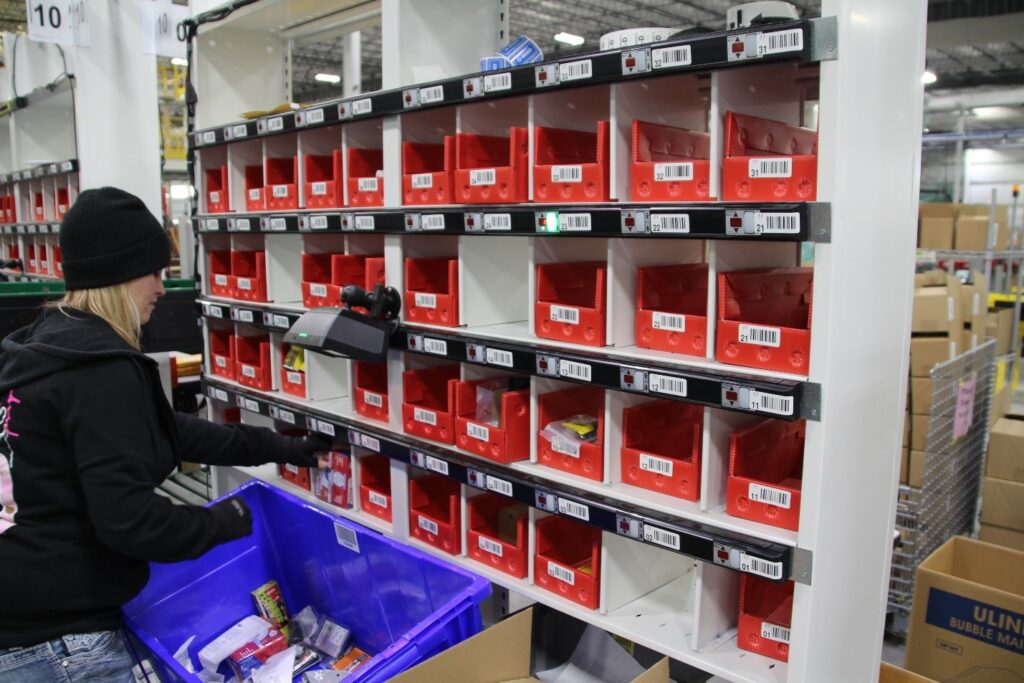
- Wearable technology – Voice-directed and light-directed technologies are hands-free put-away solutions that streamline restocking for faster, more accurate restocking. A bonus to wearable tech is that it allows workers to quickly check the item to ensure it is in good condition before storage.
Step 3 – Designate a Return Area
It’s hard to anticipate what and how much of anything will come back to you as a return, but it’s critically important to designate a portion of your space to that function. The CBRE suggests that you may need as much as 15% to 20% more space for returns processing than standard processing due to the variable nature of reverse logistics. That is a consideration you should make carefully with your warehouse design team based on your inventory mix, historical rate of returns, and other related metrics.
Within your returns area, set up three different sections:
-
- Inventory restocking
- Returns to supplier
- Discards
Organizing your return area to process inventory quickly is critical to hitting efficiency targets.
Step 4 – Sort & Send
Now that you’ve primed your returns area for action, your team will be equipped to process returned inventory efficiently, for example:
- Check for good quality
- Confirm all components are present against the return order
- Scan inventory back into the WMS if it will be restocked
- If it is damaged, sort it into a designated supplier send-back zone or bin
- If being discarded, sort it into a designated container for disposal
A few notes on these tasks:
 Restocking – this is where well-constructed WMS and IMS technology can pay you back. Scanning and capturing the SKU data to restock will keep your stock counts up-to-date to help satisfy customer search needs. Also, it will help you keep an accurate record of items being returned to your suppliers and or sent for disposal.
Disposal – before you trash broken or out-of-date items, consider whether they are usable for parts or recycling, i.e., precious metals or plastics. While you don’t want to spend valuable assets on things bound for the trash, you may be able to recover some costs lost by coordinating with an asset recovery company. Additionally, you can include the process as your corporate “green” strategy to help build and maintain customer loyalty.
Getting Started with a Reverse Logistics Plan
A successful reverse logistics plan pulls planning elements from several warehouse operations sectors. Working with a full-service warehouse design, integration, automation solutions, installation, and equipment supplier is one way to build cohesion right into the process. Apex is a family of companies that can meet your operational needs seamlessly. Call our team today to speak with a planning expert and get your reverse logistics plan moving forward.
