
Pallet Rack Design and the Rocky Mountain Seismic Shift

What Coloradans Need to Know About Safe Pallet Rack Design and Installation
The Rocky Mountain seismic shift is not a new dance move on TikTok, it’s a serious consideration when it comes to pallet rack design and system installation in Colorado, and the western U.S. Much of this region is considered an active tectonic province, and therefore requires close attention to the seismic building and safety codes set out by the International Building Code (IBC), Federal Emergency Management Agency (FEMA), Rack Manufacturers Institute (RMI), and the American National Standards Institute (ANSI).
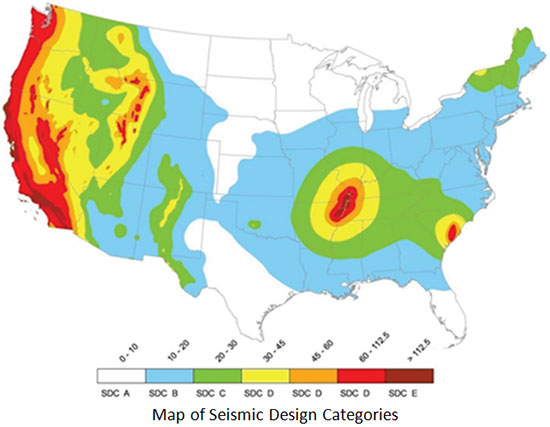
RMI and NBC have issued strict guidelines for designing and building warehouse pallet rack systems in designated seismic areas. Design features increase correlatively with seismic activity risk. For example, earthquake-ready warehouse rack systems are built with heavier-gauge steel and feature a robust design to protect against failure if shifting occurs. Some of the primary considerations for seismic pallet rack design include:
-
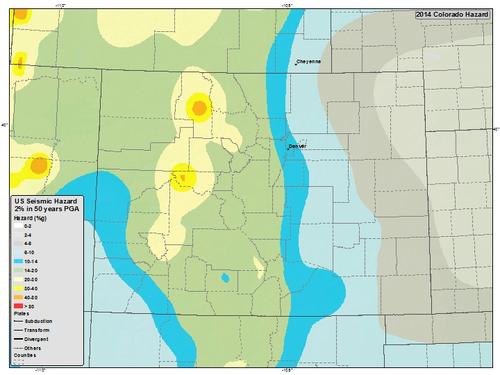
Colorado Seismic Map
Geography – Your building location will determine the seismic risk. For example, these images display seismic areas of concern in the U.S. and Colorado. So, knowing your seismic risk and connecting that with the proper building codes will help you design a safe system. However, it is also critical to confirm that the subsoil and building floor meet building code regulations adequate to support your pallet rack system prior to installation.
- Daily Ground Movement – Have a professional engineer assess the average daily ground shift at your warehouse site. This data will help you set the pallet racks with a safe distance between them, and how far away your racks should be from high-traffic areas.
- Weight of Average Rack Loads – The weight of the average rack load is critical to calculating down-aisle force. Most warehouses are built to house high-density loads in tighter areas. Calculating down-aisle force (the force with which collapsing racks impact adjacent fixtures) is critical to mitigating impact and minimizing serious damage.
- Materials and Construction – Design your pallet rack system with built-in protection against the effects of seismic shifting. Row spacers, shear plates, and heavy-duty horizontals are examples of components that help reinforce your system — e.g. using structural row spacers and spacers reinforced with steel shear panels in back-to-back rack configurations protects against shifting and twisting. In addition, heavy-duty horizontal struts bolted to the lower portion of the frame further stabilize the rack against movement.
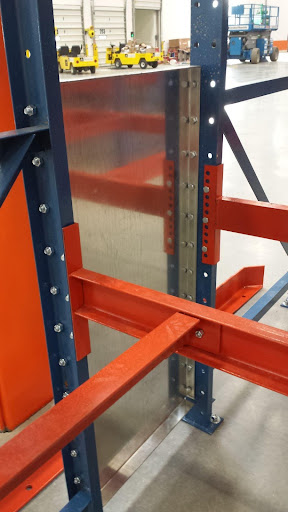 Shear Plate |
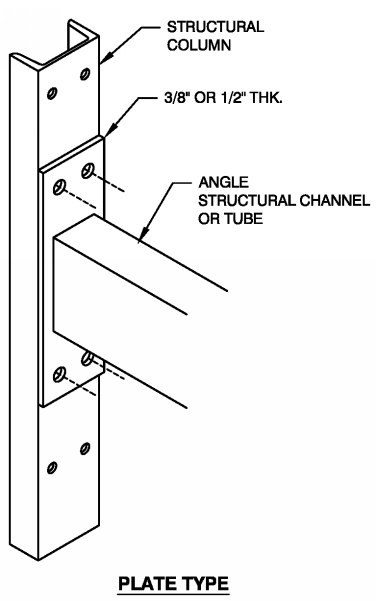 Structural Row Spacer |
Additionally, focus on heavier-gauge steel and stronger components, for example:
- Thicker and larger baseplates to anchor the rack to the floor, i.e., 5” x 5” and 6” x 8” and as thick as 0.25” to 0.375”
- Adding more welds to structural steel systems to reinforce stability
- Heavier or specially designed frame brace panels
- Larger beam connectors to add support
- Ensure adequate beam sizing and placement
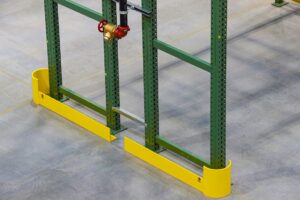 Aisle frames – tightly spaced heavy-duty horizontal struts extend full-frame height, no X bracing |
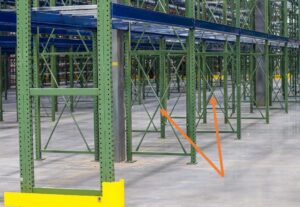 All interior frames feature standard horizontal and X-braced panels |
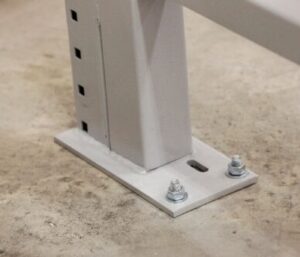 Pallet Rack Anchoring |
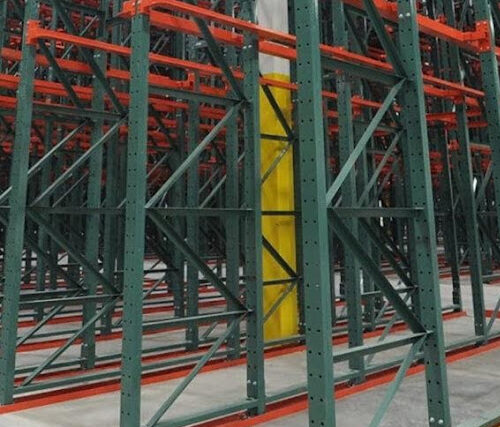 Boxed Columns & Horizontal Struts |
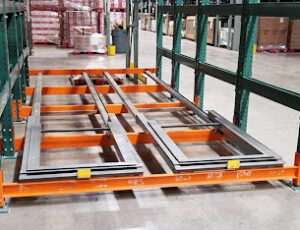 Bolted Connections |
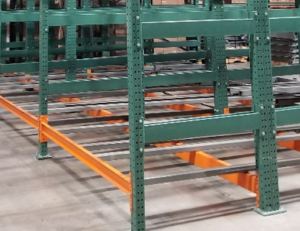 Bolted Heavy-Duty Horizontal Struts |
Contact the Apex expert team to help you navigate the serious issue of seismic pallet rack design. We offer full-service warehouse support from design and engineering to professional installation, equipment, inspection, and service. One call does it all. Call Apex today to get started on your next warehouse project.
For more information on FEMA & RMI Seismic Considerations for pallet rack safety, check out these helpful resources:
FEMA: Seismic Considerations for Steel Storage Racks Located in Areas Accessible to the Public
RMI: How Does Seismic Design Affect Rack Systems?
