
It’s All About the Pallet – Essential Design Considerations for Storage Rack Systems

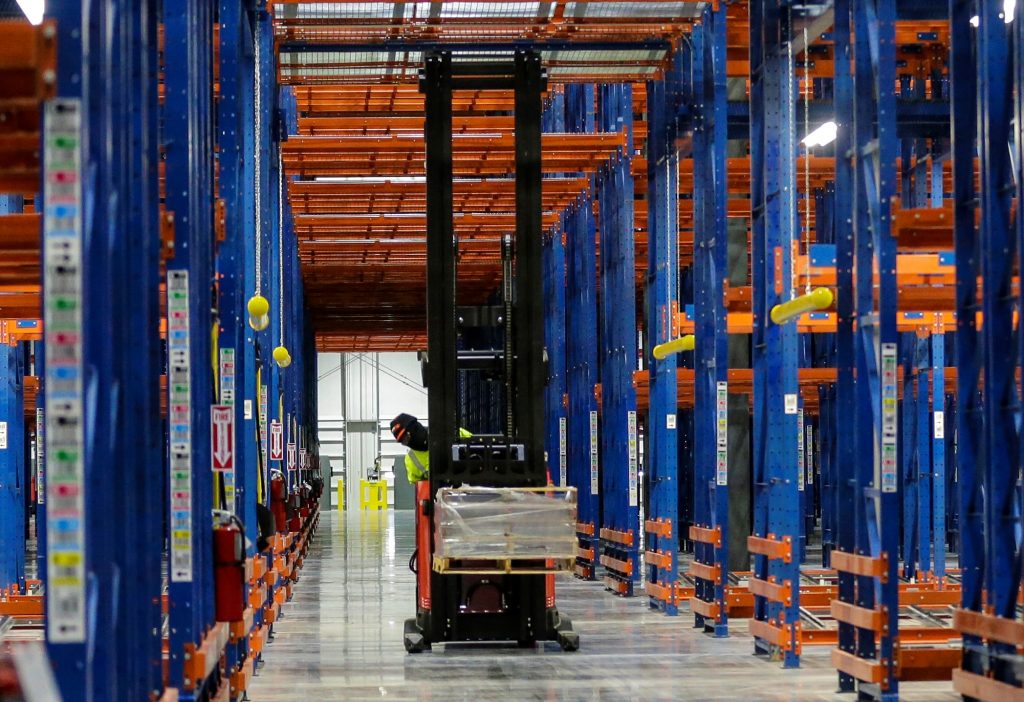
What considerations go into the design of a pallet rack system? The answer is there are many, covering everything from the facility specifications, warehouse space, obstructions, and climate, to inventory specs, material handling equipment, and order fulfillment processes. But there is a foundational component that can’t be overlooked when configuring your pallet rack storage system, and we mean that quite literally… it’s the pallet. The pallet specs significantly impact pallet rack system design and function.
The Apex team has put together this guide to help you identify the types and features of pallets plus vital pallet specs that will ensure optimal storage system design. Let’s guarantee a great fit.
Pallet Basics
While there are many pallet styles, materials, and designs used for inventory of every shape and size, there is an established standard for pallets that serves as a perfect jumping-off point to understanding pallet construction. The Grocery Manufacturers Association (GMA) set a standard that is widely accepted and, is the most common pallet type used in the United States. Pallets referred to as GMA or GMA-style fit the following criteria.
 GMA-Style Pallet Parameters
- Stringer-style
- Wood
- 40” w x 48” d x 6½” h
- 7 top and 5 bottom boards – minimum ½” thick
- Minimum load capacity of 2500 lbs.
- 4-way forklift entry
- Top boards — 5 1/2″ x 40″ on each end & five 3 1/2″ x 40″ boards in the center
- Bottom boards – 5 1/2″ x 40″ on each end & three 3 1/2″ x 40″ boards between
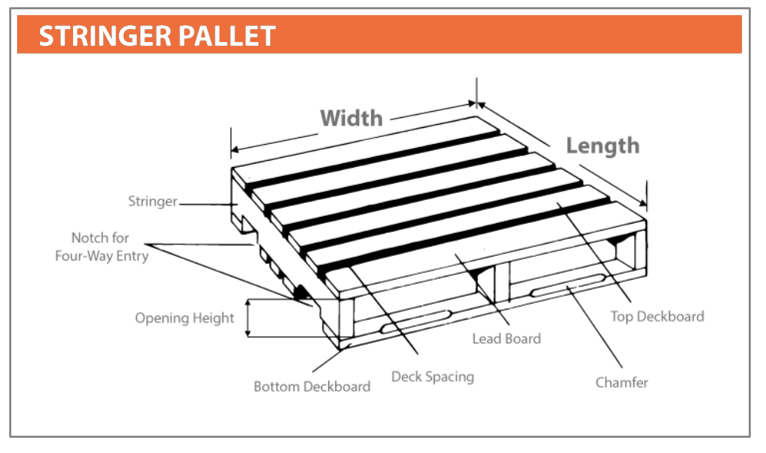
GMA-style pallets are wood pallets that meet the specific size of 40” w x 48” d x 6 1/2” h. The construction is such that a forklift can access it from the side or the end which allows the pallet to be placed in the storage bay with either orientation. To be sure you understand which is which, here is a guide to properly measuring your pallet.
Measure Your Pallet
- Pallet width– GMA-style pallets are 40” wide which refers to the direction of the deck boards.
- Pallet depth– GMA-style pallets are 48” deep which refers to the direction of the stringers.
- Pallet orientation – refers to the orientation of the stringers relative to the direction of the pallet into the bay or lane.
To measure a GMA-style (stringer) pallet, measure the pallet across the width of the deck boards, then down the length of the stringer and from the top boards to the bottom.
2-Way vs 4-Way
GMA-style pallets have notches in the stringers to allow for forklift access along the sides and the ends. These are called “4-way”. When the stringer boards are without notches, the pallet can only be accessed from the ends. These are called “2-way”.
Generally, pallets are oriented 40” w x 48” d resulting in more pallet lanes in the system and easy access for the forklift. However, if you are designing a system for a low number of SKUs with a large quantity of each, you can orient the pallet 48” w x 40” d. This will allow more pallets within each lane, though you will sacrifice the overall number of lanes. Note, however, that this pallet orientation is more difficult for forklift operators to extract without causing beam damage due to the shallow fork pocket of the pallet. The orientation must be established before configuring the rack bay.
Other Common Pallet Types
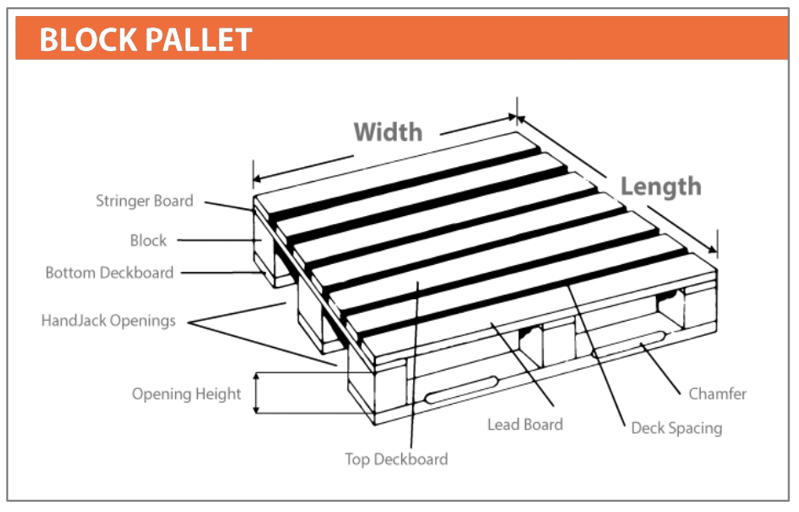 Block – Block pallets use blocks between the top and bottom boards with parallel and perpendicular boards to hold it all together. Typically, 4 to 12 blocks are used in the design. The openings between the blocks allow for forklift access creating a 4-way pallet.
Skid – a skid is a stringer pallet without bottom deck boards.
Square – 42 x 42 & 48 x 48 are common sizes of square pallets.
Pod – plastic pallet with protruding feet (pods) vs traditional full-length bottom boards.
Solid top – plastic pallet with a smooth top surface to prevent rips and tears of inventory or storage cases. Allows for 4-way forklift access.
Honeycomb – Corrugated paper pallets for one-way use, lightweight and eco-friendly.
Metal Frame – vary in size and design. Important to note weld condition and any protrusions that can impede safety for forklift operators or within dynamic storage systems (see below for more on dynamic systems).
A Closer Look at Pallet Quality & Material
Metal Frame Pallet |
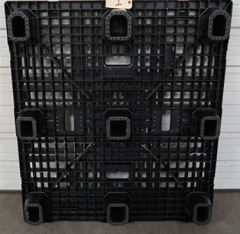
Plastic Pod Pallet |
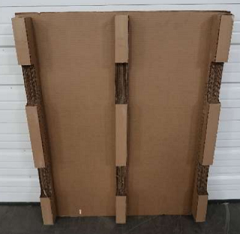
Corrugated Cardboard Pallet |
Pallet quality is important for overall inventory and warehouse safety. Pallets in good condition are unlikely to cause damage or injury via broken boards, protruding nails, unstable loads, etc.
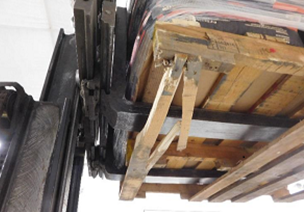
Choose Grade A or at least Grade B pallets for the safety of your operation. Grade A is of high quality and does not have damage to the stringers. Grade B can show a little wear and have stringer damage that has been repaired; however, it is important to note that reconditioned pallets may show inconsistencies due to maintenance.
In the same way that caution is advised regarding wood pallet condition, metal and plastic pallets can also pose a concern and trigger additional system design considerations. Welds on metal pallets and containers can create an uneven surface and cause point loads. Similarly, plastic can have pod feet as opposed to a smooth surface. One good way to provide stability in your pallet rack system configuration for these types of pallets is to install a decking product such as bar grating or solid decking which provides safe and sturdy support for standard pallets and non-standard pallets.
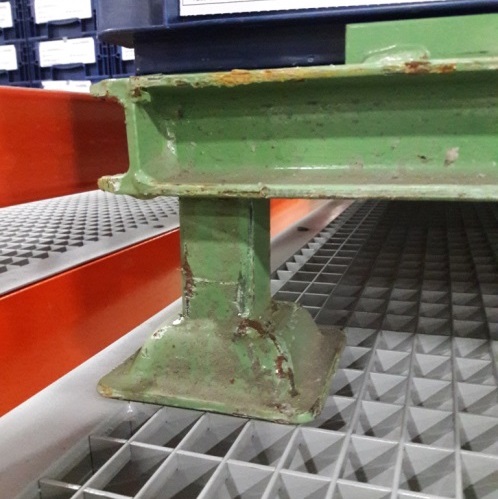 Benefits of Solid Decking or Bar Grate Decking
- Full-surface shelf coverage
- Drops into step beam
- Enhance warehouse safety
- Provide support for broken or compromised pallets
- Ideal for hand-stacked applications (non-palletized)
- Supports odd-sized pallets
Equipping your system with supports or decking allows warehouse management to be more flexible with pallet style and opens up opportunities to fully utilize your pallet racking systems.
Designing Dynamic Pallet Rack for Your Pallet Type
Where pallet type and condition becomes imperative is in dynamic systems such as pallet flow and push-back rack. These systems are highly-productive deep-lane storage solutions with dedicated SKU lanes where the pallets flow forward to keep the pick face automatically replenished. Due to the movement within the lane, the configuration of the storage lanes is predicated on pallet type and condition.
Pallet Flow Rack
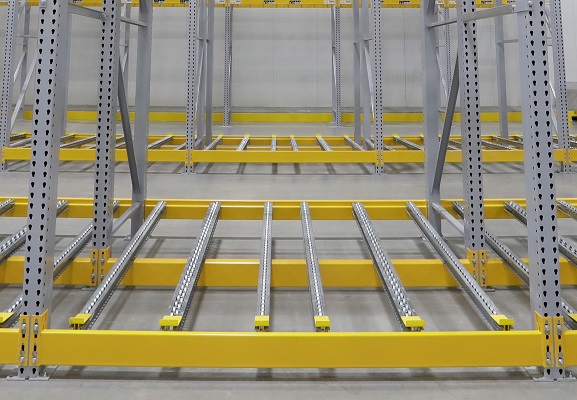
Pallet Flow Rack |
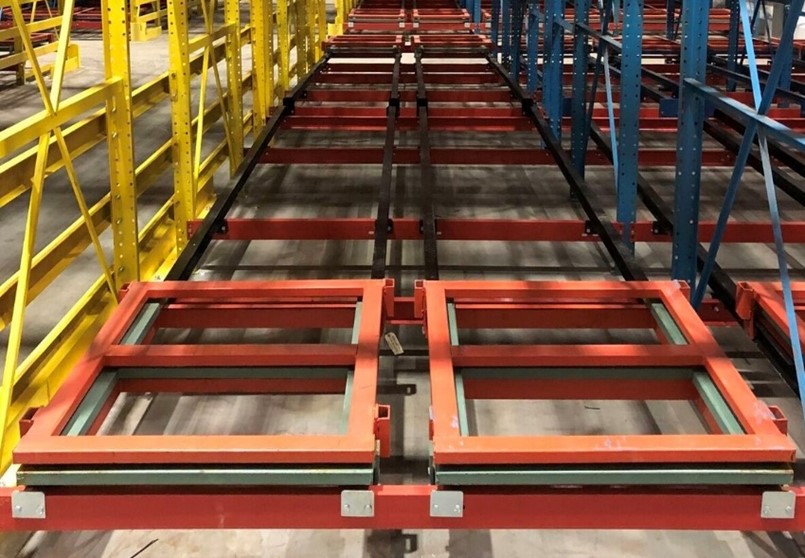
Push-Back Pallet Rack |
In a pallet flow system, the pallets ride on wheeled or roller gravity conveyor rack typically designed with a rear load side that flows down on a slight pitch to a forward pick aisle. Pallet flow can also be used as a push-back style storage system by using a single aisle for both the load and pick functions. Warehouse space and processing needs often dictate the setup of the system but the pallet specs are what drive the storage lane design.
Pallet flow is available in either wheeled or roller lanes. A rule of thumb is that wheeled systems are ideal for standard GMA-style pallets, while either split roller or full-width roller lanes are best for non-standard pallets, i.e. plastic, pod-footed, metal containers and custom pallets, providing extra pallet contact and support. It is always advised to work with experienced gravity flow systems designers to be sure your system meets your needs.
Push-Back Rack
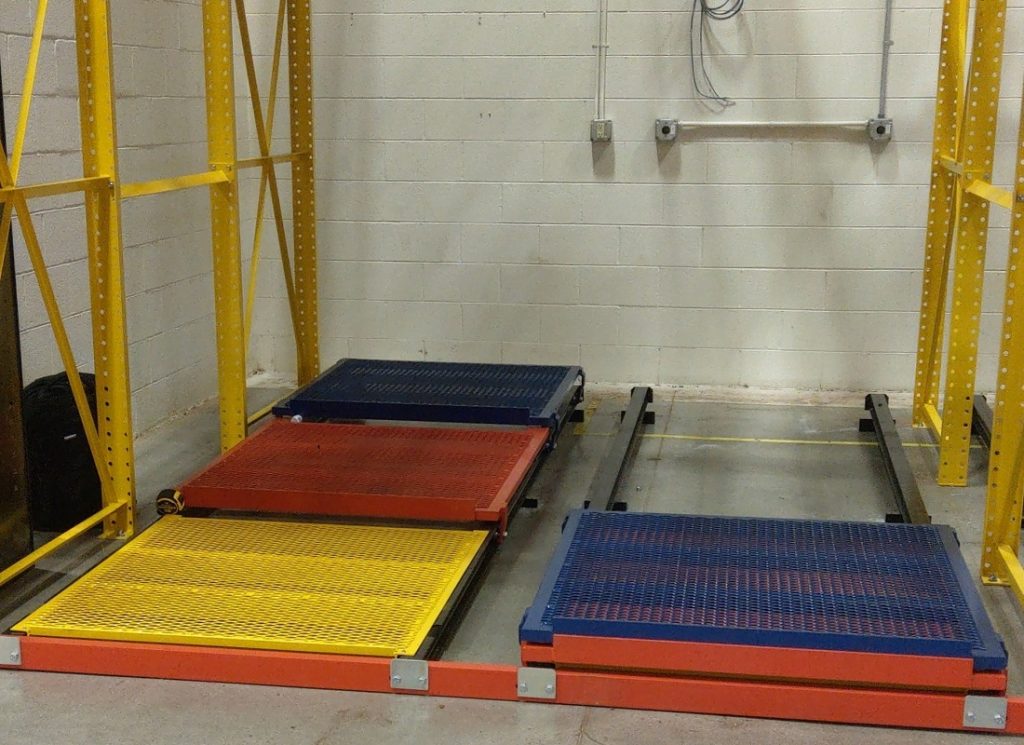 A different style of dynamic pallet storage is a push-back cart system. Pallets are loaded and picked from a single aisle. Pallets are placed on enveloping wheeled carts that are pushed back to load each new pallet. As they picked from the lane, the rear carts flow forward until the pick face is replenished.
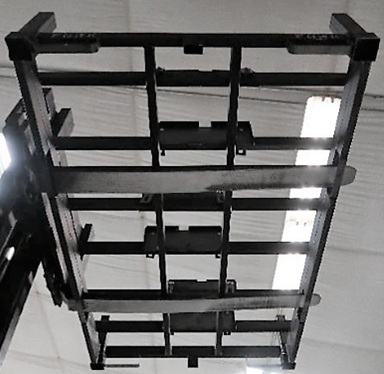
Push-Back carts typically have an open frame design so do not provide full-surface support for the pallet. Carts can be constructed with a decked surface to support non-standard-sized pallets or those with uneven bottom surfaces.
Due to the pallet movement within a dynamic system, poor-condition pallets or those with uneven bottom surfaces can cause the load to not sit properly in the lane or on the cart. If the pallet isn’t properly positioned, it could deflect or get hung up in the lane causing productivity slowdowns and possibly even safety concerns. A good practice is to train forklift operators to quickly scan the pallet for dangers that may be present before loading inventory into a dynamic storage system.
Don’t Leave Design to Chance
We know there are many storage rack suppliers and integrators available to you, however, Apex offers tried and true full-service warehouse solutions. Our expert team is cross-trained on warehouse design and function so that we understand the full needs of our customers and we can supply just what they need to meet their operational goals. From storage rack, conveyor, and automation solutions, to installation, material handling equipment, repairs and safety –we have your back. Give us a call to discuss the warehouse challenges you’re facing and let’s work together to implement just the right solution.
