
Why Drive-In Rack Is a Smart Fit for Cold Storage Warehouses

Store More In Costly Refrigerated Space with Drive-In Rack
In cold storage, space is a cost driver. Each additional aisle increases the refrigerated cube your system must cool, control, and operate within. That’s why high-density storage solutions like drive-in racks are often considered in cold storage design—particularly for palletized raw materials (ingredients/components) or finished goods. In some configurations, drive-in systems can increase pallet positions by up to 75 percent versus standard selective racking, helping facilities make better use of existing cooler space before expanding refrigerated zones.
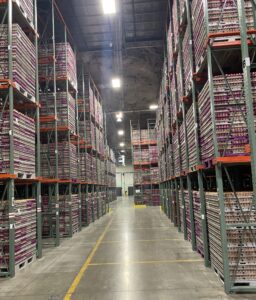
Underground Cold Storage Drive-In Rack
Quick Cold Storage Context: Temperatures, Zones, And Why Cube Utilization Rules
Cold storage warehouses are temperature-controlled facilities designed to protect products that must remain within a specific range to preserve safety, quality, and shelf life.
In practical terms, many operations manage zones such as:
- Cooler/chill storage: typically around 32°F to 45°F
- Freezer storage: typically around -10°F to 0°F (sometimes lower, depending on product and process)
Those temperature targets influence more than utility costs. They affect layout, airflow design, equipment selection, and overall storage strategy.
In cold environments, cube utilization is critical—but it must be balanced with airflow and temperature consistency. Efficient storage requires using both height and depth wisely while preserving proper air circulation. If storage becomes too dense in the wrong areas, it can create cold or hot spots, slower pull-down times, frost or condensation issues, and uneven product temperatures.
That balance between density and environmental control makes storage system selection in cold facilities more nuanced than in a dry warehouse.
What is Drive-In Rack
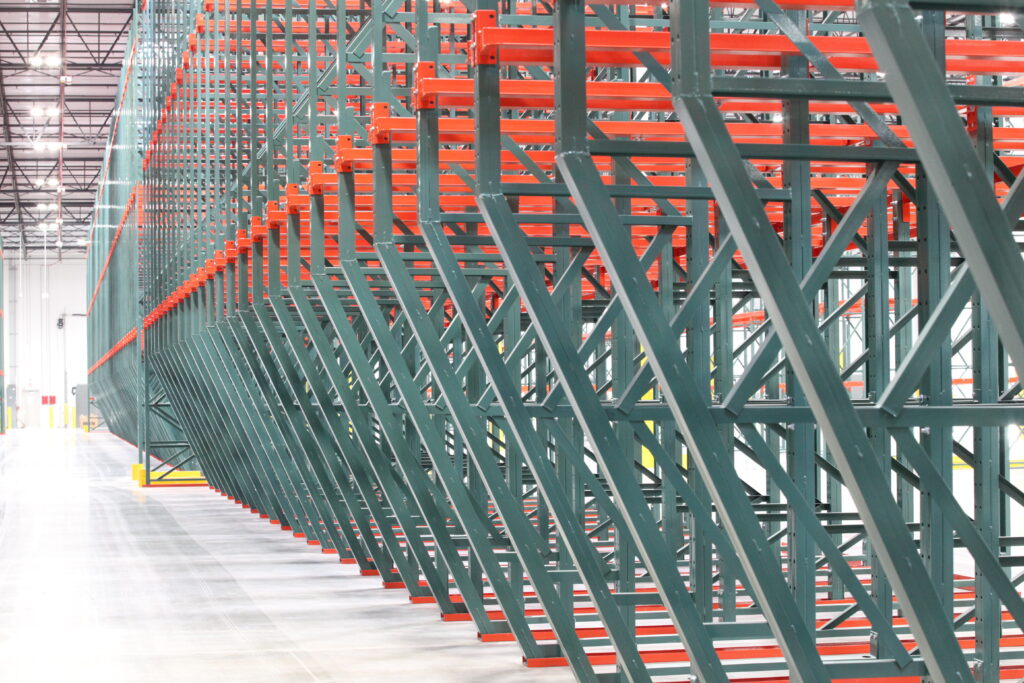
Drive-in rack is a high-density pallet storage system where forklifts enter rack lanes to place and retrieve pallets. Pallets are supported on side rails rather than resting on standard crossbeams as they would in a selective rack system.
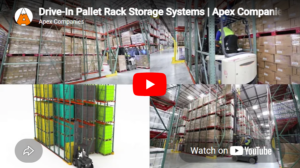
In most drive-in layouts, inventory follows a LIFO (last-in, first-out) flow. The forklift loads and unloads from the same aisle, so the most recently stored pallet is typically the first one out. Since forklifts must enter the rack to access pallets stored deep within the lane, the system prioritizes density over selectivity.
A closely related system is the drive-thru rack. It uses the same lane-and-rail concept, but the rack is loaded and extracted from opposite aisles. That makes FIFO (first-in, first-out) flow possible when the operation, aisle access, and traffic controls are designed correctly.
Drive-in rack is considered high-density because it stores pallets in deeper lanes, reducing the aisles needed for access. Systems can be designed for 10 or more pallets deep, depending on inventory needs and space availability.
Why Drive-In Rack Shines In Cold Storage
1. Density that directly supports cold storage cost control
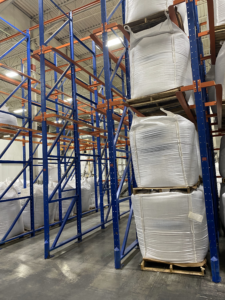
Bulk Sacks in Drive Thru Rack
The primary advantage is straightforward: fewer aisles translate into more pallet positions within the same refrigerated space. In cold storage environments, where refrigeration represents a significant operating expense, incremental density gains can have a meaningful long-term impact.
Drive-in rack is not a universal solution—but for the right inventory profile, it remains one of the most proven ways to achieve high-density pallet storage.
2. Strong match for high volumes of the same SKU
Drive-in rack is especially effective when you are storing larger quantities of the same item or a small number of SKUs in predictable volumes.
Common examples include:
- Bulk ingredients
- Seasonal, high-volume finished goods
- Beverage pallets
- Frozen food products
- Other palletized inventory with a consistent footprint and repeatable handling patterns
In these applications, the operational focus is not on immediate access to every pallet, but on dense storage and repeatable movement patterns.
3. Simplified inventory management
Drive-in systems are attractive because the storage logic is relatively straightforward when the operation is a fit. Drive-in rack is built around single-SKU lanes: all pallet positions in a lane—top to bottom—are reserved for one SKU. That simplicity can be a real advantage in cold storage environments, where labor is harder to staff, mistakes are more expensive, and consistency matters.
In many facilities, drive-in rack becomes the bulk-storage engine, while other zones handle faster-moving or more selective inventory.
Considerations: What Can Go Wrong (And How To Plan Around It)
This is where good planning matters. Drive-in rack can be an excellent solution, but it is not a set-it-and-forget-it system.
1. Forklift skill and training are non-negotiable
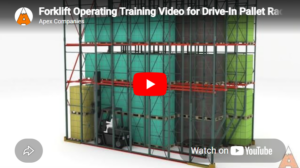 Forklift operators must drive into the rack lanes and place pallets on rails with tight clearances. That raises the consequence of poor alignment, rushed handling, or inconsistent technique. Because drive-in systems involve frequent forklift interaction within the rack structure, they can experience more abuse than other rack types if training and discipline are weak.
That is why it is important to plan for:
- System-specific operator training
- Clear SOPs for entry, placement, and retrieval
- Smart rack design and column guarding
- Routine inspection for impact damage
In cold storage, where visibility, comfort, and fatigue can all be factors, operator consistency becomes even more important.
2. Honeycombing risk (and why it hurts density)
Honeycombing occurs when storage lanes are only partially filled but cannot be efficiently reassigned to other SKUs. The result is empty pallet positions that exist on paper—but are not practically usable.
This typically happens when SKU counts increase, pallet quantities fluctuate, or replenishment volumes no longer match lane depth.
For example, if a lane is designed to hold 32 pallets of one SKU but only 18 are on hand, the remaining positions may sit empty because the lane is still allocated to that product.
Drive-in rack performs best when:
- SKU counts remain relatively stable
- Lane depth aligns with pallet quantities
- Replenishment patterns consistently support full lanes
- Slotting decisions are intentional and monitored
3. Fire Code and Insurance Constraints (NFPA 13 – 2022)
Drive-in rack is a deep-lane (multi-row) storage system, so the approved fire protection approach can place real constraints on allowable lane depth and overall configuration. Under NFPA 13 (2022) (and depending on local adoption and carrier criteria), rack layouts that exceed 20 ft in depth and/or 25 ft in height may require additional measures—such as maintaining 6-inch flue gaps and/or using in-rack sprinklers—based on the approved design and commodity classification.
Drive-in rack performs best when:
- AHJ code edition/local amendments and insurance carrier requirements are confirmed early
- Lane depth (20 ft) and rack height (25 ft) thresholds are evaluated during layout development—not after permitting begins
- Commodity classification and storage height are defined early enough to drive the sprinkler approach
- Rack layout and fire protection design are coordinated with a plan for 6-inch flue gaps and/or in-rack sprinklers, when required
4. Selectivity tradeoff
Drive-in rack trades selectivity for density.
If an operation requires frequent access to many different SKUs at the same time, drive-in can become inefficient. Operators may spend additional time managing lane sequencing rather than simply retrieving pallets.
Rotation requirements also matter. Standard drive-in layouts are typically LIFO. If strict FIFO is required, a drive-thru configuration must be evaluated carefully to ensure it is operationally practical within the building layout and traffic flow.
Design And Safety Features To Bake In From Day One
Drive-In: Recessed Columns, Floor Channel Guides, Column Protection
The best drive-in installations in cold storage are not just “dense.” They are designed for durability, operator reality, and repeatable performance.
1. Safety and durability features commonly used in drive-in systems
These features are widely used to reduce damage risk and improve long-term reliability:
- Column protectors: Help absorb impact at entry points where forklift contact risk is highest.
- End-of-row guards: Protect exposed upright faces from strikes in high-traffic areas.
- Heavy-duty horizontal struts: Add stiffness and support in zones where forklifts operate, and contact risk is higher.
- Floor channel/guide rails: Help guide forklift entry and reduce the chance of column strikes from drift or misalignment.
- Floor angle stops: Help control pallet placement depth and improve consistency in loading position.
- Heavy-duty, boxed, or recessed columns: Improve durability in high-contact environments where standard components may take repeated hits.
In many cold storage applications, these are not optional upgrades—they are practical safeguards that protect uptime and reduce damage-related disruption.
2. Before you load: Operator and load discipline
Even a well-designed system depends on disciplined execution. Before loading drive-in lanes, confirm that foundational controls are in place:
- Qualified operators familiar with drive-in handling procedures
- Quality pallets only: Rail-supported systems depend on pallet integrity.
- Uniform pallet size per lane: Mixed dimensions can create instability and damage.
- Verified load weights: Ensure actual pallet weights align with rack design assumptions, especially in cold storage, where packaging or frost buildup can alter loads.
Drive-in rack rewards consistency. Small deviations in pallet quality, size, or loading discipline tend to compound over time.
Drive-In Isn’t The Whole Plan: How To Think In Zones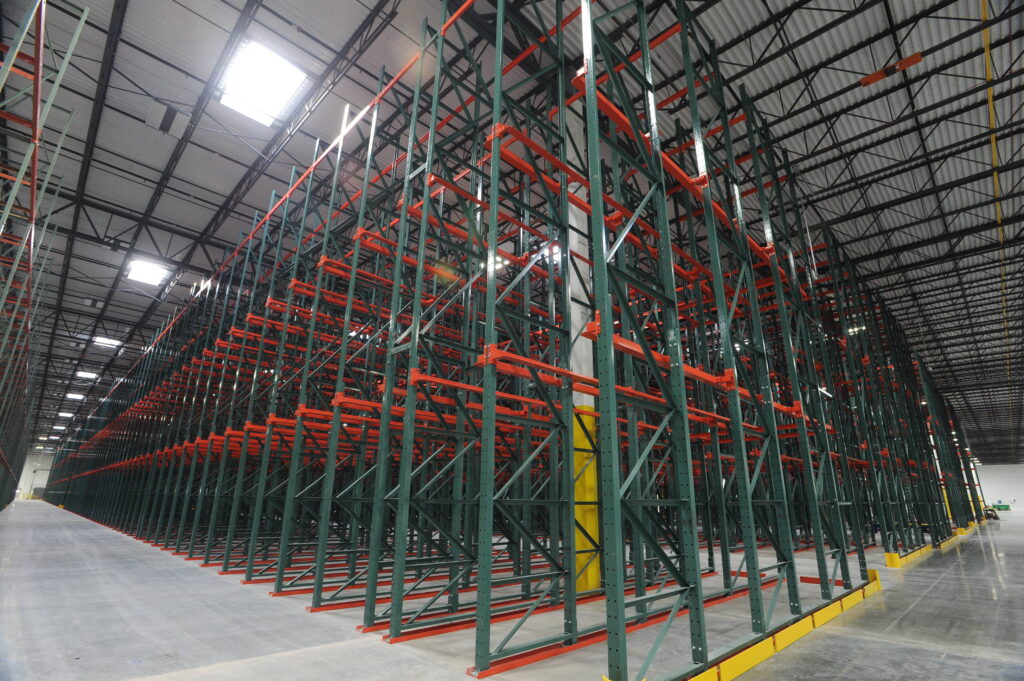
A strong cold storage layout is rarely built around a single rack type. One practical way to approach this is through zoning:
Zoning Example:
- Zone A (bulk, low-SKU storage): Drive-in rack for dense pallet storage
- Zone B (higher selectivity / faster turns): Selective rack, push-back, shuttle systems, or AS/RS depending on throughput and SKU profile
- Zone C (staging/processing): Dock staging, tempering, QA hold, value-added handling, and outbound preparation
This zoning mindset helps you use a drive-in rack where it delivers the most value.
Cold storage operations often operate with tighter labor margins and lower error tolerance than ambient facilities. In some cases, automation can be a smart complement, but only where SKU mix, throughput, and business case genuinely support it.
Drive-In Rack Is A Smart Fit, When The Fit Is Real
Drive-in racks can be a smart fit for cold storage operations that require dense storage for high-volume, low-SKU palletized inventory. It allows facilities to reduce aisle count, use refrigerated cube more efficiently, and support bulk storage in a disciplined way.
But the benefits only hold when the operation is designed for it. Think the right inventory profile, strong operator training, quality pallets, and protective system features that reduce damage and keep the rack performing as intended.
Let Apex custom-design the complete solution to maximize space, productivity, and cost efficiency, so your cold storage operation performs today and adapts tomorrow.
Additional Related Blog: Cold Storage Rack
