
How to Stack Pallets in Pallet Rack Systems | Apex Safety Spotlight

Best Practices For Double-Stacked Pallet Loads in Pallet Rack Systems
Stacking pallets two-high is a simple move that can make a real difference in warehouses. You get more out of the same space, cut down on extra handling, and keep things moving without adding new equipment.
But it only works if your racking system is set up for it.
Load capacity, clearances, rack design, and even the condition of your pallets all come into play. Get those right, and two-high stacking becomes a reliable way to boost efficiency without creating safety risks.
Let’s take a look at how to make it work for your operation.
Why Operations Stack Pallets Two-High and What It Means for Your Rack System
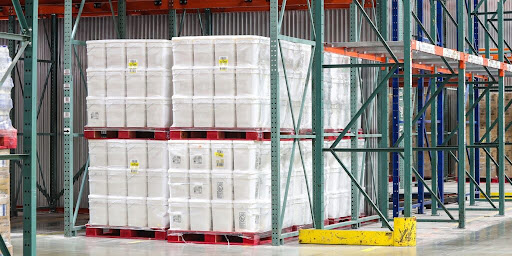
Stacking pallets two-high is usually about getting more from the space you already have.
In the right operation, it can increase storage density, make better use of the vertical cube, and cut some unnecessary handling moves. But those gains only hold up when the loads are consistent, and the racking, pallets, and lift equipment are all suited to the added weight and stacking height.
Common reasons operations use it include:
- Reducing forklift travel
- Storing more pallets in the same footprint
- Speeding up putaway and retrieval in high-volume areas
- Improving throughput without expanding the building
How This Impacts Pallet Rack System Design and Operation
- Load capacity: Two-high stacking increases the total weight carried in each rack position, so beam and upright capacities need to be confirmed.
- Vertical clearance: Beam spacing, pallet height, and load height must leave enough room for safe placement and removal.
- Load stability: Double-stacked loads need to be uniform, balanced, and securely stacked to reduce the risk of shifting or collapse.
- System compatibility: Not every pallet rack system, pallet type, or load profile is suitable for two-high storage.
- Operator handling: Higher load placement can affect forklift visibility, lift control, and overall handling safety.
General Guidelines for Stacking Pallets in Pallet Rack Systems
When stacking pallets two-high in pallet rack systems, the goal is not simply to make the load fit. Safe performance starts with a rack system that was configured for the expected pallet size, load height, and load weight from the beginning.
ANSI and RMI guidance prohibit double-stacking in rack positions unless the system is specifically designed for it, and OSHA consistently cites overloaded, damaged, or modified racks as serious hazards.
- Confirm the rack is designed for double-stacked loads: Beam capacity, upright capacity, beam elevations, and overall rack configuration must match the combined weight and height of the two stacked pallet loads.
- Do not change beam levels without engineering review: Moving beams to “make room” can reduce the allowable capacity and compromise the structural stability.
- Use a qualified rack engineer for modifications: Any retrofit or layout change should be reviewed and approved to ensure the system continues to comply with its load ratings and design requirements.
- Verify rack load capacity: Beams and uprights must be able to safely support the increased load. Rack capacities should not be assumed, and OSHA specifically flags situations where rack capacities are exceeded or not clearly documented.
- Maintain required clearances: Clearances must allow the load to be lifted safely to protect the rack from impact.
- Match pallet specifications and load weights to the rack system design: Rack systems are configured around the expected pallet dimensions, load heights, and load weights. If actual pallet loads vary from those design assumptions, storage clearances, capacity, and handling safety can all be affected.
- Inspect pallets before double-stacking: Damaged, weak, or poor-quality pallets should not be used. OSHA has cited unstable loads stored on damaged pallets as a struck-by hazard.
- Make sure each load is stable, square, and evenly distributed: Stored materials must be stacked and secured so they do not slide, shift, or collapse.
- Post and update rack load notices: If the configuration or loading condition changes, the rack’s load signage should reflect the new capacity.
- Train operators for high-tier handling: Two-high pallet storage can change visibility and handling risk, so forklift operators should be trained and use extra care during high-tier placement and retrieval.
Stacking pallets two-high is effective when the pallet rack system, pallets, loads, and lift-truck practices all support it. Any changes to the rack or loading method should be reviewed by a qualified racking professional before they are put into daily use.
Pallet Stacking Guidelines by Pallet Rack System Type
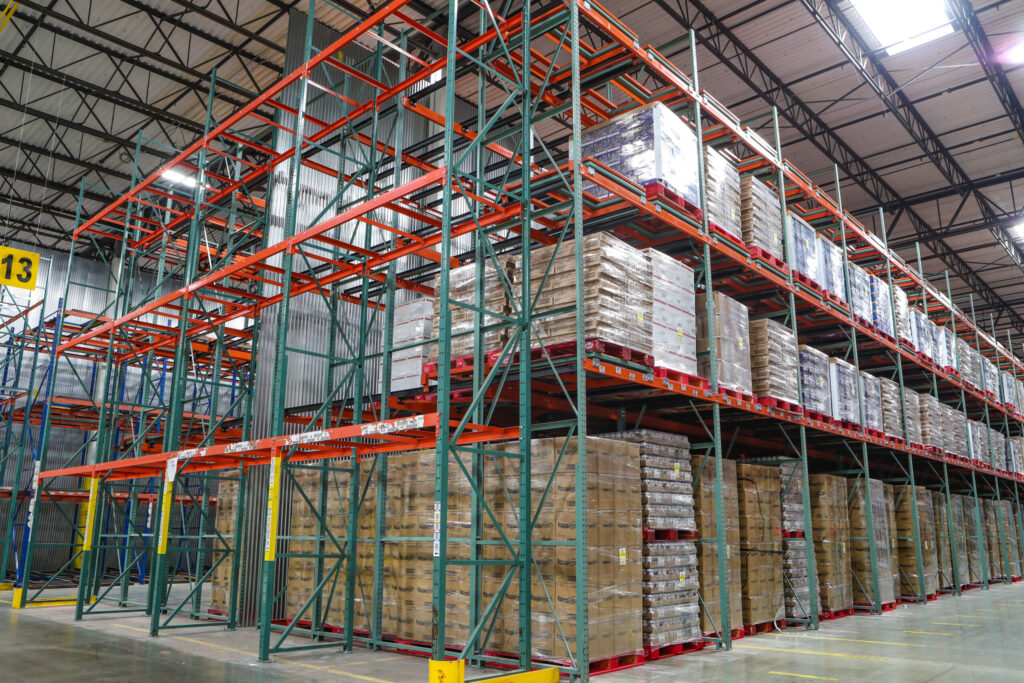
Not all pallet rack systems respond the same way to double-stacked loads. That is why the same two-high strategy that works in one rack type may create problems in another. The key is matching the load to the rack design, pallet condition, and handling method.
Selective Pallet Rack Systems
Selective Pallet Rack Systems
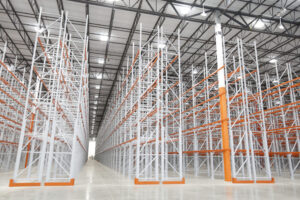
Selective rack is a single-deep system with direct access to every pallet position, which makes it the most flexible option for many operations. It can be engineered for double-stacked pallet loads, but only when capacity, beam elevations, and vertical clearances are set for that loading condition.
- Direct access to every pallet position
- Best fit when you need flexibility and visibility
- Loads should be centered and evenly distributed on the pallet and rack position
Drive-In / Drive-Thru Rack Systems
Drive-In / Drive-Thru Rack Systems
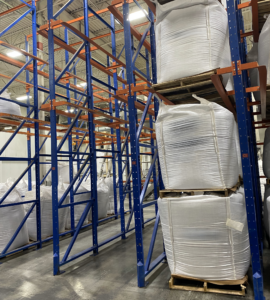
Drive-in and drive-thru racks are high-density lane systems where forklifts enter the structure, and pallets rest on side rails.
They are typically used for high volumes of the same SKU, and loading sequence matters: drive-in lanes are generally loaded from back to front and bottom to top. Unloading follows the reverse sequence.
Because operators enter the lane and place pallets on rails, pallet quality, load consistency, and operator precision are critical.
- High-density storage for fewer SKUs and more pallets per SKU
- Best with uniform pallet size, weight, and condition
- Two-high loading should only be used where the system is specifically engineered for it
Push-Back Rack Systems
Push-Back Rack Systems
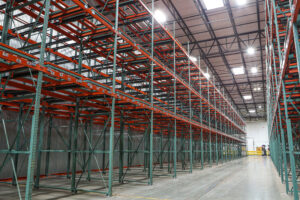
Push-back rack is a LIFO system that stores pallets on sloped rails using nested carts. Each lane is independent, allowing SKU-segmented storage. Loads must be stable and properly supported because the system is dynamic. Weight variation inside a single push-back lane should also be controlled.
- High-density LIFO storage with carts on pitched rails
- Good for multiple pallets of the same SKU in a lane
- Double-stacked loads should be reviewed case by case, based on rack and cart design
Pallet Flow Rack Systems
Pallet Flow Rack Systems
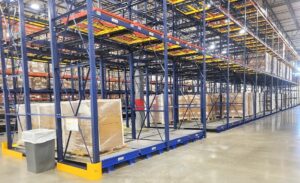
Pallet flow rack is a FIFO system that uses sloped wheel or roller tracks to move pallets by gravity from the loading side to the opposite picking side. Each lane typically stores a single SKU, making it possible to support a range of products across the system. Because pallet flow speed is largely driven by pallet and load weight, the system design—including pitch and speed controllers—must be configured to the expected inventory specifications.
- FIFO storage with separate loading and unloading aisles
- SKUs are segmented by lane
- Two-high loads can be used, but only when the system is configured to the inventory specs
Note: Pallet shuttle and ASRS systems typically do not support double-stacked pallet loads due to strict load height requirements, pallet tolerances, and automation constraints.
Support Safe Stacking with Expert Rack Inspections
Stacking pallets two-high can improve efficiency and storage density, but only when your pallet rack systems are properly designed, maintained, and operated within safe limits.
With Apex PROs Rack & Safety Inspections, our team evaluates your racking systems for:
- Load capacity compliance
- Structural integrity
- Damage and wear
- Safe operational practices
We help identify risks before they become costly problems, keeping your operation safe, efficient, and compliant.
Ready to ensure your pallet rack systems are safe, compliant, and optimized for performance? Contact Apex today to schedule a professional rack and safety inspection.
