
How to Fix a Tipped Pallet in Storage Racking

Your Action Plan for a Tipped Pallet in Storage Racking — and How to Prevent It
Tipped, shifted, or misaligned pallets can happen in any warehouse — and when they do, it’s more than just a cleanup job. It’s a serious safety concern that requires a clear, controlled response. This guide outlines how to safely address a tipped pallet in your storage racking system — whether it’s standard selective rack or a dynamic system like push-back or pallet flow. You’ll get practical steps for recovery and tips to help prevent future incidents.
Common Causes of Tipped, Shifted, or Misaligned Pallets

Understanding the root cause helps teams take proactive steps and avoid repeat issues. Address these concerns in your SOP training to increase awareness:
- Poor pallet building – uneven stacking, overhang, or unstable box layers
- Uneven weight distribution – heavy items placed on top or off-center
- Loose or inadequate wrapping/strapping – can cause the load to shift
- Damaged or improperly sized pallets – poor condition (broken, missing, warped boards) or too small for load
- Overloading – exceeding pallet load weight capacity
- Forklift impact or rough handling – abrupt movements can tilt or shift loads
- Environmental issues – humidity can warp wooden pallets, and excessive floor vibration can contribute to pallet imbalance
- Stacking misalignment – pallets not aligned squarely on the beam or load below
- Lack of regular inspection or SOP adherence
Universal Safety Protocol
Before taking any action to recover a tipped pallet in storage racking, it’s critical to follow these universal safety steps — no matter what type of pallet racking system you’re working with.
Step 1 – Isolate the Area
Immediately block off the bay where the pallet is tipped or shifted. Mark the area clearly and alert the safety team. No one should enter or operate equipment near the affected bay until the situation is evaluated.
Step 2 – Visual Inspection
Before attempting recovery, visually inspect the rack. Look for bent beams, loose connections, or signs of impact. If damage is visible, stop and contact Apex for a full rack evaluation.
Step 3 – Use the Right Equipment
Only use equipment rated for the task — like a forklift, order picker, reach truck — and confirm operator training before beginning recovery.
Step 4 – Follow a Clear SOP
Establish a documented procedure for your team, and train employees to alert the safety chain when they spot a misaligned pallet. Clear roles and defined steps reduce risk and downtime.
How to Safely Address a Tipped Pallet by Rack Type
Every racking system has its own structure, access limitations, and operational flow — which means the safest way to handle a tipped or shifted pallet depends on the system in use. Below, we break down the recommended steps for selective, drive-in, push-back, pallet flow, and ASRS shuttle racking so that you can develop a clear SOP tailored to your facility.
Selective Pallet Rack
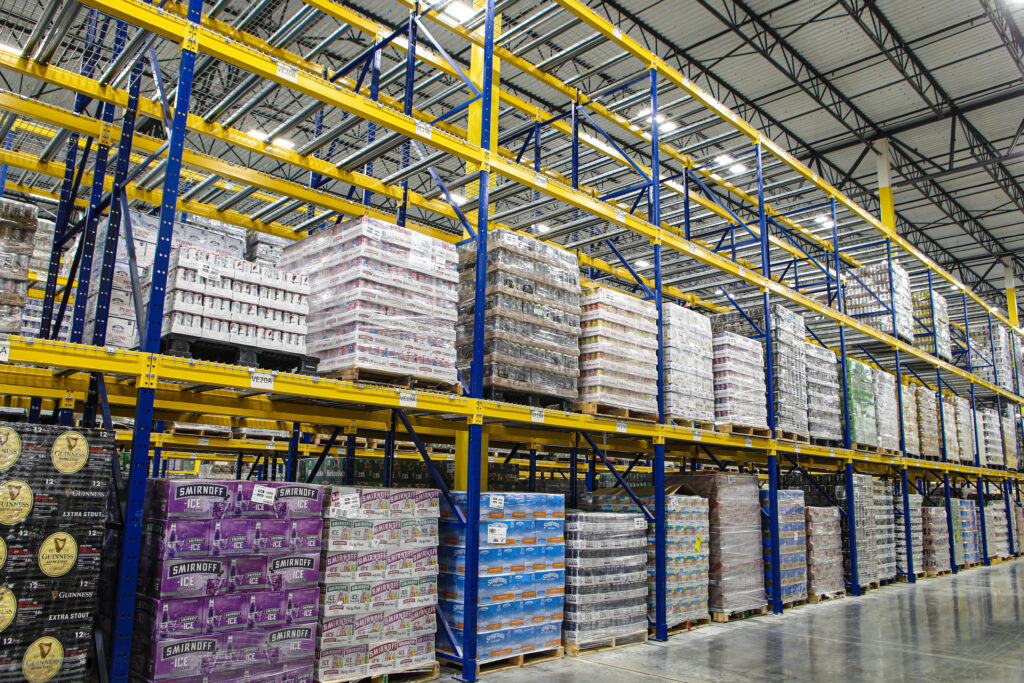
Selective pallet racking is the most common storage system — single-deep pallet bays with full aisle access to every load. While this open-access design makes it easier to spot and respond to tipped pallets, it still requires a structured approach to protect your team and inventory.
Steps to Safely Address a Tipped or Stuck Pallet in Selective Racking
- Choose the Appropriate Recovery Method
Before proceeding, make sure the area is isolated and the rack has been visually inspected for damage. If the structure is sound, you can safely move forward using one of two accepted recovery methods, depending on pallet accessibility and condition:- Option 1: Down-Stack from an Order Picker (Preferred)
Use an order picker to reach the level of the misaligned pallet. Carefully down-stack the product from the pallet, working from the picker platform. Once the weight is reduced, reposition or remove the pallet. This method allows controlled recovery with minimal product loss.
- Option 2: Controlled Fall (Use Only When Necessary)
From a safe position, use poles or grabber tools to knock the pallet to the ground in a controlled manner. This option should only be used when the pallet is not safely accessible, and down-stacking is not possible. Expect some product loss and a longer cleanup process.
- Option 1: Down-Stack from an Order Picker (Preferred)
- Reposition or Replace the Pallet
After recovery, repalletize the product and return it to the rack if safe to do so — or replace the pallet entirely. - Inspect and Document
Once complete, recheck the bay for signs of damage or shifting. If any issues are found, stop and document them. Use the Apex Rack Repair App or contact Apex for next steps.
Double-Deep Rack
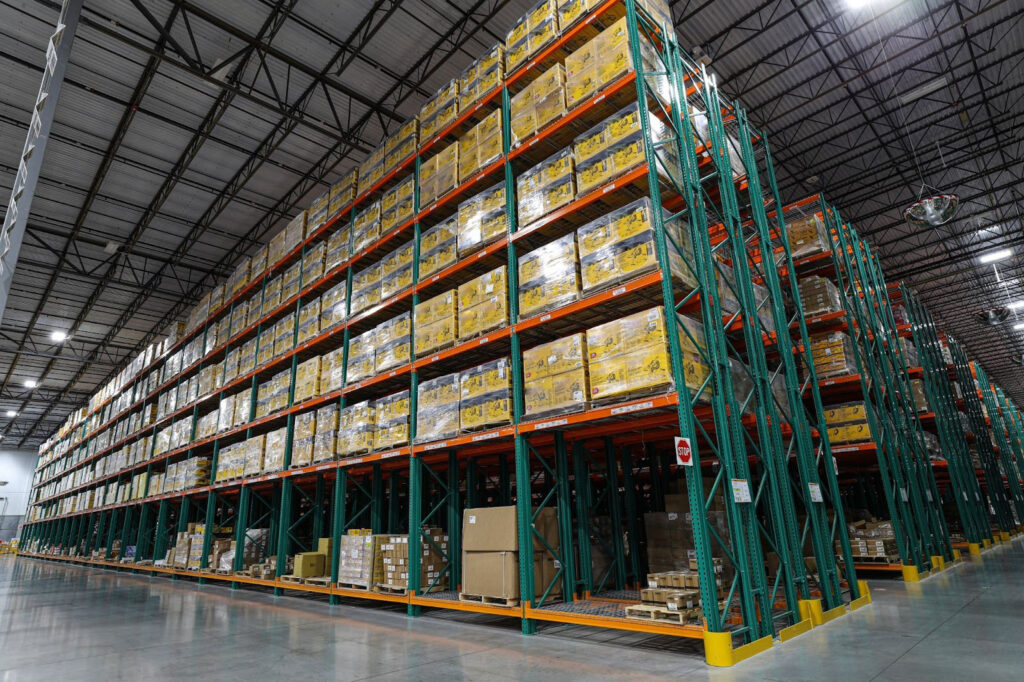
Double-deep racking is a modified selective system where pallets are stored two deep instead of one. It doubles storage density while maintaining aisle access; however, it requires a deep-reach truck or pantograph attachment to access rear pallets.
Steps to Safely Address a Tipped or Shifted Pallet in Double-Deep Rack
First, isolate the affected bay and visually inspect the rack structure for any signs of damage. If everything appears sound, proceed with caution.
- Determine Pallet Position
Identify whether the misaligned pallet is in the front or rear position.
- Front pallet: treat similarly to selective rack — use an order picker to down-stack and reposition.
- Rear pallet: greater care is needed due to limited visibility and increased reach distance.
- Front pallet: treat similarly to selective rack — use an order picker to down-stack and reposition.
- Use a Deep-Reach Truck or Order Picker
If the rear pallet is accessible and the load is stable, use a deep-reach truck to gently extract it.
- Do not attempt to drag or shift a leaning pallet into the front position — this increases the risk of load drop or system damage.
- Do not attempt to drag or shift a leaning pallet into the front position — this increases the risk of load drop or system damage.
- If Manual Entry Is Required
If the pallet cannot be safely retrieved from the aisle, a trained associate may need to enter the rack to down-stack the load and manually reposition or remove the pallet.
This work must be performed under strict fall protection protocols in accordance with OSHA standards:
- Fall protection is required for any work performed at a height of 6 feet or higher.
- Associates must use a Personal Fall Arrest System (PFAS) — including a full-body harness and double-tied lanyards.
- Anchor points must be approved by a qualified professional and capable of withstanding at least 5,000 lbs.
- Recommended tie-off locations include:
- A column just above a beam connection
- The column where it connects to a cross-aisle tie
- Avoid tying off to sharp or rough edges that could compromise lanyard integrity.
Only trained personnel should enter the rack structure for this task. If your team is not equipped or qualified, contact the Apex experts to manage the recovery safely.
Drive-In Pallet Rack
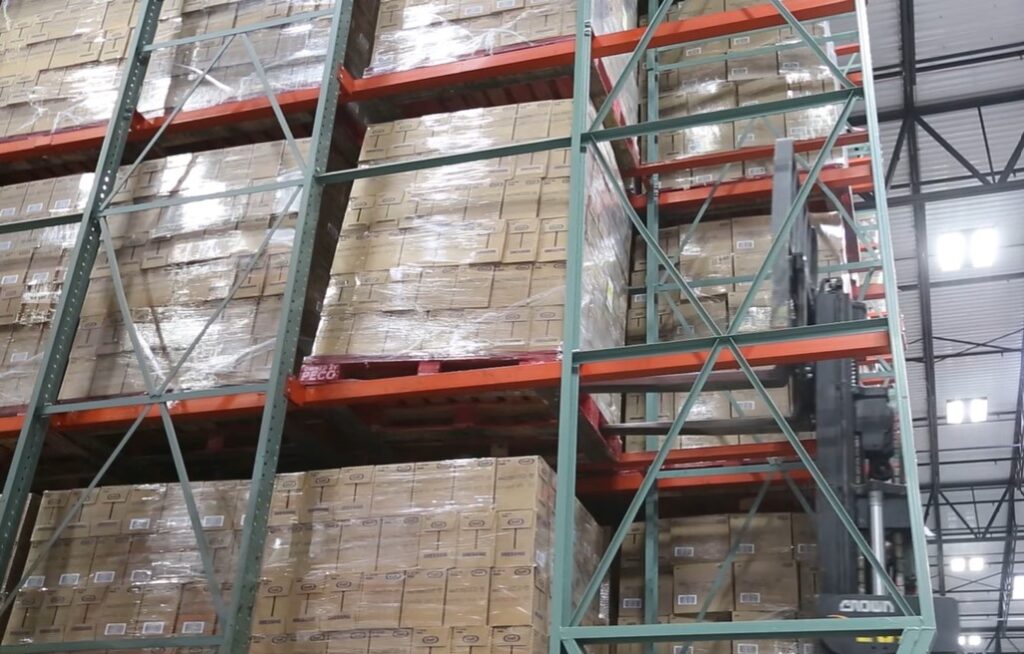
Drive-in racking is a high-density storage solution where pallets are stored multiple positions deep on rails, and forklifts drive directly into the lanes to load or retrieve inventory. This design maximizes storage space but limits access to individual pallets — making it more challenging to recover a tipped or shifted load.
Steps to Safely Address a Tipped or Stuck Pallet in Drive-In Racking
1. Unload from the Top Down
Once the area is secured and the structure is confirmed to be safe, begin by systematically unloading the lane.
-
- Start with the front pallet at the top level and work your way down to the floor. Then move to the 2nd pallet position in the lane and repeat the process — removing pallets from top to bottom.
- Continue this pattern, one position at a time, until you reach the misaligned load. Never attempt to reach over or around other pallets, as this increases the risk of injury and equipment damage.
2. Remove or Reposition the Tipped Pallet
Once accessible, carefully extract the leaning pallet using a forklift. If the load is compromised, use a scissor lift to down-stack the load before attempting to reposition the pallet.
3. Repalletize Or Replace Pallet
Check the pallet for damage and repalletize or replace as needed before reloading.
4. Inspect the Lane Before Returning to Service
Check the rails, arms, and entry guides for any signs of damage or misalignment before reloading the lane. If any issues are found, stop and request a professional inspection.
Check out our Drive-In Rack Operator Training Video for system-specific loading and unloading instructions as well as rack safety tips.
Push-Back Rack
Push-back pallet racking is a high-density, gravity-fed storage system designed for last-in, first-out (LIFO) inventory rotation. Pallets are stored in SKU-specific lanes, typically 3-4 deep, but can be as many as 7 deep.
Pallets sit on nested, wheeled carts that ride along slightly inclined rails. As pallets are loaded, they push the preceding pallets and carts back into the lane. When a pallet is removed, the remaining pallets automatically flow forward.
These systems typically function smoothly, but if a pallet shifts or a cart gets stuck, it must be handled with care. As a dynamic system, there is the risk of shifting loads, which can create a safety hazard and interrupt flow lane performance.
Steps to Safely Address a Tipped or Stuck Pallet in Push-Back Rack
- Unload the Lane
First, isolate the affected lane and perform a visual inspection to confirm there’s no rack or cart damage. If the structure appears sound, begin carefully unloading the lane from the front, one pallet at a time. - Assess the Jammed Cart or Pallet
Your ability to safely recover the pallet largely depends on its position in the lane, what’s causing the hang-up, and how many pallets are stacked behind it. In push-back systems that store up to 7 pallets deep, the closer the jammed pallet is to the front, the greater the pressure behind it.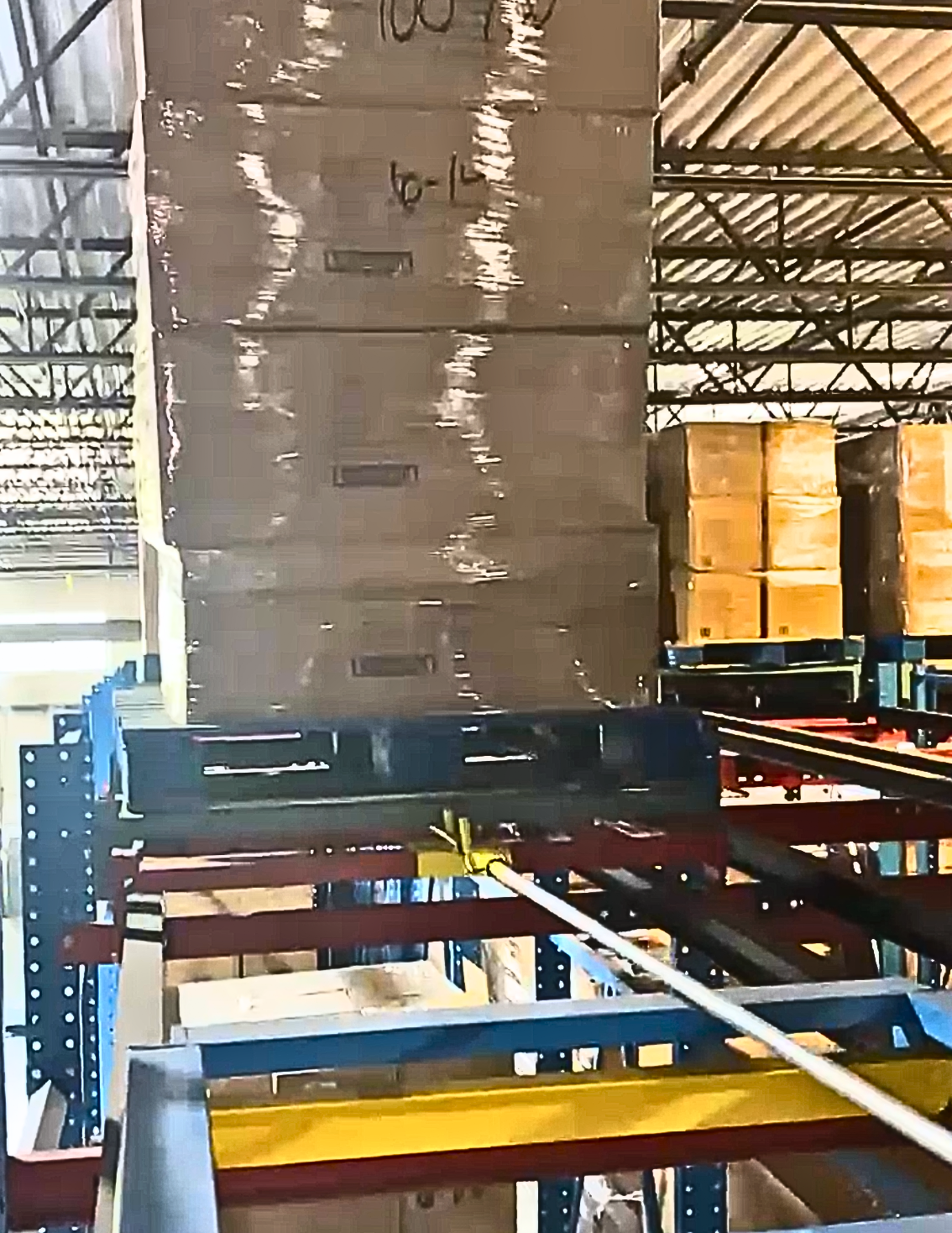
Cart-Retrieval Tool
- If the front pallet is misaligned, you can often reposition it with your forklift.
- If a rear pallet is hung up due to a minor cart misalignment or debris, use a cart retrieval tool (contact Apex to get yours) to safely reach back and pull the cart forward from the aisle.
- If the load has slipped, tipped, or is severely jammed, more controlled recovery is required — follow the directions in Step 3.
- Clear the Jam from the Adjacent Lane
If the obstruction cannot be resolved from the aisle, follow this controlled approach:- First, unload the adjacent push-back lane to create a clear, stable access path.
- Then, position a forklift at the face of the jammed lane to prevent unintended movement.
- From inside the cleared lane, a trained associate may enter using a scissor-lift to observe and assist with clearing the obstruction from the side.
- Proper fall protection is required. According to OSHA guidelines, workers must:
- Wear a full-body harness with double-tied lanyards
- Use anchor points rated to withstand at least 5,000 pounds of force — verified by a qualified professional
- Tie off to approved locations such as a column just above a beam connection or at a cross-aisle tie
- Avoid jagged or sharp surfaces that could damage the lanyard and compromise safety
- If the pallet cannot be safely repositioned, down-stack it from the open lane to reduce the load weight before attempting to release or remove the stuck cart.
- Back Out and Reset
Once the hang-up is cleared, unload the jammed lane fully. Inspect the push-back rails and cart wheels for debris or damage, clean the system, and reload — ensuring each pallet is centred and properly seated on its cart.
Need a refresh on push-back rack operation? Watch our Push-Back Operator Training Video for loading and unloading procedures, how to manage cart movement, and key rack safety tips.
Pallet Flow Rack
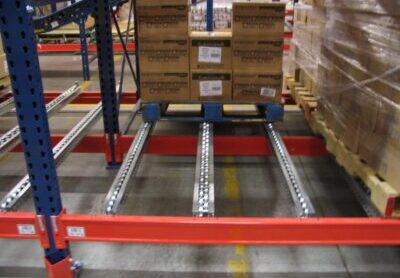 |
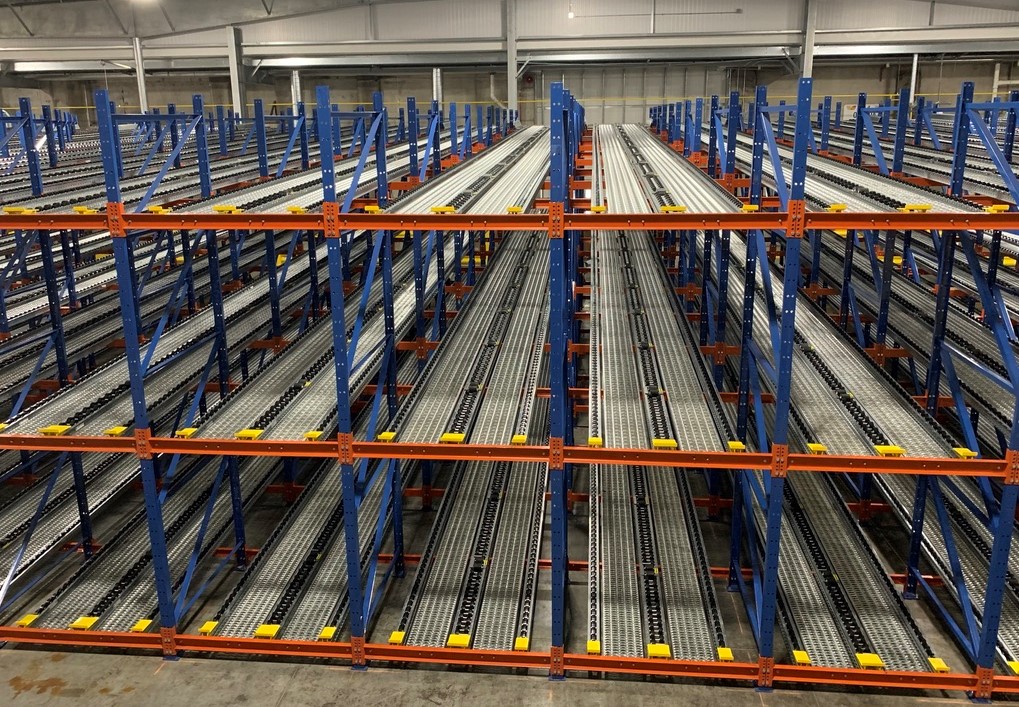 |
| Shallow Pallet Flow | Deep-Lane Pallet Flow |
Pallet flow racks are compact, deep-lane, high-density storage systems that use gravity to move pallets from the load side to the pick side. Because the lanes are pitched, each pallet is under continuous back pressure from the pallets behind it — sometimes thousands of pounds of force. A shifted pallet can become stuck mid-lane and must be cleared with extreme care to prevent sudden, dangerous pallet movement.
In shallow pallet flow systems — typically 2 to 3 pallets deep — your team may be able to address a stuck or misaligned pallet from outside the rack system. However, deeper lanes may require a worker to enter the rack system. This solution carries significantly more risk due to the rear pressures inherent in the pitched flow lane design. Remediation of the stuck pallet should only be addressed by trained staff or hired professionals.
Steps to Safely Address a Stuck or Shifted Pallet in Pallet Flow
- Remove the Rear Pallet
Ensure the area is marked and there is no identifiable rack damage. If reachable, remove the last pallet loaded into the affected lane from the charge (rear) side. This helps reduce pressure in the lane. - In a Shallow System: if the pallet is accessible from outside the rack, your team may be able to use a shepherd’s hook to offload product, reduce the weight, and safely reposition the pallet.
- In a Deep-Lane System: Begin by fully unloading the lane next to the affected one to create a safe working space. Mark it as a restricted zone and block off both ends.
- Fall Protection Comes First
Before entering the adjacent lane, ensure all personnel follow OSHA-recommended fall protection procedures:- Wear a full-body harness with double-tied lanyards.
- Use approved tie-off points capable of withstanding at least 5,000 pounds of force — such as a column above a beam connection or a cross-aisle tie.
- Avoid tying off to sharp or jagged edges that could compromise the lanyard.
- Only trained personnel should enter the lane under direct supervision.
- Wear a full-body harness with double-tied lanyards.
- Create a Stable Walking Surface
- If your pallet flow lane is constructed with bar grating between the wheeled rails, you can enter the adjacent lane as long as you are harnessed properly. Otherwise, you must build a stable platform.
- Fall Protection Comes First
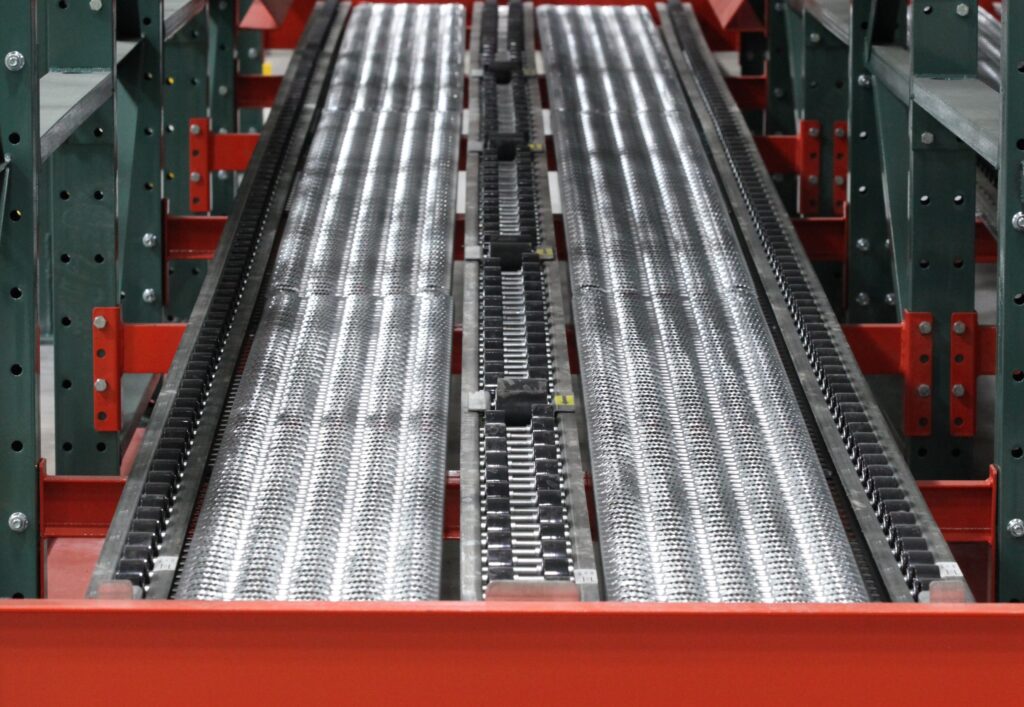
Bar Grating within Pallet Flow Lane
-
-
- To build a platform, fill the now-empty adjacent lane with tight-fitting empty pallets to form a stable, walkable platform across the rollers.
- Only proceed if the pallets are secure and movement-free.
- Enter Adjacent Lane for Visual Assistance Only
- A trained associate wearing OSHA-recommended fall protection tethered to a secure fixed point may enter the adjacent lane to observe or assist with recovery.
- Effective communication between personnel is crucial during this process.
-
*Never enter the jammed lane; a sudden pallet release can trigger a dangerous surge of weight.
-
- Unload the Lane Manually
- From the adjacent lane, down-stack the pallets behind the stuck pallet.
- Once empty, remove those pallets from the lane — this process is time-consuming and risky. Again, a professional response is strongly recommended.
- Finally, down-stack the stuck pallet to be able to reposition or remove it from the flow lanes.
- Unload the Lane Manually
- Repalletize and Reload the lane –only use good quality pallets in pallet flow rack and ensure loads are secured with tight wrapping or straps.
Get to know your pallet flow system inside and out. Our Pallet Flow Operator Training Video covers proper loading methods, flow lane troubleshooting, and essential safety practices.
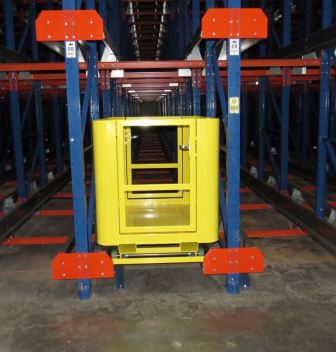
Pallet Rack Maintenance Cart
ASRS Shuttle Racking Systems
ASRS shuttle racking is a high-density, deep-lane pallet storage system that uses semi- or fully-automated shuttles to transport pallets into and out of designated storage positions. Forklifts or conveyors place shuttles and pallets within the storage levels. This system enables greater storage capacity and improved inventory control with minimal labor costs.
However, when a pallet becomes stuck or tipped inside a shuttle lane, recovery can be far more complex than in traditional systems. Limited access, deep storage positions, and automated movement all require a more controlled response.
To safely clear a jam, you’ll need:
- An order picker or turret truck
- A shuttle maintenance cart
- An empty pallet for down-stacking
- Full-body fall protection gear with approved tie-off
- Two trained personnel to perform the recovery under supervision
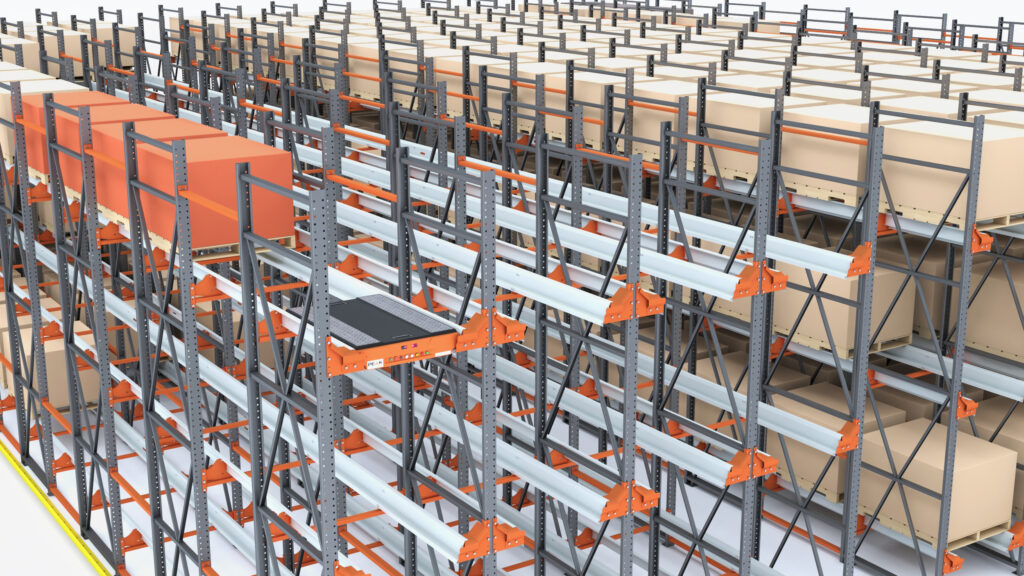
SOP for Clearing a Jammed Pallet in a Shuttle System
- Inform all shuttle operators in the area of the jam.
- Notify a supervisor about the jammed pallet.
- Shut down the affected bay and disable shuttle/cart movement in that lane.
- Where possible, clear out any pallets that can be reached with the shuttle.
- Remove the shuttle from the system if accessible.
- Using proper MHE (material handling equipment), place the maintenance cart into the row that needs clearing.
- Two trained personnel enter the order picker or turret truck with an empty pallet on the forks. Note: Ensure workers are wearing proper PPE.
- One operator raises the platform until the operator compartment is level with the maintenance cart.
- Once level, the second person enters the maintenance cart—this step assumes fall protection and tie‑off are in place.
- The MHE operator remains in the compartment to monitor the work of the maintenance cart operator.
- The person in the maintenance cart moves toward the jammed pallet by reaching out and grabbing the racking to manually roll the cart along the rails.
- At the jam point, begin down‑stacking the product into the maintenance cart.
- When the maintenance cart is sufficiently loaded, roll it back to the entrance of the row where the MHE equipment is stationed.
- Hand the product, one pallet’s worth at a time, to the MHE operator for restacking on the empty pallet.
- Repeat the process until the jammed pallet is removed and the lane clear.
- If exiting the maintenance cart or repositioning inside the lane is required, the same fall‑protection tie‑off system must be used.
- Once the row is cleared, both personnel enter the operator’s compartment of the lift vehicle and ride with the newly stacked pallet down to the floor.
- Deposit the pallet and one person.
- Remove the maintenance cart from the system.
- Notify all relevant personnel that the jam has been cleared.
- Re‑enable operations and return the lane to normal service.
If the Rack Is Damaged — Call Apex
If you find bent uprights, twisted beams, or signs of structural damage during your inspection, pause operations in that bay. Use the Apex Rack Repair App to capture images and key specs that can be uploaded to the Apex PROs for evaluation, or contact our PROs for a full rack inspection. Quick action can prevent further issues and keep your team safe.
Wrap-Up: Build the Process, Train the Team
Tipped, shifted, or misaligned pallets can quickly escalate into safety hazards, system damage, and costly downtime — especially in deep-lane, high-density rack systems. The best way to reduce risk and ensure a safe, effective response is to have a clear, rack-specific SOP in place.
- Develop procedures tailored to each type of pallet racking in your facility
- Train your team to identify the issue, secure the area, and follow recovery protocols step by step
- Equip operators with the right tools and safety gear — and make sure they know when to escalate the situation
- Document incidents and inspect systems before returning to service
- Partner with Apex for expert rack inspection and repairs
Don’t wait for a tipped pallet in storage racking to become a bigger problem. Contact the Apex team — we’re ready to help.
