
How to Keep Your Team Safe Around Warehouse Robots

Smart Safety Strategies When Humans and Warehouse Robots Share the Floor
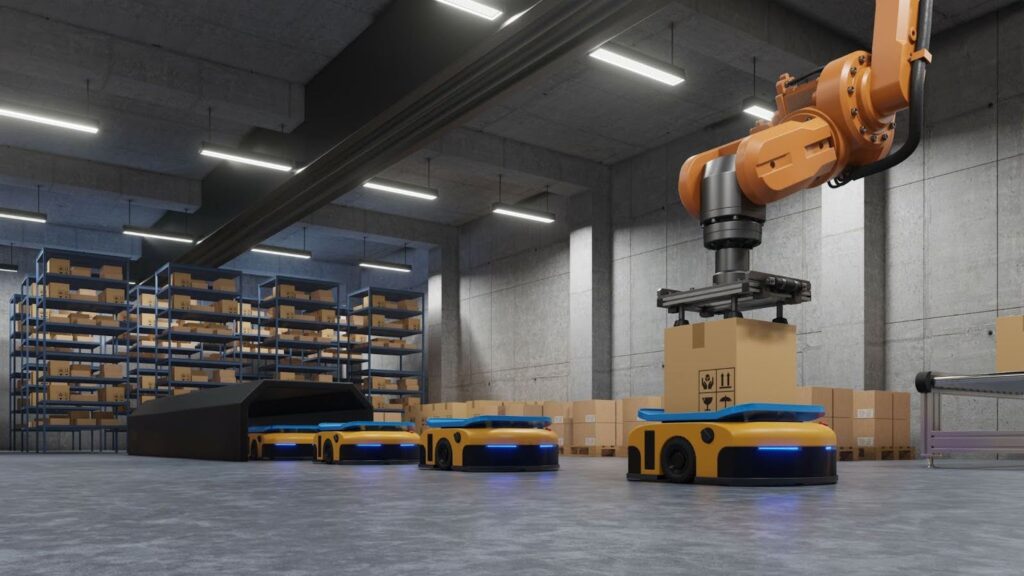
Integrating robotic equipment into your warehouse is a powerful way to streamline operations and reduce manual strain. But whether your systems operate autonomously or in tandem with your team, safety must remain a top priority. Modern warehouse robots, such as AMRs, AGVs, robotic arms, and cobots, are equipped with advanced safety features. Still, the real protection comes from a well-trained workforce and clearly defined protocols that guide human-robot interaction.
In this Safety Spotlight, we’ll walk through practical ways to keep your team safe while maximizing the benefits of robotic automation.
Types of Warehouse Robots & Their Roles
Each type of warehouse robot plays a specific role in optimizing material flow and reducing manual strain. Understanding how they operate—and where safety risks may arise—is the first step to building a safer shared workspace. Here’s a breakdown of the four most common robot types Apex customers encounter and how they interact with their environment.
Autonomous Mobile Robots (AMRs)
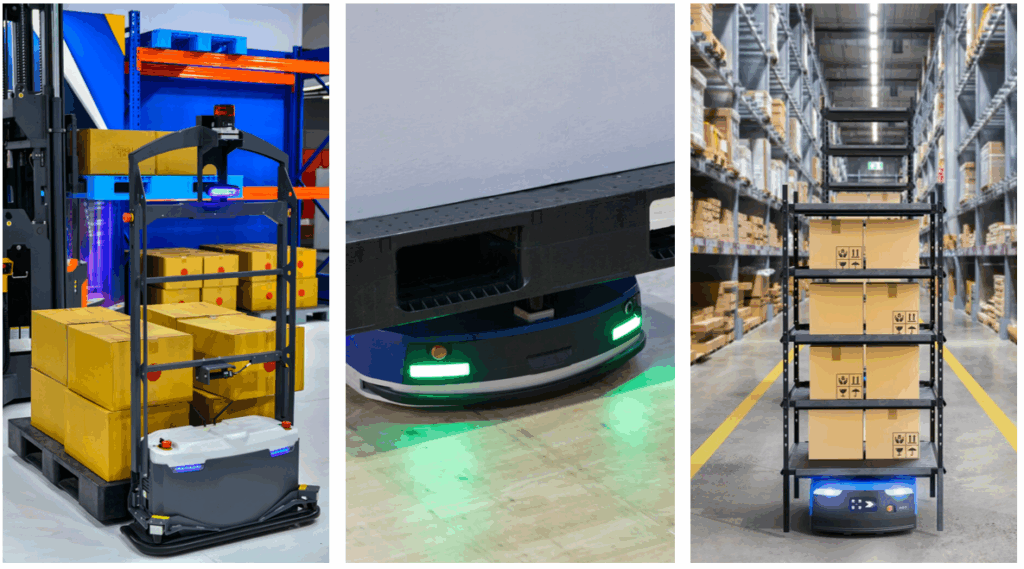
Autonomous Mobile Robots
AMRs are flexible, intelligent machines that navigate freely using advanced perception and navigation systems. They rely on sensors, onboard maps, and sometimes AI to dynamically respond to changes in their environment. AMRs are ideal for transporting goods, replenishing pick zones, and managing internal deliveries without fixed paths.
Safety Note: Because AMRs operate in shared spaces, they must be equipped with collision avoidance and proximity sensors. Workers should be trained to stay alert in shared zones and avoid obstructing AMR routes.
Automated Guided Vehicles (AGVs)
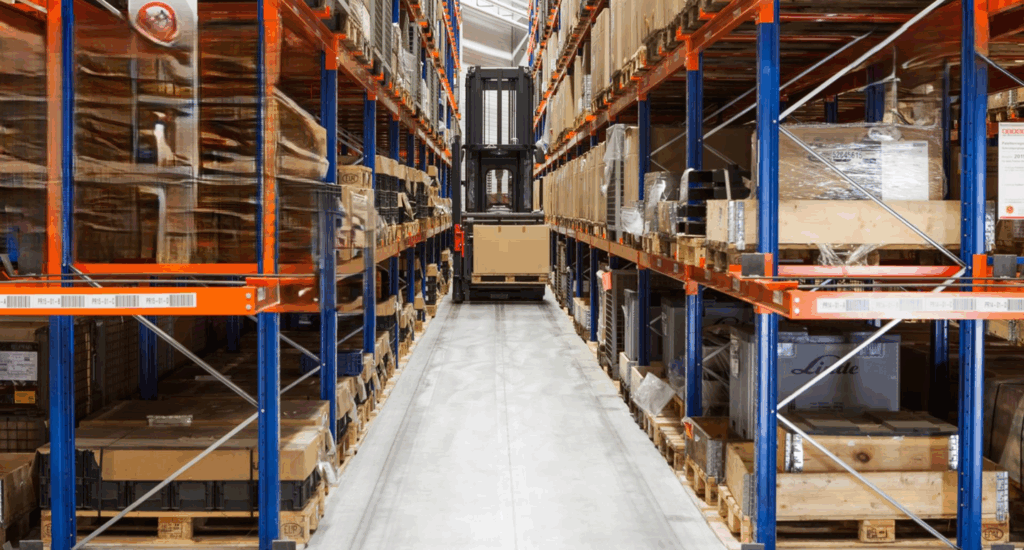
Linde K-Matic AGV
Unlike AMRs, AGVs follow predefined routes—often guided by magnetic tape, QR codes, wires, or lasers. They’re typically used for repetitive transport tasks like moving pallets or containers between receiving, storage, and shipping areas.
Safety Note: AGVs require clear, unobstructed pathways and visual signals to function safely. Floor marking and restricted lanes can help separate AGV traffic from foot traffic and forklifts, minimizing collision risk.
Articulated Robots (Robotic Arms) & Cobots
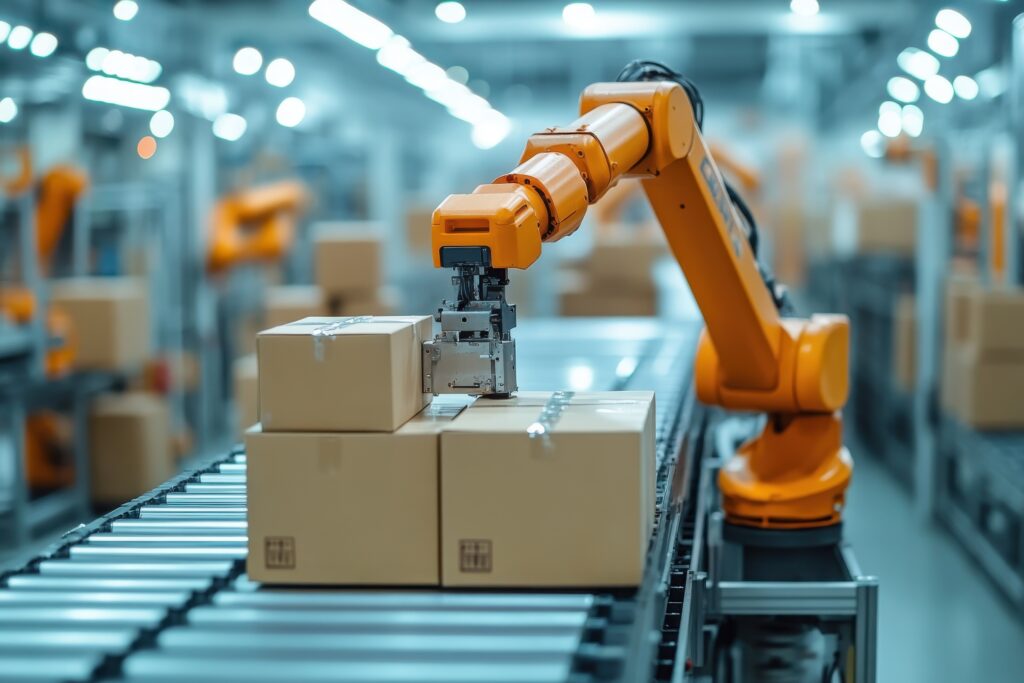
Warehouse Robots
Two types of robotic equipment that are often confused are articulated robot arms and collaborative robots (cobots). While both can appear similar and even perform comparable tasks, the key difference lies in how—and where—they interact with human workers.
Articulated Robots
 These stationary robotic systems are built with multi-jointed arms that replicate human-like motion. Commonly used for palletizing, depalletizing, picking, and even welding, robotic arms deliver high precision and speed in fixed locations.
- Perform a single task
- Precision operation
- Requires programming skills
- No human coordination
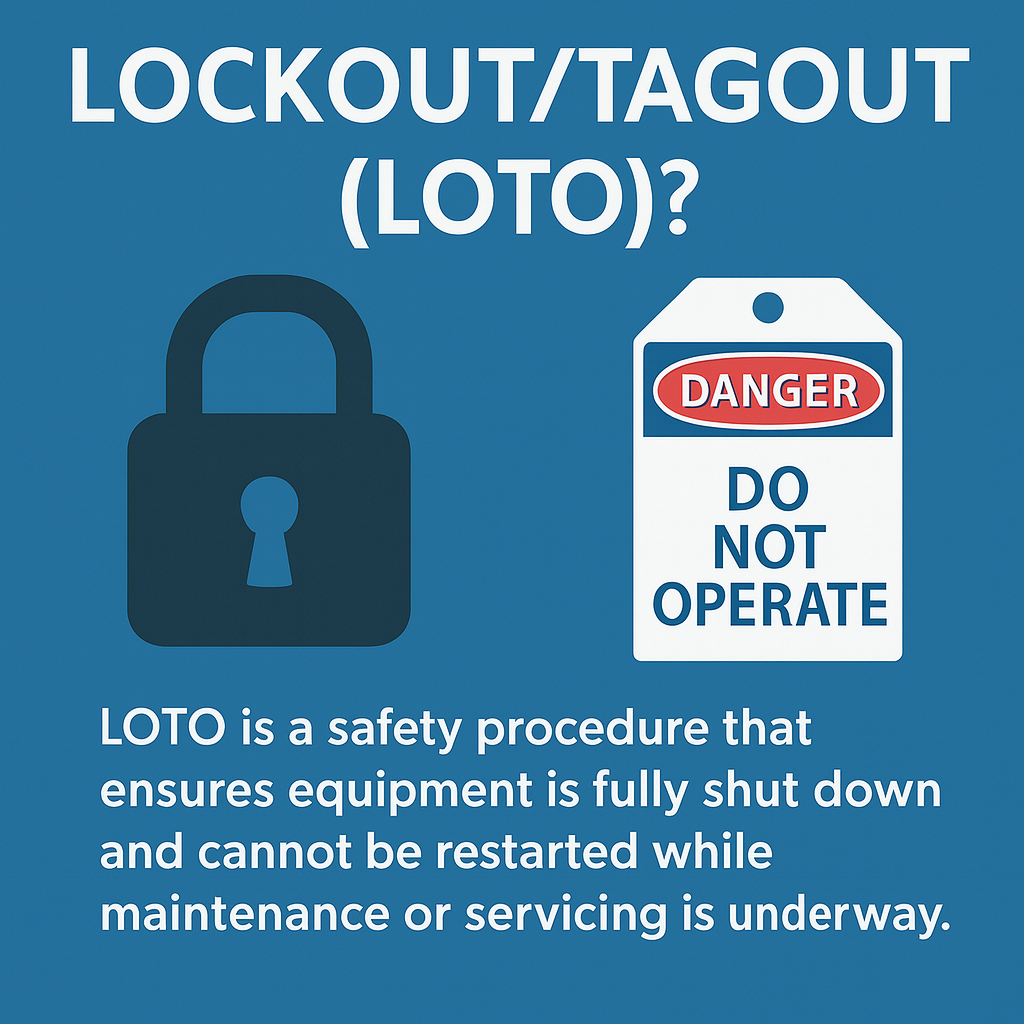
Safety Note: Due to the force and motion of these machines, articulated robots must be protected with hard guarding—such as steel cages, mesh barriers, or light curtains — that prevent accidental human access during operation. Lockout/tagout (LOTO) procedures are essential during maintenance.
Collaborative Robots (Cobots)

Warehouse Cobots
Cobots are designed to work directly alongside human operators. They come equipped with force and proximity sensors, AI-driven decision-making, and automatic shutdown or slowdown features. Cobots are commonly used for assembly, inspection, and lightweight pick-and-place tasks.
- Perform multiple tasks
- Programming skills not required
- Collaborate with humans
- Easily redeployed across workflows
Safety Note: While cobots are built for safe interaction, they should still operate within defined safety zones. Monitoring systems that enforce speed and separation rules are key, especially in high-traffic or variable workflow areas.
Common Safety Risks When Robots and Humans Share Space
While warehouse robots are engineered for precision and efficiency, they still operate in dynamic environments where human presence adds complexity. Understanding the most common safety risks is key to creating protocols that prevent accidents before they occur.
- Unexpected Movements
Robots can make sudden or erratic motions due to misprogramming, sensor issues, or incorrect inputs. These movements may extend beyond expected paths, catching nearby workers off guard.
- System Failures
Electrical faults, worn components, or software glitches can cause robots to freeze mid-task or behave unpredictably—posing hazards to anyone nearby.
- Collision Hazards
In shared environments, the risk of robots and workers occupying the same space increases. This is especially true for AMRs and AGVs navigating aisles or during manual programming and maintenance.
- Electrical Hazards
Many industrial robots run on high-voltage systems. Improper lockout/tagout procedures or accidental exposure during servicing can result in electric shock or fire.
Pro Tip: Every safety program should start with a risk assessment tailored to the specific robot types and workflows in your facility.
Training Workers to Interact with Warehouse Robots
No matter how advanced your automation, your workforce remains your most valuable asset—and your first line of defense when it comes to safety. Equipping employees with the knowledge and confidence to work safely around robots is essential to preventing accidents and ensuring seamless collaboration.
Initial and Ongoing Training Should Cover:
- Understanding Robot Roles & Limitations
Workers should know what each type of robot does, where it operates, and how it moves—especially AMRs, AGVs, cobots, and robotic arms.
- Recognizing Safe vs. Unsafe Behavior
Teach employees to identify warning signs, stay out of active robot zones unless authorized, and never assume a robot “sees” them.
- Emergency Shutdown Procedures
Train staff on how to quickly and safely stop a robot in case of malfunction or hazard. Make sure shutoff controls are clearly labeled and accessible.
- Proper Use of PPE
Include any high-visibility apparel or wearable alert tech (e.g., detection vests or tags) in your PPE program. Explain how these devices interact with robotic systems.
- Protocol for Entering Guarded or Restricted Zones
Only trained personnel should access hard-guarded or restricted robot work cells. Entry procedures must include awareness of shutdown zones, permission protocols, and signage compliance.
- Manual Control & Override Functions
Where applicable, staff should understand how to safely engage manual controls or overrides, and when it’s appropriate to do so.
Rule of Thumb: If a worker needs to enter a robot’s operational space—for cleaning, maintenance, or troubleshooting—Lockout/Tagout (LOTO) procedures must be followed. No exceptions.
Partnering with Apex for a Safer Automated Facility
Whether you’re integrating warehouse robots into your current operation or designing a new facility from the ground up, Apex can help you plan for safety from day one. From layout optimization and automation integration to employee training and PPE recommendations, we offer complete warehouse solutions tailored to your needs.
