
Solving the Most Common Push-Back Rack Problems | Apex Safety Spotlight

6 Push-Back Racking Issues—and How to Fix Them
Push-back racking offers an efficient option for high-density pallet storage. Built for Last-In/First-Out (LIFO) inventory systems, this racking style uses a single aisle for both loading and unloading, which helps conserve floor space. Lanes typically hold between 3 and 4 pallets deep—up to 7 in some cases—with each lane assigned to a single SKU, making it ideal for managing high-turn inventory with accuracy and ease.
These systems work using nested, wheeled carts on inclined rails. Pallets are loaded at the aisle, pushing earlier pallets back. As pallets are removed, the remaining ones roll forward.
Quick Look at Push-Back Rack Benefits
- High-density storage for low-SKU-count, high-volume inventory
- Space-saving layout helps maximize available square footage
- Quick access to backup pallets helps keep processes flowing
- Supports LIFO inventory handling
- Used frequently in grocery, cold storage, food & beverage, and consumer goods sectors
While push-back racking can greatly improve efficiency, taking proper safety measures helps protect your team and your investment.
6 Push-Back Racking Hazards—and Proven Fixes

Back-to-Back Three-Deep Push-Back Racking
1. Pallets That Don’t Match
For push-back racking to function correctly and safely, all pallets within a given lane need to be the same size. When pallets vary in dimension, they may not sit properly on the carts or rails, creating misalignment issues, jams, or unsafe weight distribution that can lead to equipment failure or injury.
If your operation requires different pallet sizes, you can modify the system to keep like sizes in dedicated lanes. Another option is switching to a push-back flow rack—a design without carts that uses pallet flow rails instead—for better flexibility and potentially lower costs.
The Apex team can review your inventory setup and recommend the best solution to meet your operational goals.
2. Incorrect Pallet Alignment
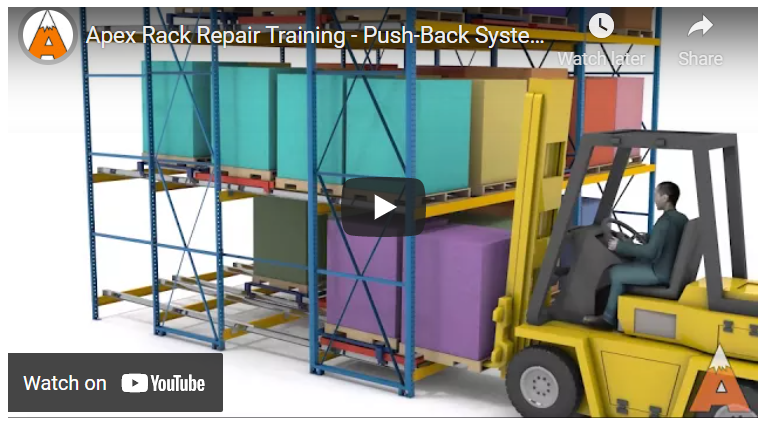
Improper pallet placement is a common source of issues in push-back rack systems. Misaligned pallets can snag in the lane, interrupting workflow and posing safety concerns—especially when workers attempt to fix it manually, risking injury or equipment damage.
To avoid these problems, forklift operators must be trained on exact pallet placement procedures. They need to center each pallet securely on the cart and gently push it back to load the next one without slamming or shifting. Operators must also back out slowly to control the return movement of the rear pallets. Any abrupt motion can cause the pallets to surge forward, which may lead to misalignment or product damage.
Apex offers instructional videos tailored to your rack system—ideal for training forklift operators on proper handling techniques.
3. Cart Wear and Tear
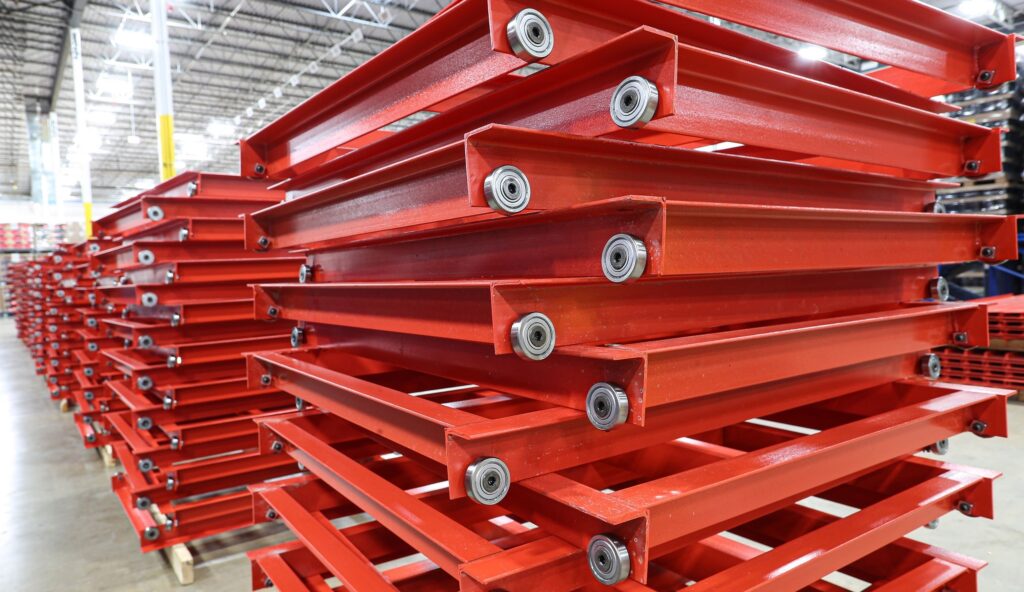
Carts Ready to Install
Damaged or worn cart wheels can lead to jerky motion, system blockages, or even pallet tipping—compromising safety and performance. Continuous use can also wear down rails and other components, causing misalignment and reducing efficiency.
To stay ahead of these issues, routine inspections should be scheduled to check cart wheels, rail condition, and cart alignment. Look out for wear indicators like flat spots, cracks, or debris buildup on wheels. Any damaged components should be replaced right away to prevent system downtime or costlier repairs.
It’s also important to ensure all carts are reseated correctly after repairs to avoid future alignment problems. Train staff to report unusual sounds, vibrations, or movement while operating the rack—these can signal early signs of cart failure.
Apex provides regular rack inspections across Colorado, offering expert analysis and dependable repairs using high-quality materials to keep your systems running safely and smoothly.
4. Overweight Loads

Mind Your Load Weights!
Loading too much weight on either the carts or racking structure can lead to serious structural damage, lost inventory, and safety hazards. At the very least, overloading accelerates system wear—especially on wheels, rails, and frame connections—reducing overall performance and longevity.
Prevent problems by enforcing strict weight checks throughout the pallet handling process. Make sure pallet loads stay within the limits specified by the racking and cart manufacturers.
Your forklift operators and warehouse team should be trained to understand weight distribution requirements and the dangers of uneven loading. Shifting loads can destabilize the system, resulting in jams or tipping hazards.
Regular inspections can also help spot signs of structural fatigue or stress caused by overloading—allowing you to address issues before they become dangerous.
5. Not Enough Room for Forklifts
Cramped aisle layouts can be risky and inefficient. Limited space puts your racking, products, and team members at risk and slows down material handling, especially when forklift operators struggle to maneuver safely.
To improve safety and performance, review your system layout to confirm there’s enough space for forklift travel and pallet handling. Keep these considerations in mind:
- Forklift Specs: Consider turning radius, machine size, and load length
- Clearance Needs: Ensure there’s space to safely load/unload pallets without scraping racks or hitting stored items
- Traffic Patterns: Establish clear forklift routes using floor tape, signage, and arrows
- Safety Measures: Add guardrails, rack protectors, and barriers at aisle ends to help prevent racking damage from accidental bumps
Apex’s engineering team can design a layout that maximizes usable space in your Colorado facility while keeping operations safe and efficient.

Missing Cart Wheel
6. Skipping Inspections and Maintenance
Failing to inspect or maintain your push-back system can lead to undetected issues—such as weakened parts, loose bolts, or corrosion. Over time, these minor issues can escalate into dangerous structural failures, threatening safety and causing costly downtime.
Avoid these risks by implementing a preventative maintenance schedule that includes regular visual checks, on-the-spot repairs, and annual expert evaluations to confirm everything meets safety standards.
Apex provides professional rack inspections and fast, reliable repairs to keep your equipment in top shape. A proactive approach helps extend system life and protects your Colorado warehouse team.
Rely on Apex for Complete Colorado Warehouse Solutions

Apex Companies delivers full-service support for your warehouse, including expert design, precise installation, ongoing inspections, professional repairs, quality equipment, and OSHA-compliant forklift training.
Looking to improve your storage systems and create a safer warehouse environment? Contact Apex today for expert guidance and dependable service tailored to your operation.
