
Got Yourself in a Sticky Situation? 7 Tips to Avoid Pallet Rack Honeycombing

Say Goodbye To Empty Pallet Rack Slots in Your Colorado Warehouse
The material handling world isn’t short on quirky jargon (seriously—have you seen our glossary?). One term that might raise eyebrows is honeycombing. In warehousing, honeycombing refers to the underutilization of pallet rack space—when open or half-filled slots start to resemble the empty cells of a honeycomb. This isn’t just a storage efficiency issue—it can also affect the stability of your pallet rack system, creating unexpected safety risks. The good news? With the right approach, your Colorado facility can reduce or eliminate honeycombing altogether. Let’s walk through seven practical ways to optimize your pallet rack usage and protect your operation.
What Leads to Honeycombing in Pallet Rack?
To prevent honeycombing, your pallet racking layout must align with your inventory type, volume, and movement patterns. That’s the benefit of having various storage configurations to choose from—each designed to maximize space while supporting smooth product flow. But when there’s a disconnect between your racking system and your actual storage needs, you open the door to inefficient slotting and underused space. Here are a few common situations that contribute to this problem:
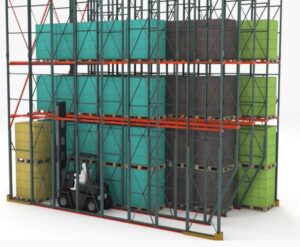
Random Inventory Placement: Without a defined slotting strategy , inventory can be placed haphazardly, creating gaps between loads and leading to wasted space—one of the primary causes of the honeycombing effect. This issue is especially common in high-density rack systems like drive-in, pallet flow, and push-back pallet rack configurations. These systems rely on dedicated SKU lanes that can range from 2 to 20 pallets deep. To make the most of this setup, those lanes need to remain largely occupied. Otherwise, the efficiency of the racking system—and your labor and fulfillment productivity—can quickly decline. While it might seem like a good idea to mix SKUs to use up the space, doing so compromises the system’s design and isn’t a practical long-term solution. Empty lanes will remain unless a reconfiguration is made.
|
Drive-In Pallet Rack and the Honeycombing Challenge Drive-in racking is especially prone to honeycombing issues due to its single-SKU lane design. Each vertical lane is dedicated to just one SKU. For example, a system that’s eight pallets deep and four levels high provides 32 storage positions per lane—intended for 32 identical pallets. But what happens when your inventory doesn’t line up with that number? Overflowing Inventory – If your SKU count exceeds the capacity of a single lane, your next option might be to start storing in a second lane. Depending on how many pallets spill over, though, a large portion of that additional lane may sit empty, creating inefficiencies. In many cases, floor stacking or using a different racking system may be necessary to store the excess. If this problem extends to multiple SKUs, it can quickly snowball into a major operational challenge. Understocked Lanes – On the flip side, if you have fewer pallets than the lane can hold, those empty spots will remain vacant unless inventory levels increase. Drive-in systems can’t store mixed SKUs within the same lane or at different levels because of their specific loading and unloading requirements. Pallets are loaded from the back of the bottom level to the front, and from bottom to top. Unloading happens in reverse—from the top front back to the deepest point. This sequence isn’t just preferred—it’s necessary for maintaining rack stability. Attempting to store mixed SKUs disrupts this process and creates serious complications for picking accuracy and efficiency. |

Lack of Proper Inventory Rotation – When older products sit too long in storage without being cycled out, they can occupy valuable slots indefinitely. As newer inventory arrives and is stored elsewhere, this can create sporadic empty spaces around the older stock—contributing to a honeycomb-like pattern of underutilized rack positions.
Non-Standard or Irregular Inventory – Pallet rack systems are typically designed around standard GMA-style pallets. If you’re storing smaller pallets or items that aren’t palletized, those mismatches can leave gaps between loads, leading to wasted space. Likewise, if pallets are poorly packed and product hangs over the edges, it may prevent you from fully loading a lane, leaving open spots that can’t be used efficiently.
Inventory Planning Issues – When demand forecasts are off, whether due to overestimating or underestimating product volume, inventory levels can fluctuate in ways that make full utilization of your pallet rack difficult. This inconsistency can lead to sections of your racking being partially filled or completely unused.
How Big Is Your Honeycomb Problem?

Think of it like the hornet’s nest out back—the larger it gets, the more you’ll want to take action. While it’s unrealistic to expect a storage system to be fully utilized 100% of the time, keeping tabs on your open rack positions can help you spot inefficiencies before they impact your bottom line.
To measure the size of your honeycomb effect:
A – Start with your total number of pallet positions.
B – Count how many are currently in use.
Subtract B from A to get C, your number of open positions.
Then divide C by A and multiply by 100 to get the percentage of unused storage.
Example:
If you have 1,000 pallet slots and 750 are filled, that means 250 are empty—giving you a 25% open rate. Depending on your facility size and inventory flow, that level of honeycombing might be driving up your per-unit handling costs more than you realize.
7 Ways to Prevent Honeycombing in Your Pallet Rack System
Reducing honeycombing is key to improving warehouse storage utilization and upholding facility safety standards. Often, the most efficient approach is combining several types of racking systems to best suit your inventory profile. A data-driven analysis from Apex can help identify the right mix for your needs.
To get started, here are some actionable strategies:
1. Strengthen your inventory management –
This is your most powerful tool for improving space efficiency. A solid Warehouse Management System (WMS) can help execute a strategic slotting plan and maintain desired inventory turn rates. Regular stock checks, movement tracking, and reliable forecasting support better inventory rotation and help you avoid the pitfalls of overstocking or running low—two common culprits of honeycombing.
2. Match your rack system to your inventory –
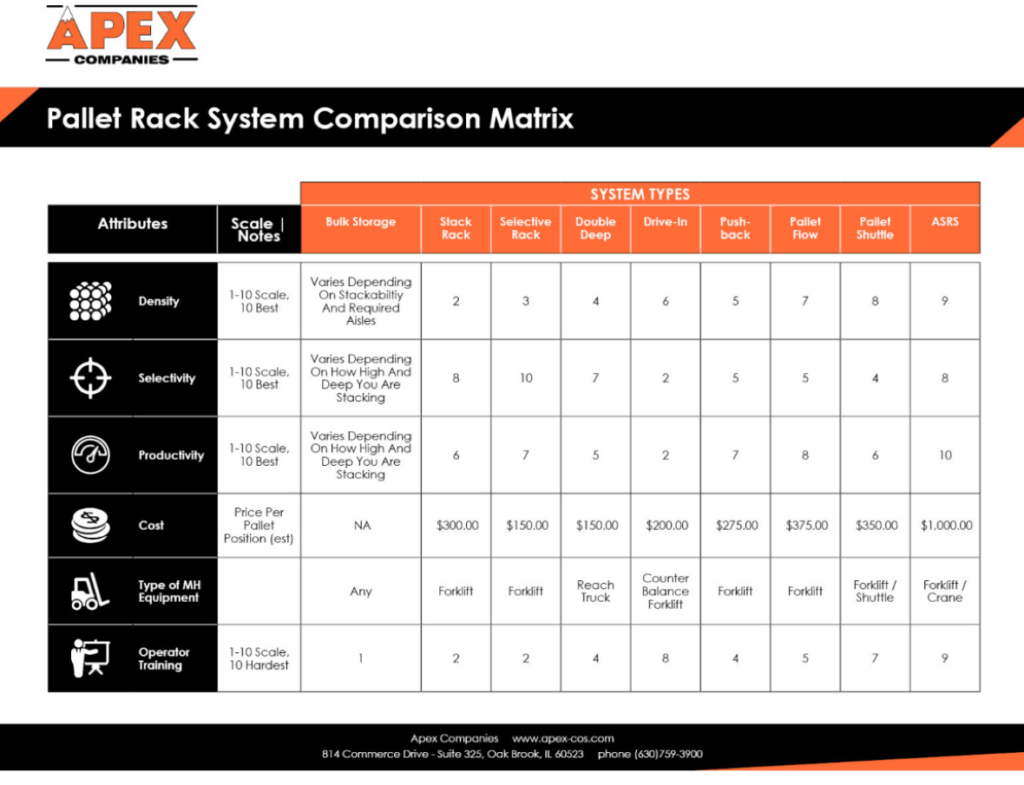
Arrange pallet placement based on product dimensions, frequency of access, and turnover velocity. Store like items together and position high-demand products in easily accessible areas to reduce the chance of underused space caused by inconsistent slotting. Make it a habit to assess your system’s efficiency and adjust as needed when inventory profiles or storage needs evolve.
Not sure where to begin? Use the Apex Matrix to evaluate which rack configurations align best with your stock requirements. Our team is ready to assist with expert system design and engineering guidance.
3. Implement clear labeling and guidance
Clearly mark each rack location and provide visual or written instructions for consistent pallet placement. These identifiers help streamline loading practices and support uniformity, making it easier for workers to fully utilize storage capacity and avoid unnecessary gaps.
4. Keep inventory moving
Establish and maintain a reliable stock rotation process to ensure goods are consistently cycled through the system. This reduces the likelihood of stagnant products occupying prime storage space and helps prevent the buildup of unused slots.
5. Invest in staff training
Equip your team with the knowledge and skills they need to follow efficient storage and inventory procedures. Teaching best practices around system slotting and awareness of honeycombing helps create a more organized, space-efficient warehouse environment.
6.Promote awareness of load limits
Make sure team members understand the importance of staying within designated weight capacities for each rack. Exceeding limits can result in uneven storage patterns, forcing underuse in other areas and increasing the likelihood of honeycombing.
7. Stay on top of rack inspections
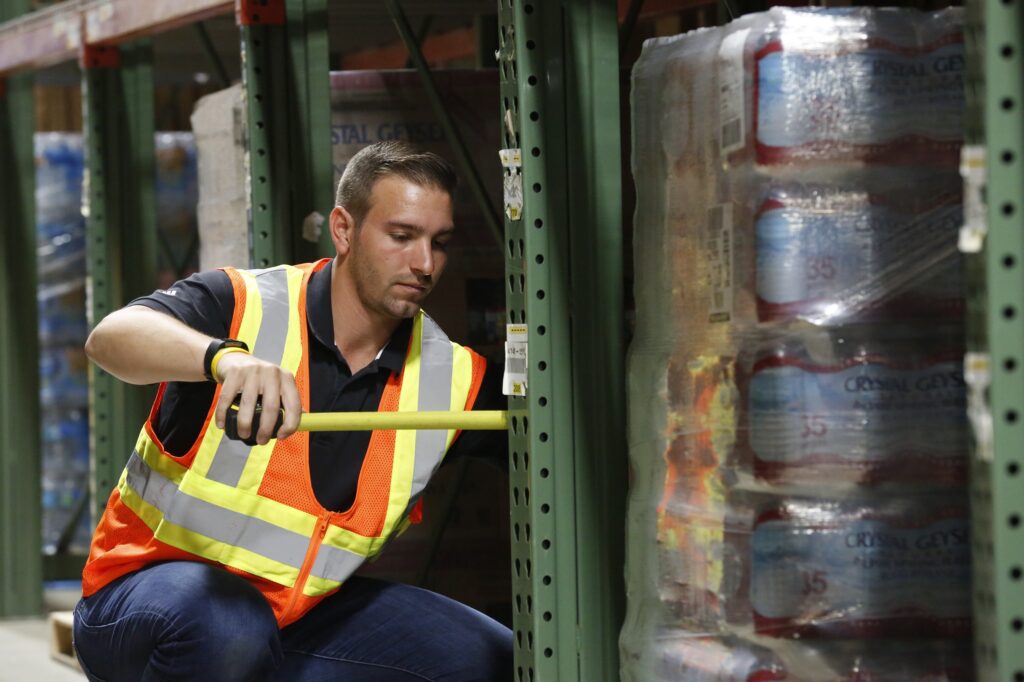
Routine inspections are essential for spotting damage that could compromise the safety and usability of storage slots. Verifying that all sections of your racking system are structurally sound ensures that you can fully utilize available space without hesitation.
By following these strategies, you’ll be better equipped to reduce the risk of honeycombing and get more value out of your pallet rack system. A more efficient layout means safer conditions for your team and smarter use of your space. If you’re unsure where to start, the Apex team is here to help. From system design and engineering to automation, installation, audits, and repairs—we’ve got the expertise you need. Reach out today to connect with our warehouse solutions experts.
