
Troubleshooting Common Push-Back Racking Issues | Apex Safety Spotlight

6 Common Push-Back Racking Challenges… and Expert Solutions!
Push-back racking systems are a smart choice for high-density pallet storage. Designed for Last-In/First-Out (LIFO) inventory management, these systems use a single aisle for loading and unloading pallets, saving valuable floor space. With lanes typically 3-4 pallets deep (and up to 7 deep), each dedicated to a single SKU, push-back racks ensure streamlined inventory management and improved accuracy for high-volume items.
Push-back uses a system of enveloping wheeled carts resting on slightly inclined rails. Pallets are loaded on the carts and gently pushed back in the lane, then flow forward for retrieval.
Push-Back Racking Snap-Shot
- Efficient pallet storage for high-volume, low-SKU-count inventory
- Compact design maximizes warehouse space
- Easily accessible reserve pallets smooth operations
- Productive LIFO inventory rotation
- Common applications include grocery, cold storage, consumer products, food & beverage
While these features make push-back racking highly efficient, taking proactive steps to ensure safety enhances your operations’ productivity and security.
6 Common Push-Back Racking Safety Considerations & Solutions

Back-to-Back Three-Deep Push-Back Racking
1. Inconsistent Pallet Sizes
Pallets within the same lane must be uniform in size to ensure smooth operation and maintain safety. Variations in pallet dimensions within a single lane can result in improper seating on the nested carts or rails, leading to potential jams, uneven weight distribution, or even accidents.
If your operation requires storing a variety of pallet sizes, the system can be customized to accommodate different pallet dimensions across separate lanes. Alternatively, a push-back flow rack—a “cartless” design using pallet flow rails—may be a more economical and efficient solution for your application.
The Apex team is here to evaluate your inventory specifications and recommend the storage solution that provides the efficiency and flexibility you need.
2. Improper Pallet Placement
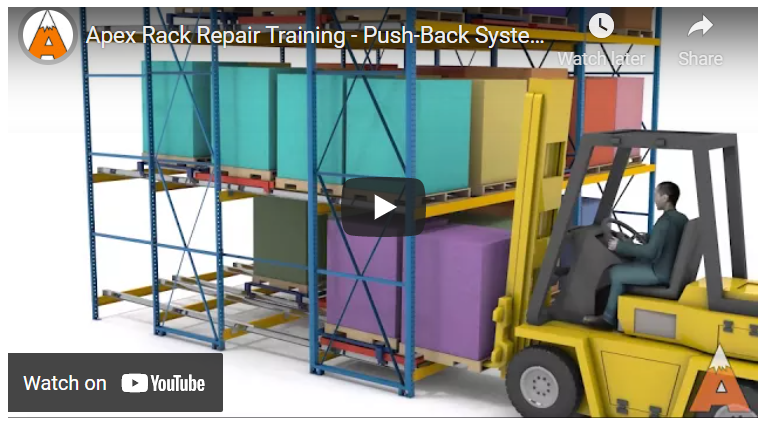 Misaligned pallets can cause significant issues in push-back racking systems, leading to hang-ups in the storage lanes that disrupt productivity and create safety hazards. These risks are heightened when workers attempt to manually resolve misalignments, which can lead to accidents or damaged equipment.
To minimize these concerns, forklift operators must be trained on proper pallet placement techniques to ensure alignment with the rails and carts. Operators must position pallets squarely and securely on the cart to prevent shifting or tilting during loading and unloading. They are also responsible for carefully pushing pallets back into the lane to reveal the next available cart for loading. This process requires precision to avoid jamming the system.
Additionally, operators must slowly and steadily back out of the system to control the forward movement of rear pallets as they flow toward the pick aisle. Sudden or jerky movements can cause pallets to accelerate uncontrollably, increasing the risk of misalignment or damage.
Check out Apex video resources for a variety of system-specific instructions for your forklift operators.
3. Cart Integrity Issues
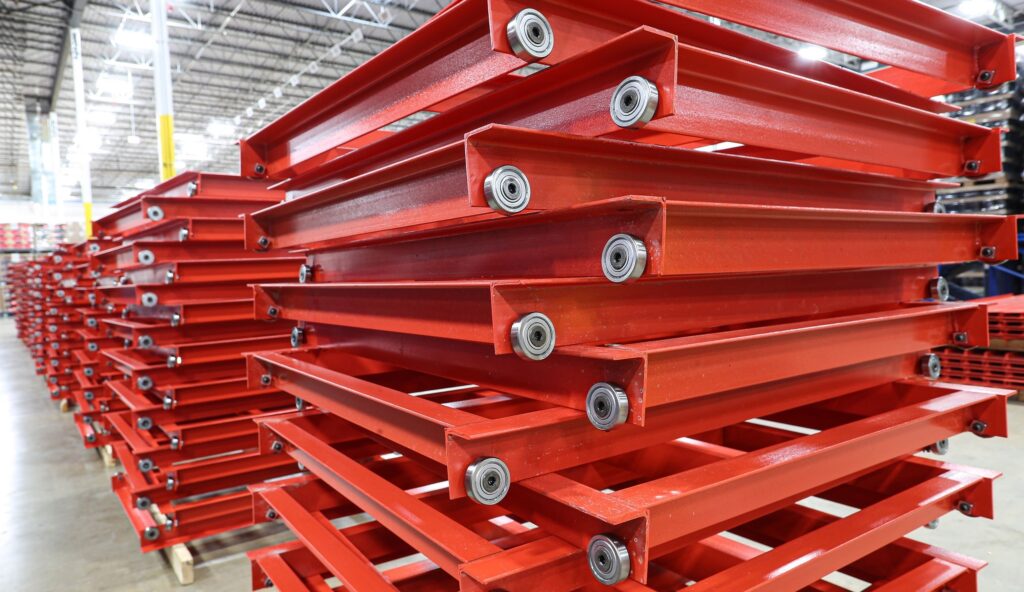
Carts Ready to Install
Worn or damaged wheels on the carts can lead to uneven movement, system jams, or even pallet tipping, which increases the risk of accidents and product damage. Over time, regular use can also cause wear on the rails or other moving components of the system, further exacerbating alignment issues and reducing the overall efficiency of the racking system.
To address these concerns, it’s essential to schedule regular inspections to check wheel quality, rail alignment, and the overall condition of the carts. Look for signs of wear, such as flat spots, cracks, or debris buildup on wheels that can hinder smooth operation. Promptly replace any damaged components to prevent larger, more costly repairs and potential downtime.
Additionally, ensure that carts are properly seated on the rails after repairs or maintenance to avoid misalignment issues. Operators should also be trained to report any signs of unusual movement, noise, or resistance during operation, as these can indicate emerging cart integrity problems that require immediate attention.
The Apex team ensures your system operates at peak efficiency with regularly scheduled rack inspections. Our experts have an in-depth understanding of system operation and design, allowing for comprehensive evaluations. In addition, we offer cost-effective, prompt repairs using high-quality, reliable materials to keep your operation running smoothly.
4. Overloading

Mind Your Load Weights!
Exceeding the weight capacity of the racking system or individual carts can cause severe structural damage, leading to significant safety risks, inventory loss, and costly downtime. At minimum, overloading can accelerate wear and tear on system components like wheels, rails, and frames, compromising long-term reliability and performance.
To prevent these issues, implement strict pallet load weight checks at every process stage—from pallet preparation to forklift loading. Ensure that all loads adhere to the manufacturer’s specified weight limits for both individual carts and the overall racking system.
It’s also crucial to train forklift operators and warehouse staff on load weight guidelines and the importance of distributing weight evenly on pallets and carts. Unevenly distributed loads can shift during operation, increasing the risk of misalignment, jams, or tipping.
Finally, schedule routine inspections to monitor the system’s structural integrity and identify signs of stress or damage caused by overloading. This proactive approach can help maintain safety, extend the system’s lifespan, and avoid unexpected failures.
5. Inadequate Space for Forklift Operation
Inadequate space for forklift operation can pose significant risks to your racking, inventory, and personnel. Tight spaces can also lead to inefficiencies, slowing material handling processes and increasing operator stress.
To prevent these issues, ensure your system layout provides adequate aisle width and turning radius for forklifts. Consider the following:
- Forklift Specifications: Factor in the type and size of forklifts, including their turning radius and the maximum load size.
- Clearance for Operations: Allow sufficient clearance for forklifts to load and unload pallets without risking collisions with the racking system or nearby inventory.
- Traffic Flow: Designate clear traffic patterns to minimize congestion in high-traffic areas. Use floor striping, signage, and arrows to guide operators and pedestrians.
- Safety Barriers: Install protective features such as guardrails, rack column protectors, and end-of-aisle barriers to absorb impacts and safeguard the racking system from damage caused by accidental bumps.
The Apex engineering and design team can ensure that your racking system maximizes your warehouse space and supports safe equipment operation.

Missing Cart Wheel
6. Neglected Maintenance and Inspections
Neglecting routine maintenance and inspections can lead to undetected damage, such as weakened structural components, loose hardware, or corrosion, significantly increasing the risk of accidents and system failures. Over time, minor issues like bent beams or loose bolts can escalate into significant hazards, jeopardizing worker safety and operational efficiency.
To prevent these risks, establish a proactive maintenance plan that includes regular visual inspections, timely repairs, and annual professional evaluations to identify hidden issues and ensure compliance with safety standards. Partnering with Apex for expert racking inspections and reliable repairs ensures your systems remain in peak condition, extending their lifespan and maintaining a safe, efficient workspace.
Partner with Apex for Comprehensive Warehouse Solutions

Apex Companies is your trusted partner in delivering end-to-end solutions for your warehouse, including expert system design, professional installation, routine inspections, reliable repairs, quality vehicles, and OSHA-compliant forklift operator training.
Ready to optimize your storage and ensure warehouse safety? Contact Apex today to experience full-service support and discover how we can transform your operations from the ground up.
