
Overcoming Mezzanine Safety Challenges in Colorado Warehouses

Safety from the top down: Protect Against Falls with Essential Mezzanine Safety Solutions
Workplace safety is closely monitored by the Occupational Safety & Health Administration (OSHA), and one of their top priorities is enforcing fall protection standards for open-sided platforms, elevated floors, and runways. Falls are a common risk, with the National Safety Council (NSC) reporting over 865 workplace fall fatalities in 2022. As Colorado warehouses and workspaces increasingly incorporate elevated areas, ensuring mezzanine safety has become essential to protecting workers and maintaining compliance.

The good news is that falls from mezzanines are preventable with the right safety training and equipment.
Mezzanine Safety Products
- Guardrails
- Safety Gates
- Chutes & Ladders
- Flooring
- Signage
- Lighting
Safety Guard Rails
Guardrails serve as the primary defense on elevated, open areas like mezzanines. The top edge of a guardrail should be positioned 42” to 45” above the working surface, accompanied by a toe-board to prevent items from falling over the edge.
Safety Gates
Safety gates provide essential protection at mezzanine loading and unloading zones, often called drop zones. These gates can be manual or automatic, and they should have safety latches to prevent accidental opening when the area is in use.
Selecting the right gate design depends on the equipment used for loading and unloading. Gates can either slide side-to-side or pivot from overhead. Overhead (pivot) gates are ideal for forklift access since they open only on one side at a time. For example, when the gate opens to the lower level, access from the mezzanine is restricted, and vice versa.
If you’re using an overhead crane, a horizontal gate allows crane access while keeping workers safely away from the load area.
Impact gates, or pallet loading gates, enable safe, efficient pallet transfers to and from elevated platforms and mezzanines. When closed, these gates offer reliable fall protection. At Apex, we use these gates with mezzanine-level pallet flow racks; they open and close on spring-loaded mounts, allowing forklifts to load and unload without additional operator assistance.
 Overhead Pivot Gate |
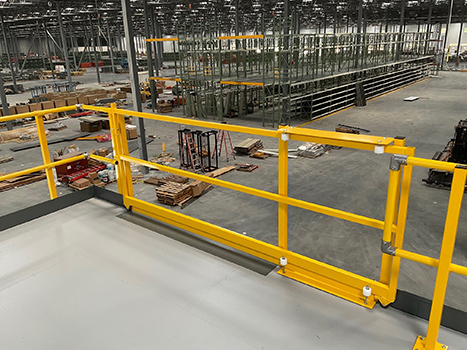 Horizontal Gate |
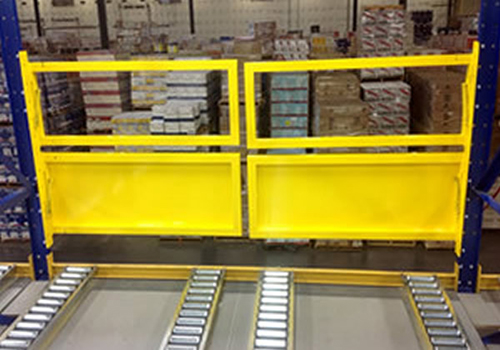 Impact Gate |
Chutes & Ladders
Beyond the drop zone, mezzanine access points typically include chutes (for materials only) and sturdy stairways or ladders for worker access. Matching safety features to each access point is crucial for optimal fall protection.
- Chutes – If you’re using conveyors on your mezzanine, chutes provide an efficient way to move corrugated materials and waste. As with other open areas on raised levels, chutes must be bordered by safety guards to prevent accidental falls, per OSHA requirements.
- Ladders – For tight spaces or as an additional exit to meet safety standards, vertical cage ladders are an excellent solution. These ladders are strong, reliable, and offer various mounting options to customize to your specifications.

Stairs
As the primary entry and exit access for mezzanines, stairs play a critical role in mezzanine safety. Besides OSHA’s fall prevention requirements, mezzanines used as active workspaces (rather than just for equipment access) must also comply with the International Building Code (IBC). The IBC specifies the number of exits based on the occupant load and the common path of egress. Generally, mezzanines with 49 or fewer occupants only need one stairway, while larger areas require two or more.
For OSHA compliance, stair treads should be slip-resistant. Additional OSHA stair specifications include:
- Step Depth: Minimum of 9.5 inches
- Tread Width: Minimum of 22 inches
- Riser Height: Maximum of 9.5 inches
- Angle: Between 30° and 50° from the horizontal
- Nosing: Straight leading edge
Handrails
Handrails must be between 30 and 38 inches in height. Requirements based on stair width are as follows:
- Stairway under 44 inches: One handrail required
- Stairway between 44 and 88 inches: Handrail on each side
- Stairway over 88 inches: Handrails on both sides and one down the middle
These standards help ensure that mezzanine stairways meet safety requirements, minimizing fall risks for employees and visitors.
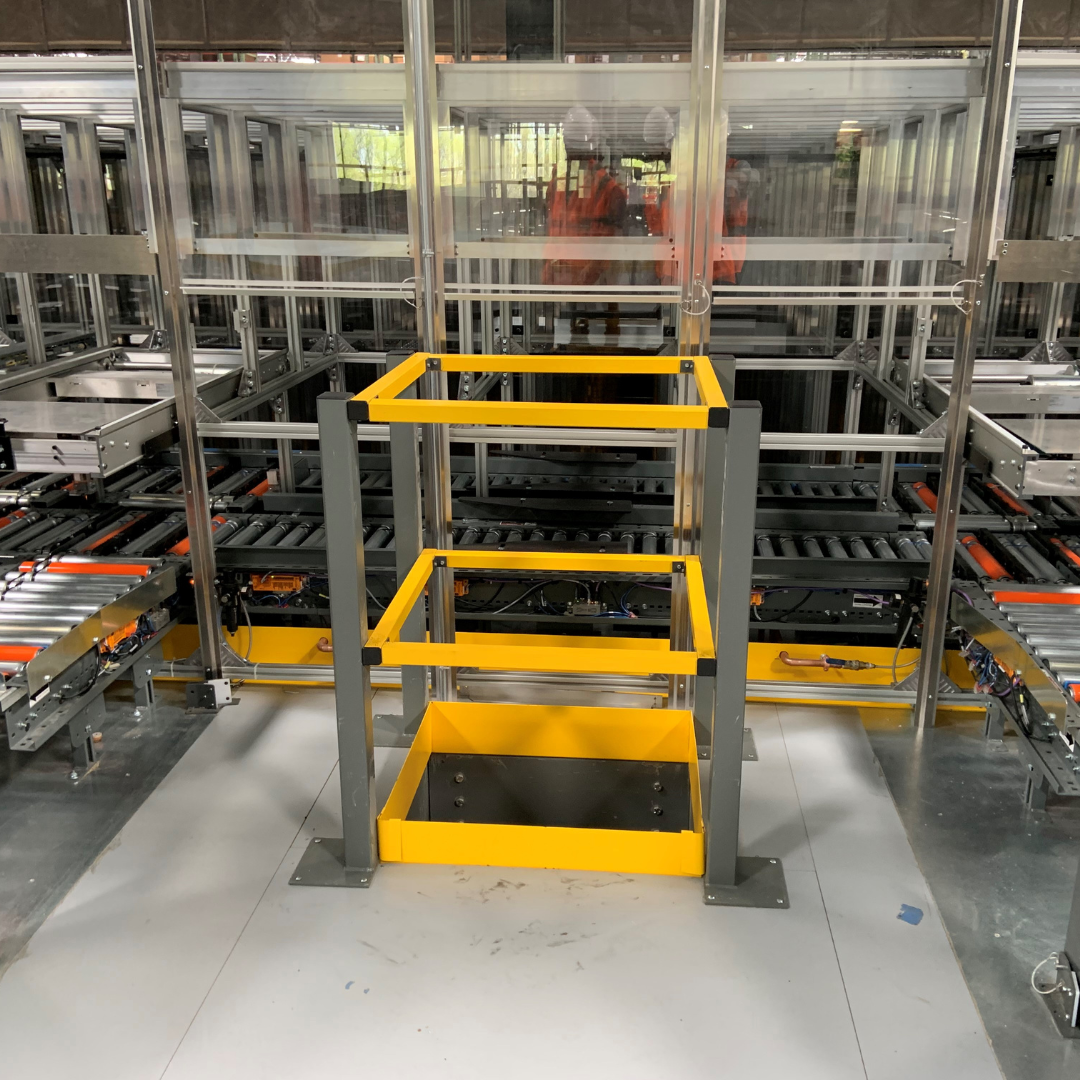 Chute Guarding |
 Vertical Ladder |
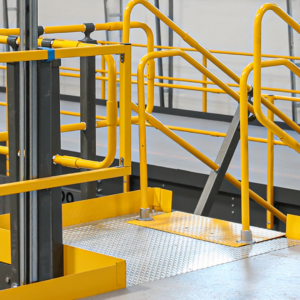 Stairs & Slip Resistant Flooring |
Mezzanine Flooring
The type of flooring chosen for a mezzanine depends largely on the activities it will support. For a comprehensive look at various flooring options, visit our blog, Mezzanine & Industrial Platform Flooring. Durability is key; select a surface that can withstand the expected level of use on the platform. Depending on your requirements, you may opt for either permeable or solid flooring materials. Remember to use slip-resistant surfaces, particularly around entry and exit points, loading zones, and drop areas for added safety
Permeable Surfaces:
|
Solid Surfaces:
|
Safety Signage
Accompanying safety equipment with clear, easily visible signage is essential. OSHA advises consistency with color-coding for safety signs, using universally recognized colors for different types of hazards. Here’s a quick guide to some recommended colors:
- Red: Indicates fire-related hazards, emergency stops, and danger.
- Yellow: Used for caution, marking physical hazards, aisles, and passageways.
For additional safety, consider color-coding both signage and equipment to provide visual cues that reinforce safety protocols across your mezzanine area. This approach aligns with OSHA’s standards for safety signage, which prioritize consistency and clarity in identifying potential risks
 Fire Safety |
 Fall Safety |
Lighting
With the added height of mezzanines, proper lighting becomes even more essential to minimize risk. Limited clearance and tight spaces often restrict light dispersion in these elevated areas, so it’s crucial to implement a lighting plan that ensures direct, sufficient lighting for workspaces, entry and exit points, and drop zones. This approach helps maintain a safe, visible environment for all mezzanine activities.
Apex: Your Go-To Partner for Mezzanine Safety
From the initial design to the installation of your industrial platform, safety remains our top priority. The Apex team offers full-service support at every stage, bringing extensive expertise in customizing mezzanines to improve workflow and maximize warehouse space. Browse our photo gallery for inspiration, and reach out to our team—we’re here to discuss your goals and ensure a safe, successful project.
For more insights into mezzanine design, check out our related blogs!
A Look At Warehouse Mezzanines From A Whole New Level
Going Up? Mezzanines – Looking At Free Standing Vs. Rack Supported
