
How ASRS Systems Help Meet New Fire Code Regulations for Tall Structures

ASRS Systems 2-for-1 – Built-In Density & Code Compliance
New fire codes aimed at safeguarding facilities from fire hazards have prompted design teams and engineers to reassess compliance strategies for tall, compact rack structures. These regulations significantly impact traditional high-density storage systems, such as pallet flow, push-back, and drive-in racks. The challenge lies in effectively mitigating and containing fires in these densely packed systems while ensuring the safety of personnel and stored inventory. For instance, regulations now mandate specific spacing between stored items, typically requiring a minimum 6-inch gap to enhance fire suppression capabilities and facilitate firefighting access.
In response to these challenges, automated solutions like 2-way and 4-way pallet shuttle systems and mini-load ASRS Systems have been able to modify how they operate to deliver greater storage density AND built-in compliance to meet the new codes. These systems can be both taller and deeper than traditional non-automated systems, enabling businesses to achieve the desired density while ensuring adherence to stringent fire safety requirements.
As the warehousing and distribution industries adapt to these new requirements, the integration of advanced automated solutions not only enhances storage efficiency but also supports compliance with evolving fire safety standards.
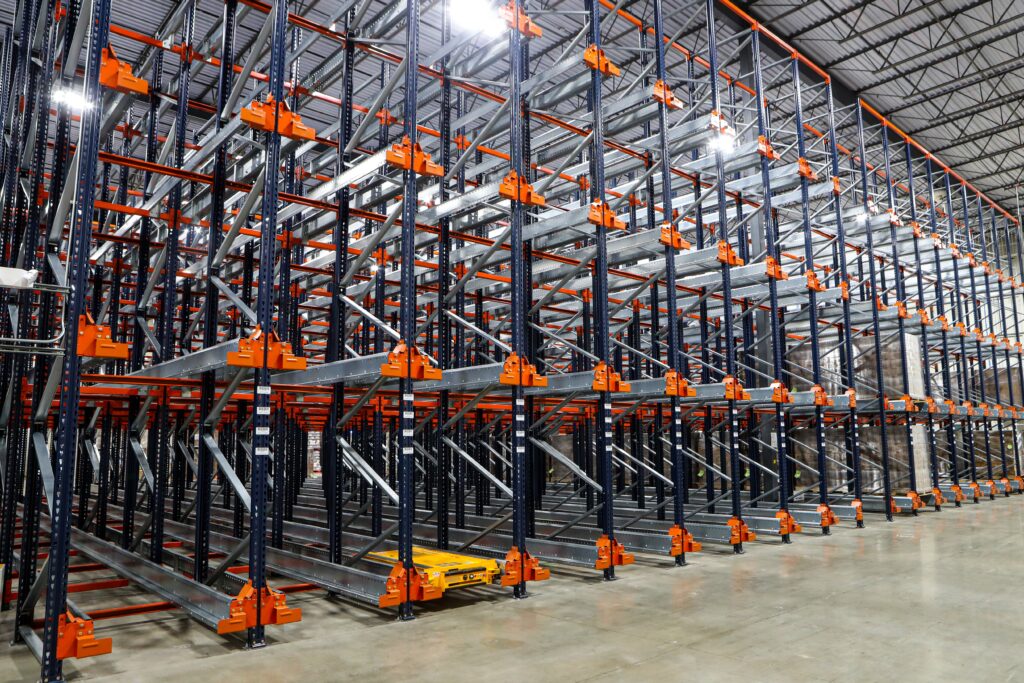 ASRS Shuttle System |
 Drive-In Pallet Rack |
Understanding the Industrial Fire Safety Regulatory Landscape
Fire safety in industrial facilities is governed by a range of regulations and standards, including the National Fire Protection Association (NFPA), leading insurance and risk protection companies such as FM Global and Zurich as well as federal, state, and local building codes. Regulations and guidelines provided by these dedicated resources direct the design, construction, and operation of facilities to mitigate fire risks and ensure the safety of workers and assets. Understanding and adhering to related codes is imperative to maintain compliance and reduce the potential of fire-related incidents.
ASRS Systems & Fire Code Compliance
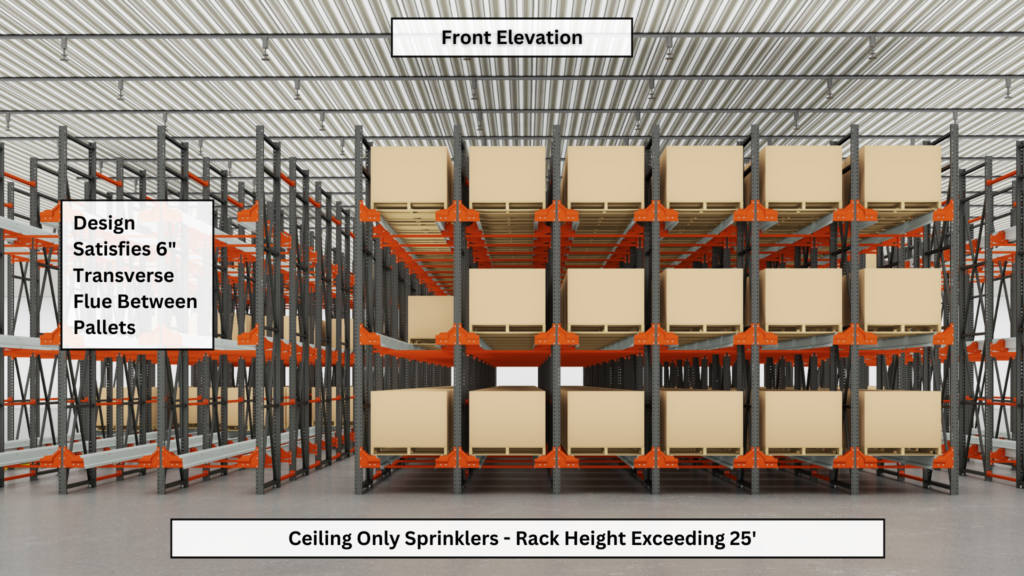
The recently updated NFPA fire codes introduced stringent guidelines for multi-row rack systems exceeding 20 feet deep. The main component of the code is the requirement for either in-rack sprinklers OR 6-inch vertical spacing between unit loads (front-to-back) maintained for the full height of the rack system to allow ceiling sprinklers to effectively distribute water throughout.
The regulation requiring 6-inch spacing between pallet loads horizontally and vertically lends itself perfectly to an ASRS design. In an ASRS system, you can program your system to ensure a 6-inch space between unit loads. This can be a significant cost savings depending on the size of the system vs. running in-rack sprinklers throughout the racking structure.
 |
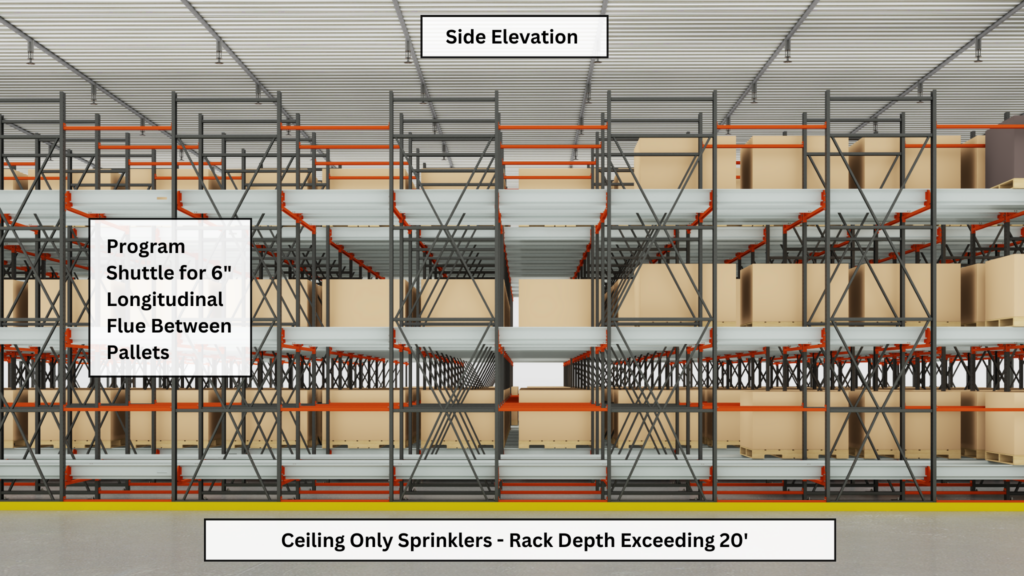 |
When implementing fire suppression measures for warehouse rack systems, it’s crucial to distinguish between various regulatory requirements. The NFPA specifies guidelines for in-rack sprinklers, particularly for racks exceeding 20 feet in depth or 25 feet in height. In contrast, ceiling-level sprinklers are mandated by local building codes and other regulatory bodies when rack configurations restrict access for ground-level fire suppression. Understanding these distinctions ensures compliance with both NFPA standards and local fire safety ordinances, effectively enhancing fire protection measures in industrial settings.
Additional Fire Suppression and Protection Requirements
Ceiling-level sprinklers will be required for multi-row storage racking systems when the racks exceed specific dimensions or configurations specified by fire safety codes. Specifically:
- Height Thresholds: Restrictions vary depending on the specific fire code being followed –be sure to check with oversight bodies in your area. As noted above, NFPA guidelines require sprinklers when rack heights exceed 25 feet.
- Storage Depth: In some cases, ceiling-level sprinklers may be mandated when the storage depth of the racks exceeds a specified limit, often around 20 feet.
- Configuration: Multi-row systems that do not allow sufficient access for fire suppression from ground-level sprinklers require ceiling-level sprinklers.
Fire Baffles
Fire baffles are another alternative to in-rack sprinklers for non-ASRS installations deeper than 20 feet. Installing fire baffles behind every 20 feet of rack contains the spread of flames, heat, and smoke within the storage area. These steel panels create barriers or compartments that control the movement of fire and smoke, allowing for safer evacuation routes and facilitating effective firefighting operations.
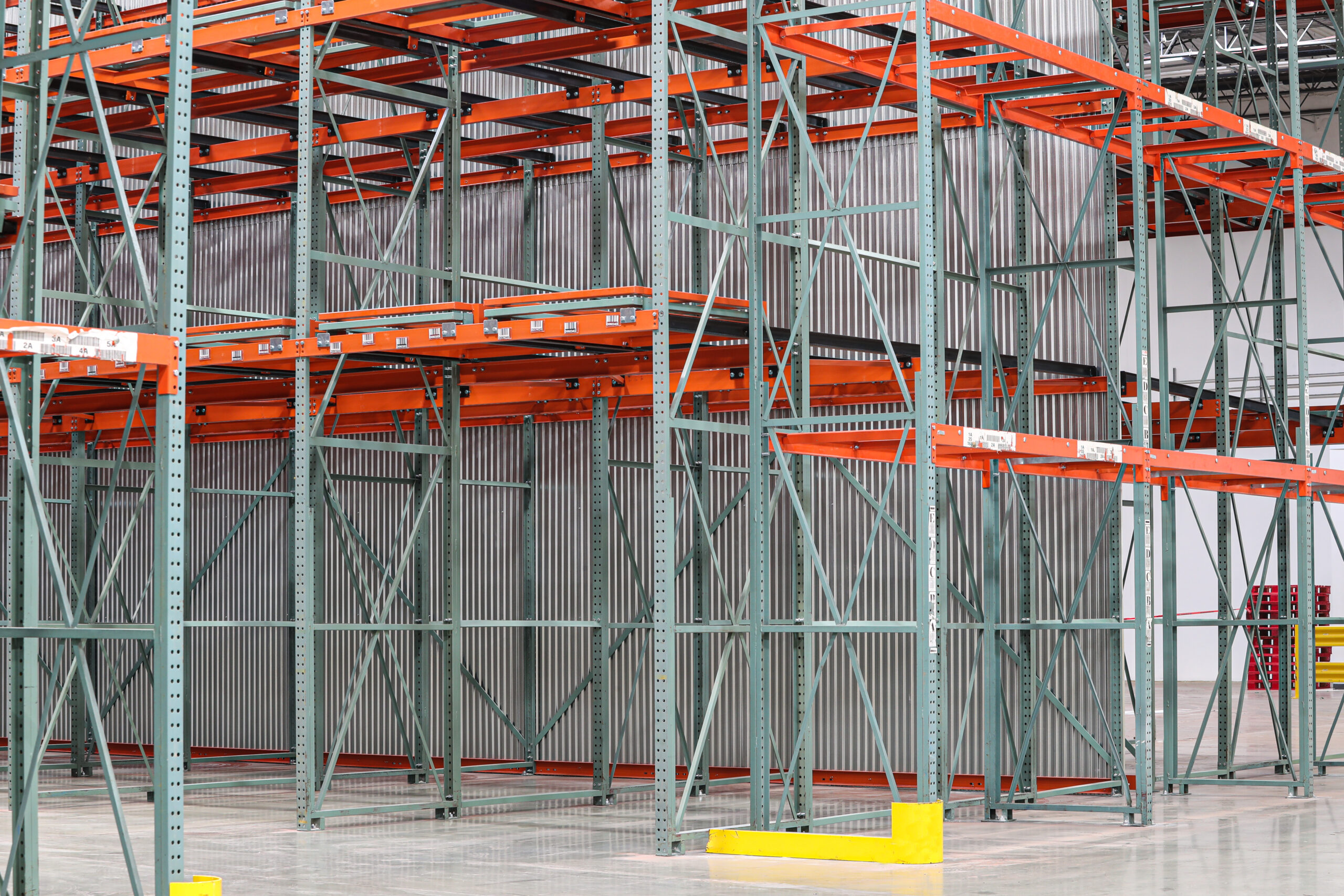
Drive-In Rack with Fire Baffle
Implementing these safety codes may pose a challenge for many warehouses, as current racking designs may not be compliant. The Apex PROs can help businesses assess their ASRS installations to ensure adherence to the latest fire codes, retrofitting existing systems to meet regulatory standards and mitigate fire risks effectively.
Full-Circle Fire Safety and ASRS Racking
Your ASRS installation plays a crucial role in ensuring smooth operations day in and day out. To maximize your investment, follow these guidelines to prevent damage and minimize downtime to your rack system and components.
- Regular Inspections and Maintenance: Implement a regular inspection and maintenance program to identify damaged components, overheating equipment, or electrical faults before they escalate into safety concerns. Regular servicing of ASRS components, including robots, shuttles, batteries, and charging stations, helps prevent costly repairs.
- Training and Education: Provide comprehensive training to personnel responsible for monitoring and servicing the ASRS installation. This training should include proper handling of the rechargeable batteries, emergency shutdown procedures, and evacuation protocols. Additionally, educate employees on the importance of fire prevention and their roles in maintaining a safe working environment.
- Integration of Fire Protection Systems: Integrate fire detection systems to help swiftly identify risks and activate suppression measures.
- Compliance with Regulatory Standards: Ensure that the ASRS design and operation align with applicable codes and standards, addressing specific requirements for fire protection, emergency egress, and hazard mitigation. Work with the Apex team to bring your existing system up to code!
- Emergency Response Planning: Develop comprehensive emergency response plans, including clear communication channels, evacuation routes, assembly points, and procedures for coordinating with emergency services. Regularly conduct drills and simulations to test the effectiveness of emergency response protocols and identify areas for improvement. Establish contact with local fire departments to ensure adequate training on tactics specific to ASRS operation.
By implementing these proactive measures and maintaining a vigilant approach to fire safety, you can safeguard your employees and your operation.
Streamline ASRS Implementation with Apex’s Full-Service Support!
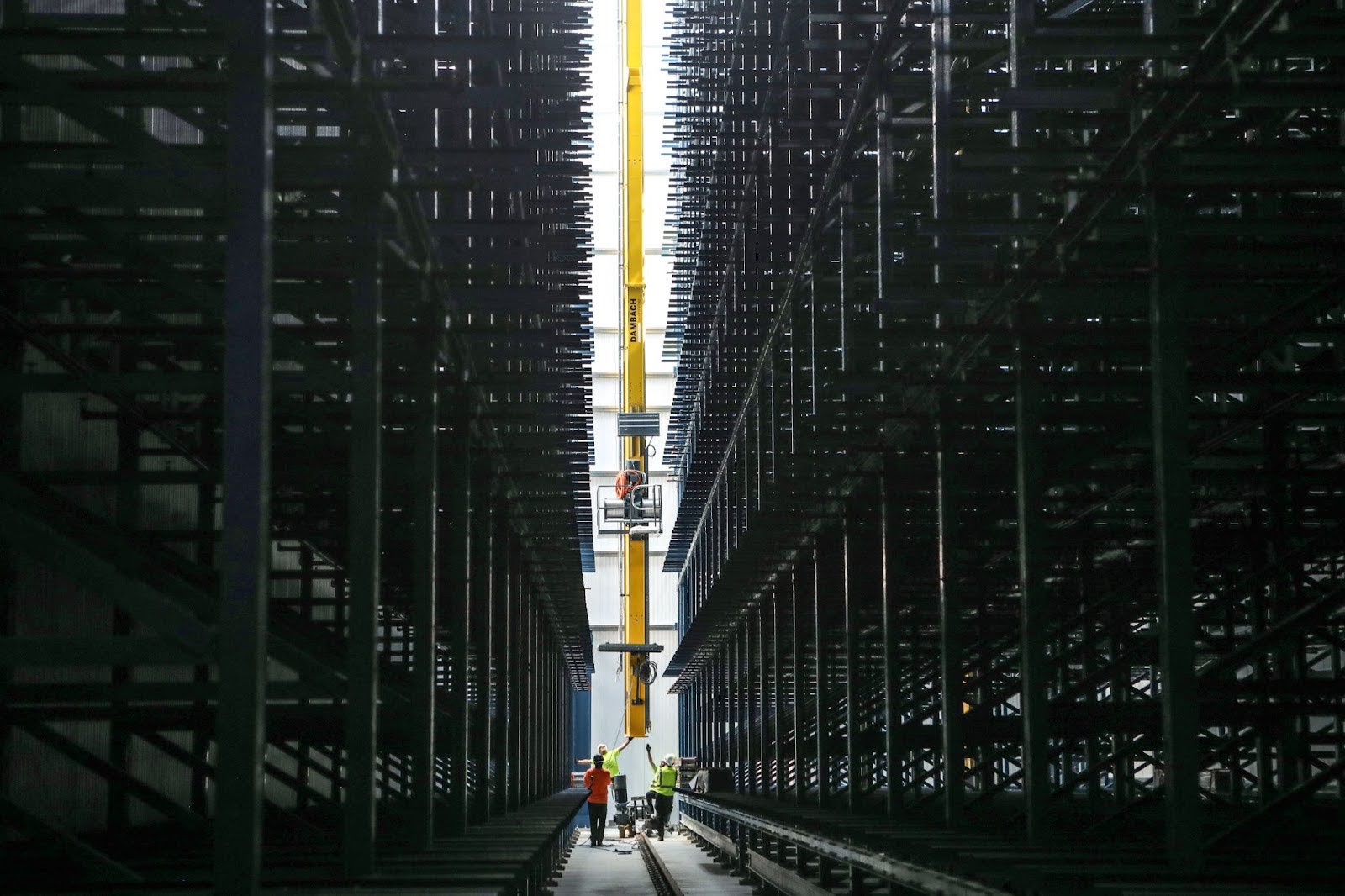
Due to the unique characteristics of ASRS installations, fire safety is of heightened significance. Whether your ASRS configuration is used for palletized materials or smaller item storage called mini-loads, the system design relies on automated material handling equipment operating within a confined space containing a high volume of items with minimal flue spaces between storage rows. Details such as aisle widths around the racking, sprinkler systems above and within the racking, smoke detection, emergency egress routes, and confinement of potential fire incidents are all vital to address.
Apex offers expert design guidance and full-service support for your ASRS needs. We begin with a data-driven approach to identify the most cost-effective storage solution tailored to your requirements. From there, we design, engineer, and install your system. Our certified rack inspection PROs are always available to inspect and repair your system, too! Let Apex streamline the process to ensure optimal performance of your racking systems.
With Apex, one call does it all. Contact Apex Companies today and experience the difference firsthand.
