
Accumulation Conveyors 101 – Meet the Conductor of Synchronized Material Flow

How Accumulation Conveyors Work to Control Inventory Movement
Picture an accumulation conveyor system, the unsung hero of a streamlined material flow system, as it seamlessly works its magic to slow, halt, or accumulate inventory along the conveyor line. This functionality is crucial for synchronizing the pace of product movement with downstream production processes. These conveyors can be programmed to adjust the speed or halt movement automatically. Inventory can be temporarily stored by diverting items to adjacent lines, preventing congestion and pileups. Once downstream processes restart, the conveyor intelligently releases the stored products in a controlled manner to maintain a consistent and uninterrupted flow.
Accumulation conveyors are widely used in various applications, such as manual workstations, robotic palletizers, sorters, and merges.
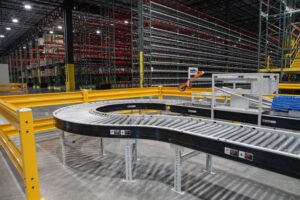
Accumulating Conveyor
Accumulating Conveyor Applications
- Batching and order processing
- Picking or packing stations
- Palletizing or wrapping
- Merging or diverting conveyor lines
- Drying or cooling product
- Sealing or labeling boxes or cartons
Accumulation conveyors play a critical role in maintaining a high throughput rate, minimizing downtime, and reducing the risk of inventory damage.
Before diving into the productivity perks of accumulation conveyor systems, let’s look at their functionality more closely.
Accumulation Conveyors at Work
In a typical accumulation conveyor system, individual chains, belts, or rollers power specific conveyor sections or “zones.” When a downstream box or package comes to a halt or slows down, a sensor such as a photoelectric sensor detects this change. This signal prompts the motorized zone controller of the respective conveyor segment to either halt or adjust the speed. This motor can be an external drive and/or embedded within the rollers. Motorized rollers act as a group within the zone to start, stop, or slow. Once the zone controller receives confirmation that the downstream holdup is resolved, the drive reactivates the rollers, and normal conveying operations resume, thus averting any potential pileup along the conveyor line.
The sensor roller is another option compared to the photoelectric sensor. It sits slightly elevated above the conveyor line surface. As the load passes over the sensor roller, it depresses and triggers a limit switch, controlling the drive by toggling it on and off based on the pressure applied to or released from the roller sensor. Your Apex automation expert can help you create the most effective accumulation conveyor system for your application and budget.
Accumulation Zones

Conveyor Spur
The length of accumulation zones depends on the dimensions of the boxes, totes, pallets, or items. Zone length can vary but should be greater than the longest item. For example, zones 24 inches long should have products smaller than 24 inches long. However, multiple zones can be set up for longer packages so that if the system detects a 36 in. box, two accumulation zones will stop conveying.
Buffers and Spurs
If you require a significant number of accumulated products, your system can include a temporary storage spur or accumulation table to shunt items away from the main conveyor line. After the downstream activity is cleared or completed, the system will filter items back onto the main conveyor. Note you can have multiple spurs/accumulation areas in your conveyor line.
Types of Accumulation
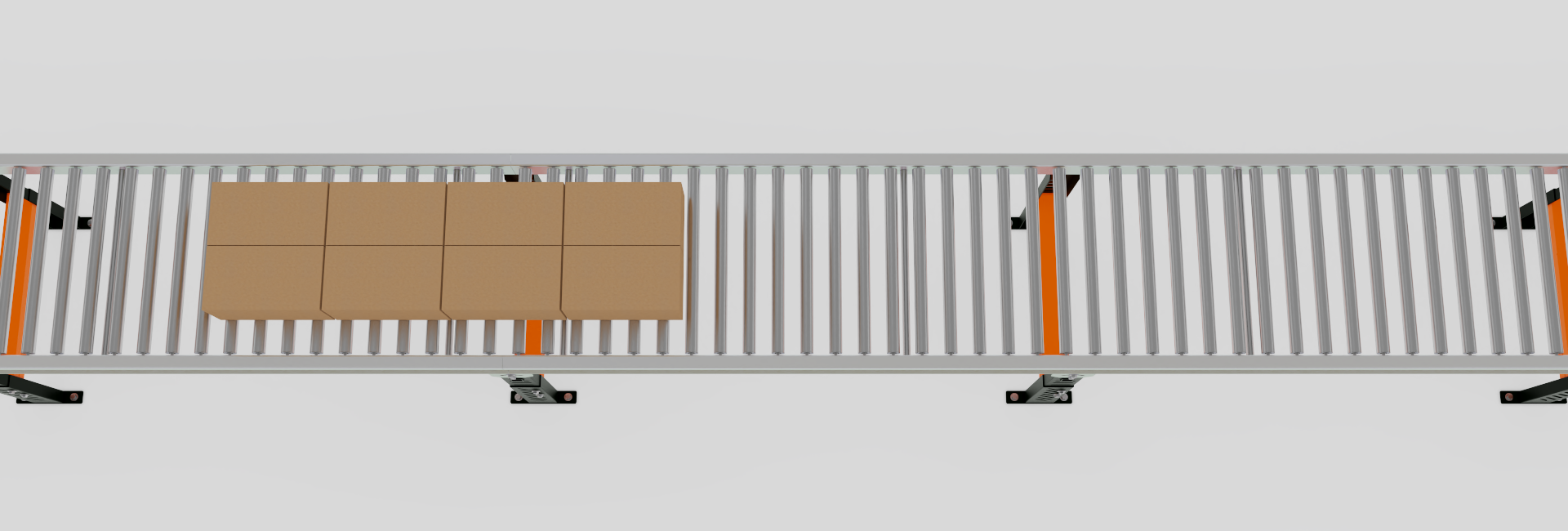
There are two types of accumulation conveyor systems: minimum pressure, also called adjustable pressure, and zero pressure.
Minimum Pressure
These low-pressure, adjustable systems are suitable for products that can make contact as they accumulate, like boxes or cartons of non-fragile products of consistent size and weight. Once the zone controller receives a “slow down” signal, the drive pressure on the rollers is reduced to allow the cartons to accumulate. Note that cardboard boxes must be sturdy enough not to crush when accumulated. Also, totes with an outer lip or handle are not recommended.
Zero-Pressure
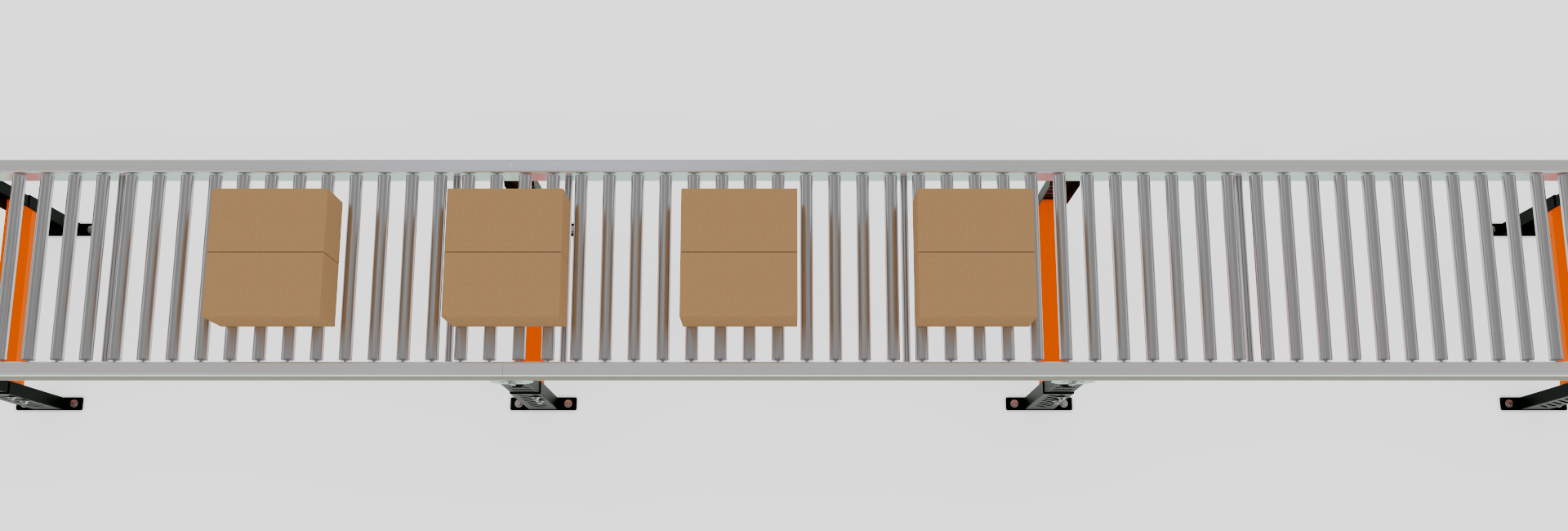
When your items are too fragile or have a range of sizes and weights, a zero-pressure system is best for your needs. In these systems, the zones must be large enough to accommodate the length of the largest product plus a buffer space between items. Photoelectric sensors detect when a box has stopped and send a signal to the next upstream segment to prevent the next box from making contact.
Release Modes
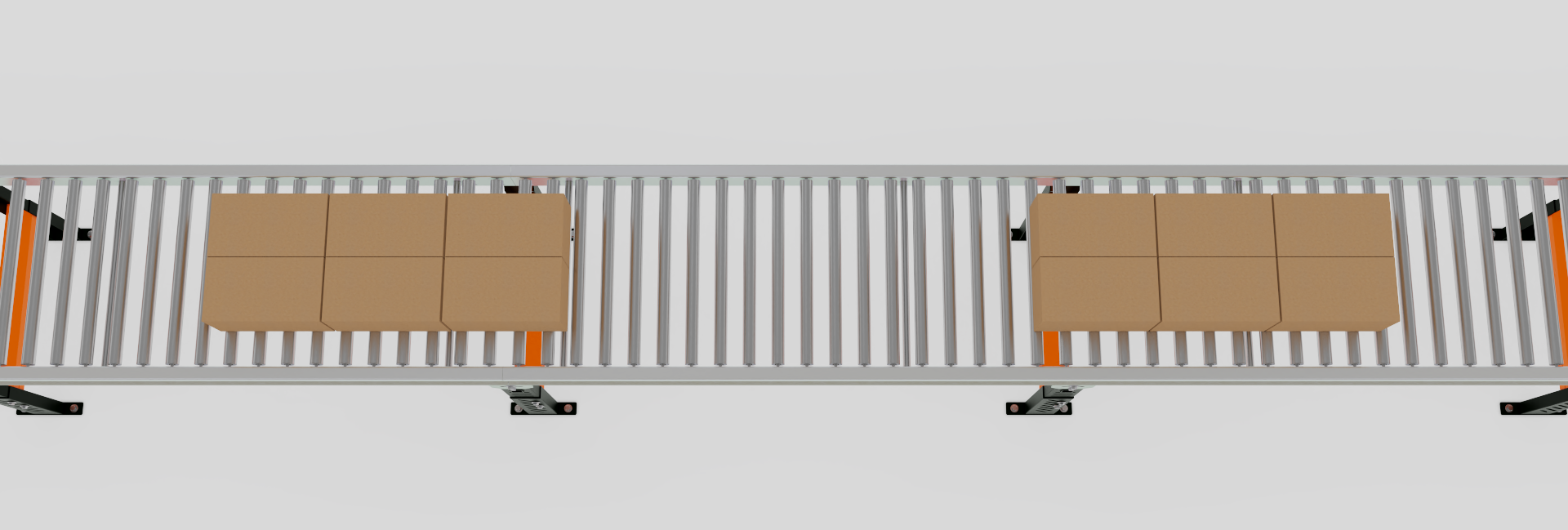
As downstream activity clears, the conveyor will begin to release items. Singulation flow is a one-at-a-time release, while all-at-once release is slug flow.
Your release choice depends on where the product is headed. If products are destined for palletization, you may want to use slug flow. Singulation flow works best if items are headed to different destinations via a sorting system, such as a shoe or tray system.
Customizing Accumulation Conveyors to Optimize Throughput

Space-Saving Conveyor In-Rack
Clearly, the most significant parameter in specifying an accumulation conveyor is the nature of the products you’re placing in the system –the weight, physical dimensions, and level of fragility. Next is the reason for accumulation and the nature of the downstream holdup. Is it to accommodate palletizing on a medium-speed line or sorting and re-routing on a high-speed line?
Ultimately, your accumulation conveyor system should optimize your material flow, enhance production efficiency, reduce downtime, and contribute to a more flexible and adaptable manufacturing or distribution process. Let us help make that happen!
Contact the Apex Automation team to configure your accumulation conveyor systems to satisfy your operational goals. Apex is your single source for all warehouse automation and material handling products and services.
