
Narrow Aisle Forklift Navigation: Wire Guidance vs. Rail Guidance

How to Choose the Right Guidance System for Your Narrow Aisle Forklift
Today’s warehouse managers require efficient, space-maximizing solutions to meet today’s increased demand and scarce labor. One effective solution with ubiquitous appeal is narrow aisle storage racking. Narrow and very narrow aisle designs can cut traditional aisle space by 50% – 60+% and open up floor space for more storage or other warehouse activities. However, those tight spaces require specialized vehicles to maneuver safely –enter the narrow aisle forklift. These vehicles are often classified as VNA or order picker forklifts and include turret and swing-reach trucks.
Precision within spaces as limited as 4’ to 6’ is paramount and requires a navigation method paired with the narrow aisle forklift. Aside from precision guidance, forklift navigation systems automate steering, freeing operators to focus on picking activity and improving overall productivity. Additionally, the guidance systems reduce product and rack damage and minimize the risk of operator injuries, enhancing warehouse safety. A range of navigation options are available to pair with narrow aisle forklifts. Two popular choices are wire and rail installations –Let’s look at each application’s pros and cons.
Understanding Wire Guidance for Narrow Aisle Trucks
Wire guidance integrated into the floor between rack rows ensures smooth and safe operation. Wires are usually coated with epoxy to protect against damage. Specialized VNA forklifts, including order pickers and turret trucks, come equipped with sensors that receive electromagnetic signals from the charged wire guidance system. This enables the vehicles to move swiftly and precisely along the wire and within the narrow spaces. The wire guidance typically extends 15 feet beyond the end of the rack for turret trucks and 10 feet for order pickers, ensuring sufficient maneuverability for these vehicles.
Pros & Cons of Wire Guidance:
Pros
 Precision & Accuracy: Wire guidance delivers high precision, ensuring accurate navigation for optimized warehouse efficiency.
- Control: Certain wire guidance configurations are customizable, allowing travel speed restrictions and end-of-aisle slowdown.
- Durability: The wire is protected with an epoxy layer that allows for heavy-duty use with minimal upkeep.
- Versatility: Operators can deactivate the guidance system, enabling the forklift to travel outside the predefined wire path. This feature allows operators to navigate efficiently and adapt to diverse warehouse scenarios, enhancing overall operational versatility.
- Application: Ideal for long aisles and limited forklift fleet.
Considerations
- Installation Costs: Wire guidance systems require a higher initial cost vs. rail systems.
- Flexibility and Scalability: Wire guidance systems are limited in adaptability due to the required embedded installation. An autonomous vehicle might be the preferred choice if forklift route flexibility is anticipated.
- Maintenance: Wire guidance systems require periodic inspections and upkeep to ensure optimal performance. This may involve checking and repairing the guidance wires, connectors, and sensors. Regular cleaning of the wire path is also essential to prevent interference with signal transmission. Additionally, software updates and system calibration may be necessary to address any changes in the warehouse layout or environmental conditions.
Understanding Narrow Aisle Forklift Rail Guidance
Rail guidance systems utilize fixed rails on both sides of the aisle to guide and control the narrow aisle forklift movement along the predetermined route. Rollers and sensors on the forklift maintain the vehicle’s position in the center of the aisle.
Pros & Cons of Rail Guidance Systems:
Pros
 Stability and Reliability: Rail guidance systems offer stability and reliability in navigation, contributing to consistent and secure forklift movements.
- Durability: The durability of rail-guided forklift guidance systems can vary based on several factors, including the quality of the system components, the intensity of usage, and maintenance frequency. Generally, these systems withstand demanding activity and provide long-term reliability.
- Rack Protection: Rail guides are mounted on the ground between the forklift path and the rack system, protecting the racking baseplates and lower columns from forklift damage.
Cons
- Installation: Guiding rails are affixed to the floor in front of the rack system on both sides of the aisle.
- Flexibility and Adaptability: The rails are mounted to the warehouse floor, limiting the ease of changing the route.
- Maintenance Requirements: Regular inspections include wear, damage, and bolted connections. Vehicles should be inspected and thoroughly cleaned to remove debris and dust. Guide rollers require lubrication, and periodic sensor calibration guarantees accurate navigation.
RFID Technology & Guidance Systems
 While the narrow-aisle configuration and wire- or rail-guided lift trucks create efficient storage density, they can place a significant demand on drivers. With numerous storage locations, drivers face challenges finding the best route between points and accurately remembering item locations, often resulting in lower productivity and misplaced inventory.
Semi-automated man-up turret trucks with precision navigation programming and RFID tags can effectively address these challenges. The technology provides drivers the most efficient routes between points in the high bay racking. It automatically drives the vehicle to the pick location, maximizing productivity –upwards of 17-20% and reducing errors.
Warehouse Layout and Design Considerations
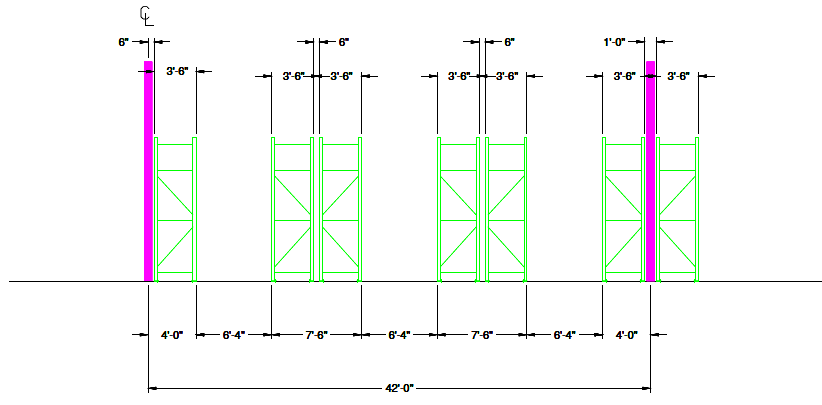
Design for a Very Narrow Aisle Turret Truck
 The warehouse layout and design are pivotal when selecting between wire and rail guidance for very narrow aisle forklifts. Considerations such as aisle width, storage configuration, and the overall spatial layout are crucial in determining which guidance system aligns best. Additionally, anticipating future growth and changes in warehouse dynamics is vital in choosing the most cost-effective solution. If scalability and adaptability are critical, consider wire guidance, which allows the operator to override.
The Apex team can help you make the best choice for your application needs. We’ll thoroughly review and provide independent solutions to your warehousing and distribution challenges. Our professional installation teams will ensure precision wire or rail guidance placement for optimal productivity.
Contact Apex for full-service support. We Got This!
