
The Perfect Fit – Pallet Rack Height Considerations & Precautions

Tips to Maximize Your Vertical Space with Custom-Fit Pallet Rack

If you build it, pallet positions will come. Ok, that might be a stretch, but isn’t that the goal –to stretch your operating capital? Paying for underutilized cube space doesn’t make much sense, particularly when you can install pallet racking to maximize your available space. Additionally, pallet racking enhances warehouse safety and function by creating more orderly, secure pallet storage vs. bulk stacking. Optimizing warehouse space, improving efficiency for labor and equipment, and making your operation safer, now that’s a dream come true.
While you will want to get the most capacity from your rack system, there are several limitations to consider when determining exactly how high to go.
Pallet Rack Height Constraints
- Ceiling height
- Suspended obstructions, e.g. lighting, HVAC
- Building codes
- Max lift equipment reach
- Inventory specs
Ceiling Height & Suspended Obstructions
While ceiling height is an obvious limitation on how high you can build your pallet racking, it may be more complex than it sounds. When measuring ceiling height, you must also include any obstructions, including lighting, HVAC & fire suppression equipment, and suspended walkways. Additionally, it’s imperative to note any roof-sloping or dropped ceilings in any parts of your build area.

Deciphering the Codes – Building, Fire, OSHA & NFPA
Typically, the taller the pallet racking system, the more sophisticated your fire suppression requirements. In general, racking cannot obstruct the function of sprinklers or suppression systems. However, the National Fire Protection Administration (NFPA) specifies that there must be at least an 18” clearance for sprinkler heads. Additionally, the NFPA requires in-rack suppression systems for racking 12’ high or taller and depending on rack density, you may also need smoke and heat barriers. The NFPA specifications are in addition to any local fire safety codes.
 Working with an experienced pallet rack design team and engineers is the best way to ensure your system provides maximum storage efficiency while complying with all regulations.
Lift Equipment – Maximum Reach
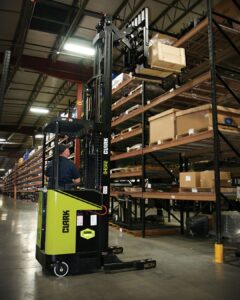
Your rack and lift equipment must be compatible. Like forklift load capacity and turning radius are critical specs when designing your rack system, so is the maximum safe reach height. Remember, mast capacity diminishes with height, and thus you may need to invest in new equipment to service your taller rack system. The good news is that there are so many lift equipment models to choose from today that you can surely find equipment to meet your needs. However, this is an associated cost that will factor into your pallet rack decision and may affect the maximum height that makes sense for your business.
Inventory Specs Plus
The height of your palletized inventory is critical in the design of your pallet rack system. But that is just one number in the calculation. Add together inventory height, pallet height, beam height, and lift-off height (clearance for the forklift to lift load in & out of the storage bay safely) to establish the elevation of your storage levels. Ensure you’ve considered whether you will double up pallet loads within any of the storage levels.
Your system designer will provide a pallet-racking solution that best uses your space, given the parameters noted above. Working with an experienced team will also enable you to consider efficient inventory flow and how you can better utilize any newly cleared warehouse space.
Seamless Integration
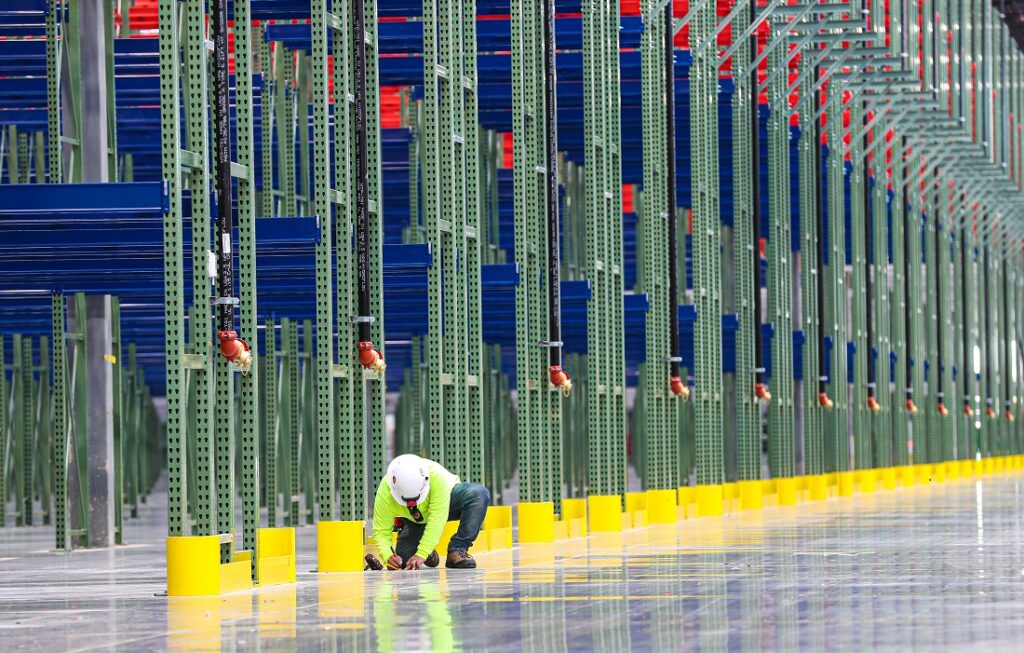
Contacting the Apex team gives you access to all the support you need for your project. Our experienced pallet-racking system designers and engineers work seamlessly with our project managers, installers, and equipment specialists to deliver your completed project on time and on budget. Apex also has a team of rack inspection and repair specialists that can promptly address accidental forklift strikes once your system is in use.
Over 500 years of combined experience are at your disposal when you call the Apex team. Remember, just one call does it all with Apex.
