
Drive-In Pallet Racking North Carolina: High-Density Storage Systems
For North Carolina operations where floor space is the constraint and SKU variety is low, drive-in pallet racking delivers more pallet positions per square foot than most conventional storage systems. Here's what to know to determine whether it's the right fit for your facility.
For North Carolina operations weighing drive-in against other high-density options, Apex engineers can review your inventory profile, facility conditions, and equipment constraints to confirm fit before design begins. Contact Us to schedule a fit review.
Request a Fit Review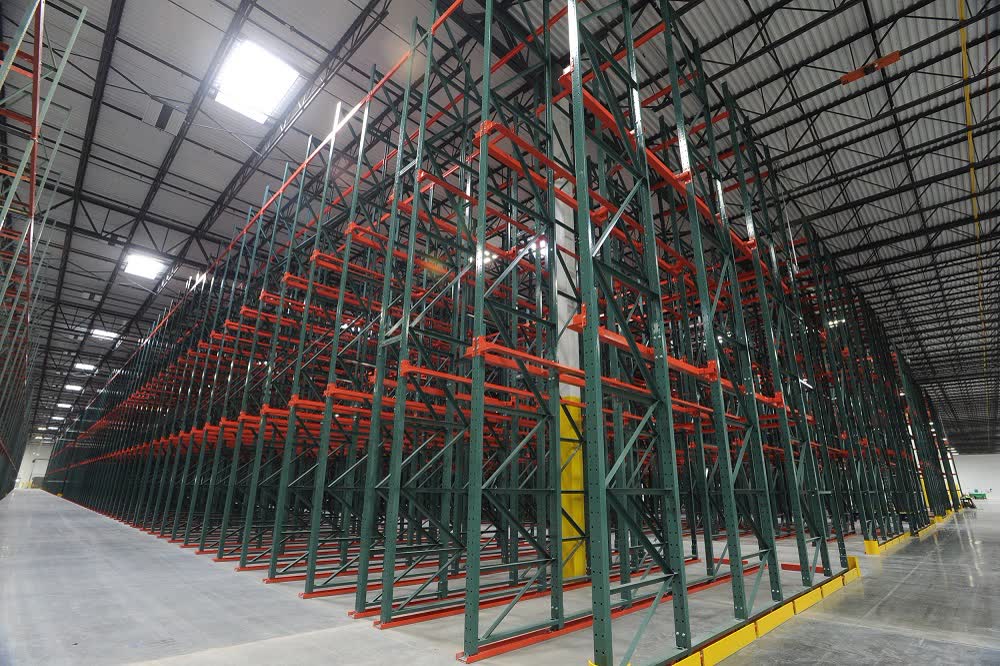
What Is Drive-In Pallet Racking?
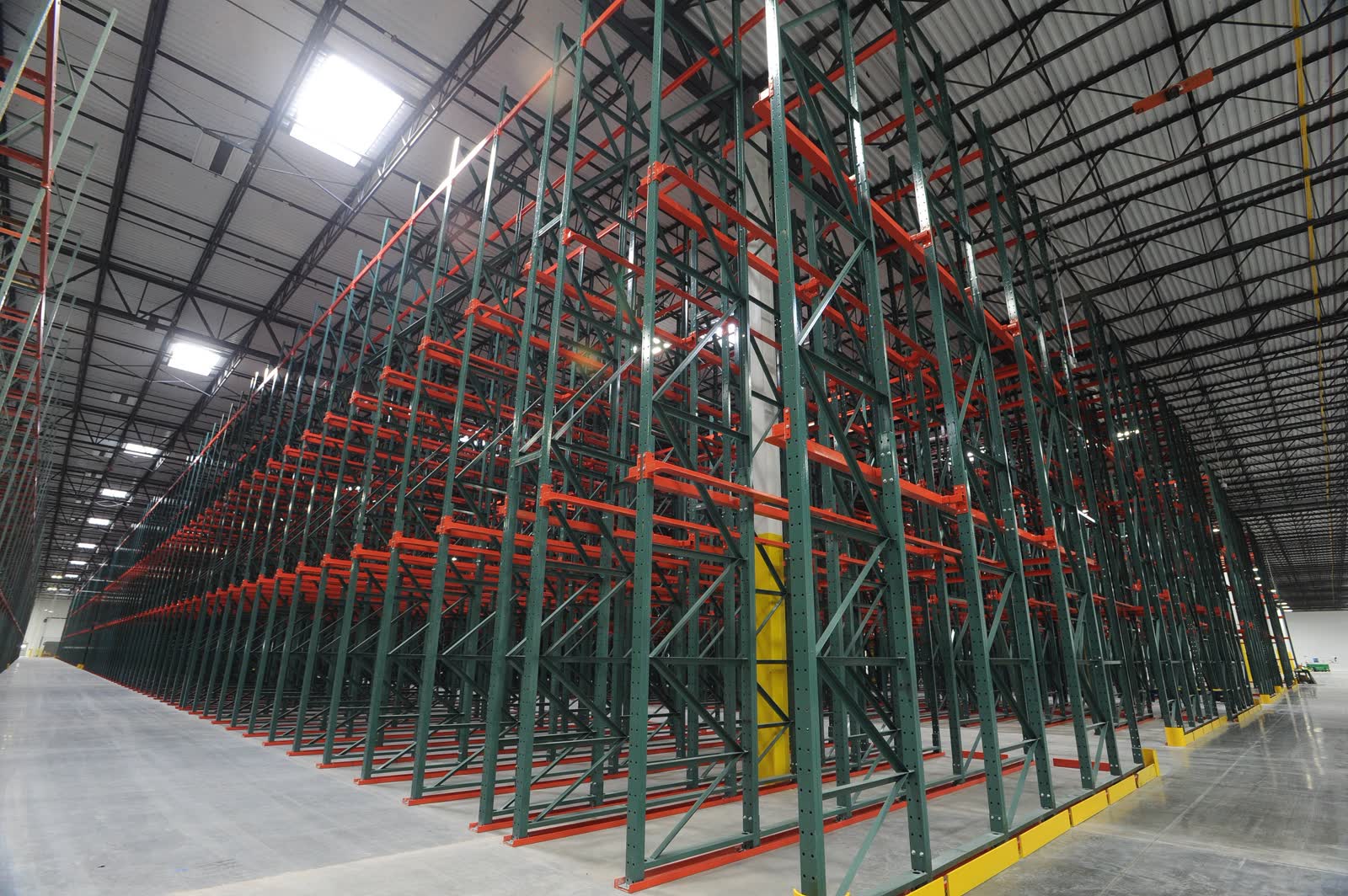
Drive-in pallet racking is a deep-lane storage system designed for operations with high pallet volumes and a limited SKU mix, where pallets can be stored in dedicated lanes. Forklifts drive directly into the rack structure to place and retrieve pallets, allowing the system to store pallets multiple positions deep while reducing the number of access aisles required. Compared with selective pallet racking, drive-in rack increases storage density but reduces individual pallet access, making it a strong fit for bulk storage, reserve inventory, seasonal products, and staging applications where full pallet selectivity is not the priority.
How Drive-In Rack Systems Work
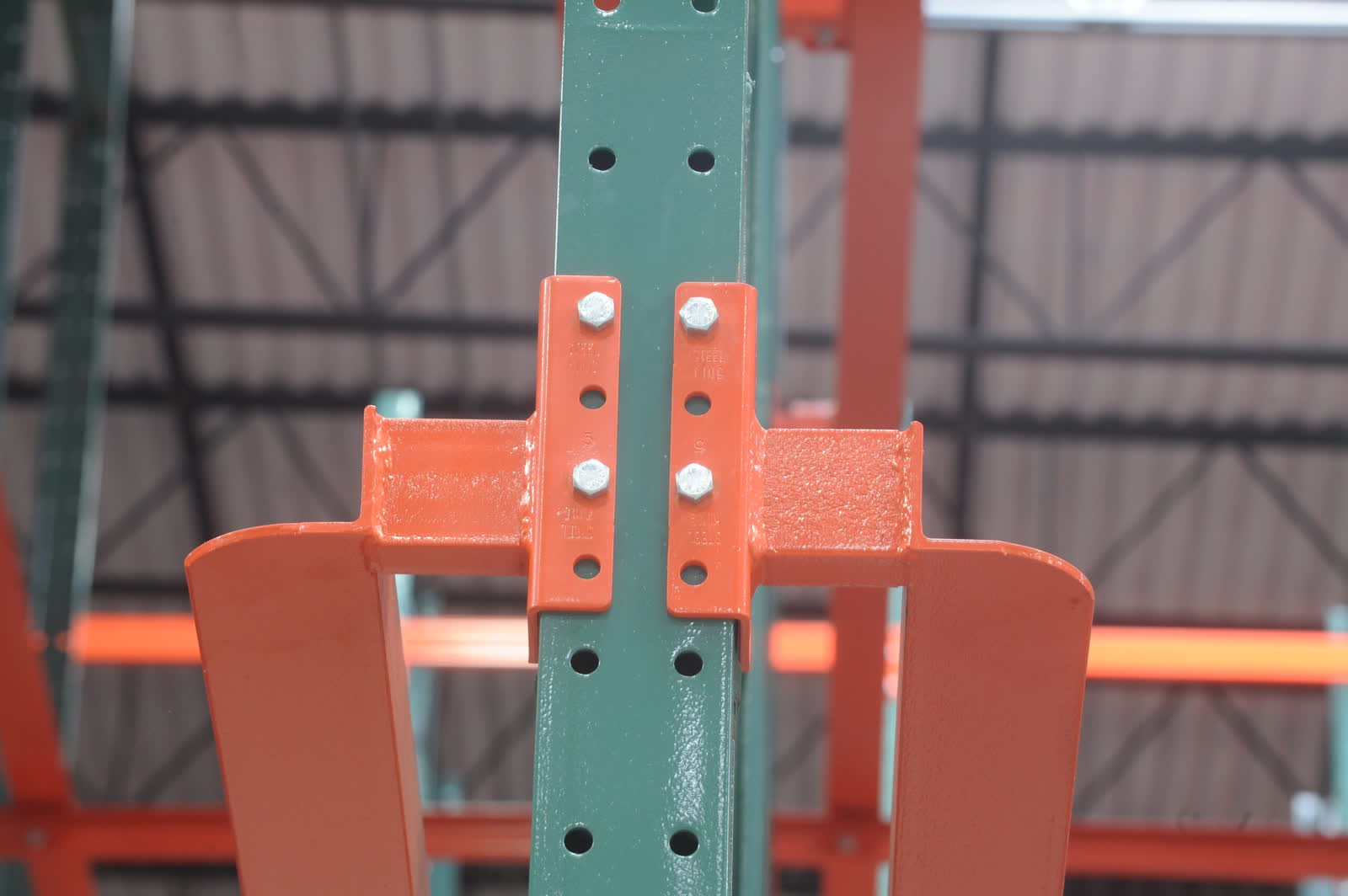
Drive-in rack uses continuous rails that run the full depth of each storage lane. Forklift operators drive into the rack structure, place pallets onto the rails, and back out of the lane after loading or retrieval. Because pallets are stored multiple positions deep and accessed from the same aisle face, drive-in rack operates on a last-in, first-out (LIFO) flow.
Each full drive-in lane should be dedicated to the same SKU, product lot, or rotation group from top to bottom and front to back. This lane-based structure helps reduce the number of access aisles required, allowing facilities to store more pallets within the available floor space.
Drive-In Racking Advantages (With Operational Constraints)
High-Density Floor Space Recovery
By eliminating the multiple pick aisles that selective rack requires, drive-in systems can reduce aisle space by approximately 75% compared to selective configurations. That recovered space converts directly into storage capacity and better use of vertical space.
Cost-Effective High-Density Storage
At approximately $200 per pallet position, drive-in racking is a cost-effective high-density storage solution for operations with the right inventory profile. Its density rating of 6/10 places it well above selective rack while remaining below pallet flow racking or shuttle systems in overall storage density.
What Drive-In Racking Trades for Density
Higher density comes with clear tradeoffs.
Selectivity Limits
Drive-in racking scores 2/10 on selectivity, so individual pallet access is limited by design. You retrieve the last pallet loaded before reaching pallets deeper in the lane.
Productivity Profile
Productivity also rates 2/10, which reflects the single-aisle picking process that comes with LIFO flow.
For operations where LIFO works and inventory groups into dedicated lanes, these tradeoffs are easy to manage. Operations that need fast access across many active product lines are usually a better fit for selective or push-back rack.
Where Drive-In Racking Fits Best
Drive-in racking is best suited for operations that need dense, lane-based pallet storage for high-volume inventory groups. It helps facilities store more pallets within the available footprint while keeping storage organized by SKU, lot, or rotation group:
The system works best with consistent pallet sizes and uniform load weights.
Consider Another System When
Some inventory and rotation patterns point toward a different storage system. If your inventory profile doesn't match these patterns, selective pallet racking or pallet flow rack preserves individual pallet access while still delivering meaningful warehouse storage density. For FIFO rotation, pallet flow rack is the right direction. For high-SKU variety with frequent picking, selective pallet racking provides the access you need.
Operational Readiness Matters Too
Beyond inventory and equipment fit, operational readiness matters. Operations without stable inventory profiles, documented pallet quality standards, or a trained counterbalance operator pool often benefit from addressing those foundations first. The density advantage depends on those operational disciplines being in place. When inventory velocity is still shifting or pallet quality varies lane to lane, a double-deep rack system or push-back configuration may be the better fit.
North Carolina Drive-In Racking Installation and Service Areas
Apex supports North Carolina drive-in racking projects with local sales and project coordination from the Charlotte team, backed by installation coverage across the state. The team supports warehouses, distribution centers, manufacturing facilities, and storage operations in Raleigh, Greensboro, Durham, Winston-Salem, Asheville, Wilmington, and surrounding markets.
North Carolina's position as a growing Southeast logistics hub, anchored by the I-85 and I-40 corridors through the Piedmont, puts pressure on operations to store more without expanding their footprint. Apex's Carolinas presence, including a quick-ship warehouse in Hickory, means direct project coordination on the ground, backed by national resources for design, permitting, and system setup. As a Licensed General Contractor in the Southeast, Apex also streamlines permit coordination on rack and storage builds across the state.
Drive-In Pallet Racking System Components
Before scoping a project, understand what goes into a drive-in build. Each component carries specific operational implications for your North Carolina pallet racking project.
Upright Frames and Continuous Rail Structure
The backbone of any drive-in rack system is the upright frame set and the continuous horizontal rails pallets rest on. Rails run the full depth of each lane, replacing individual beam pairs used in selective racking.
Counterbalance Forklift Compatibility
Counterbalance forklifts are ideal for drive-in rack, since the truck enters the rack structure and the mast clearance and turning profile have to match the lane geometry. Reach trucks can work in some applications when the system is engineered around their dimensions.
Column Protectors and Rack Safety Accessories
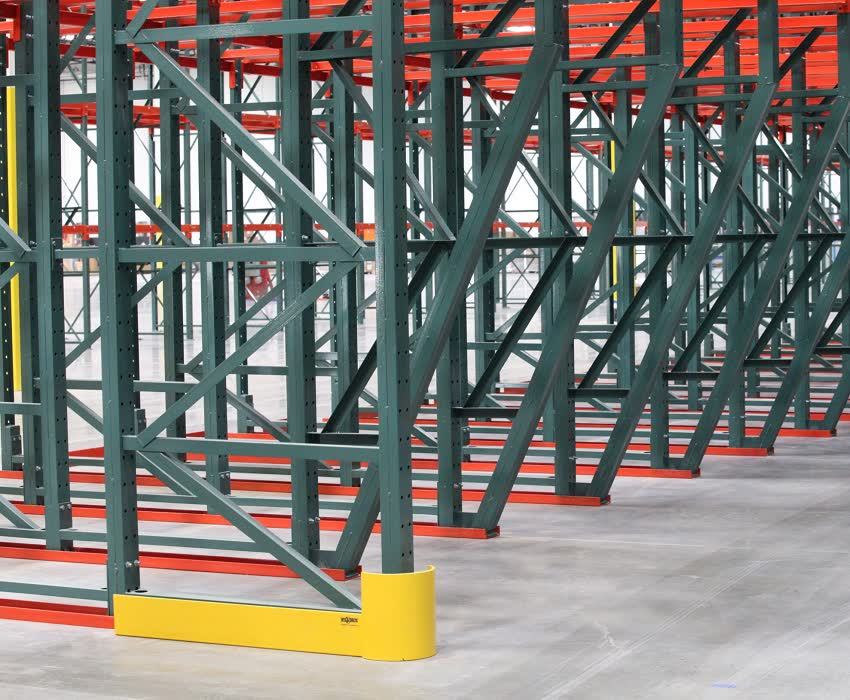
Because forklifts operate inside the rack structure, column protectors reduce damage risk in high-traffic lanes. Standard accessories like end row guards are commonly specified for drive-in environments, though not required by the system design.
Row Spacers and Bracing
Drive-in systems rely on row spacers and structural bracing to maintain alignment and stability across the full depth of each lane.
Pallet Stops and Floor Anchors
Pallet stops at the rear of each lane keep pallets from being loaded too far back. Floor anchoring is required on every installation per engineering specifications.
Drive-In vs. Drive-Through Configurations
Standard drive-in uses a single aisle access point with LIFO flow, so forklifts enter and exit from the same end. Drive-through uses double aisle access: forklifts load from one end and retrieve from the opposite end. Drive-through supports FIFO rotation but requires open access on both ends of the rack structure.
What to Evaluate Before Choosing Drive-In Racking
Drive-in racking carries an operator training difficulty rating of 8/10, the highest of any conventional pallet racking system. Before committing, walk through these factors with your team:
Need help comparing drive-in fit against your SKU profile before specifying a system? Contact Apex to review your inventory, lane layout, and facility requirements with a storage specialist.
Drive-In Racking vs. Other High-Density Storage Systems
For a side-by-side view of every system Apex installs, see the Apex Pallet Rack System Comparison Matrix. The summary below puts drive-in in context against the systems most often considered alongside it.
| System | Density | Selectivity | Productivity | Cost/Position | Flow |
|---|---|---|---|---|---|
| Drive-In Rack | 6/10 | 2/10 | 2/10 | ~$200 | LIFO |
| Selective Pallet Racking | 3/10 | 10/10 | 7/10 | ~$150 | Either |
| Push-Back Racking | 5/10 | 5/10 | 7/10 | ~$275 | LIFO |
| Pallet Flow Racking | 7/10 | 5/10 | 8/10 | ~$375 | FIFO |
Drive-In vs. Selective Pallet Racking
Selective rack provides direct access to every pallet position, making it ideal for broad SKU variety and frequent picking. Drive-in rack increases storage density and lowers cost per pallet position when inventory can be stored in full dedicated lanes.
Drive-In vs. Push-Back Racking
Both support LIFO flow. Drive-in typically offers a lower cost per pallet position for bulk storage, while push-back improves access across more active SKU groups.
Drive-In vs. Pallet Flow Racking
Drive-in rack supports LIFO storage for dense bulk inventory. Pallet flow rack supports FIFO rotation, making it the better fit for perishables, date-sensitive products, and inventory that needs controlled rotation.
Drive-In vs. Drive-Through Racking
Drive-through is a variation of drive-in with two aisle access points, supporting FIFO rotation when your facility layout allows open access on both ends.
North Carolina Warehouse Storage Challenges Drive-In Racking Solves
North Carolina's warehouse and distribution market is shaped by freight moving along the I-85 and I-40 corridors through the Piedmont, port traffic through Wilmington, and seasonal manufacturing cycles. Each pressure creates specific storage challenges where drive-in racking delivers practical results.
Seasonal and consumer-goods storage.
North Carolina operations with predictable seasonal demand can use drive-in rack to store large batches of the same SKU, lot, or group and clear them in organized blocks.
Distribution center space optimization.
Drive-in rack reduces floor space per pallet position by storing pallets in dense, lane-based configurations rather than single-deep rows.
Cold storage density.
Drive-in racking is a practical choice for cold storage and food distribution operations where operational costs make every square foot of refrigerated space expensive.
Manufacturing buffer storage.
North Carolina's industrial sector often needs buffer storage for single-product runs. Drive-in systems are well-suited for facilities that produce in large batches and stage materials before shipment.
Supply chain consolidation.
Operations consolidating high-volume inbound shipments before regional distribution across NC, SC, and GA benefit from drive-in's ability to absorb large quantities of low-SKU inventory efficiently.
Drive-In Pallet Racking Installation and Design Services
Apex handles each stage of a North Carolina drive-in project so the system performs the way it was specified.
3D AutoCAD Layout and Warehouse Design
Apex's engineering and design team designs a drive-in system that fits your floor plan, ceiling height, and operational flow. Every system is designed before anything is ordered.
Facility Assessment and Space Optimization
Apex evaluates your facility before design begins. Aisle requirements, column locations, dock access, and slab conditions all factor into configuration.
Permitting and Project Management
Apex coordinates scheduling, compliance, and installation sequencing, minimizing disruption to your operations. As a Licensed General Contractor in the Southeast, Apex handles permit coordination on North Carolina rack builds.
Professional Pallet Rack Installation
Apex's professional rack installation teams work nationally, with North Carolina project support backed by the Charlotte office and regional teams, including the Hickory quick-ship warehouse, across a range of facility types.
Post-Installation Inspection and Training
Apex reviews the completed system and confirms your forklift operators are prepared to work safely in a drive-in rack environment before the system goes live.
Frequently Asked Questions About Drive-In Racking in North Carolina
Frequently Asked Questions
Drive-in racking uses a single aisle access point. Forklifts load and retrieve from the same end, so inventory flows last-in, first-out. Drive-through has two aisle access points: forklifts load from one aisle and retrieve from the opposite aisle, supporting FIFO rotation. Drive-through requires open access on both ends of the rack structure.
Request a Free Consultation for Your North Carolina Warehouse
Drive-in pallet racking delivers real density advantages for the right operation. Getting there starts with an honest look at your inventory profile, your equipment, and your facility before any system is specified.
A qualified drive-in project review covers inventory profile, facility conditions, forklift compatibility, and installation sequencing. Call (630) 957-4020 to schedule the review.