
An Inside Look At High-Volume Order Fulfillment: From Complex System To Simple Flow

How Integrated Storage And Conveyor Systems Keep Orders Moving – Apex Project Spotlight
High-volume order fulfillment operations depend on more than storage capacity alone. As SKU counts grow and order profiles become more complex, facilities need systems that support efficient inventory access, organized picking workflows, and continuous product movement from reserve storage through final order handling.
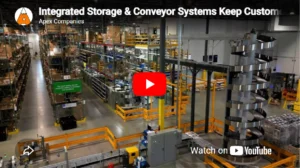 In this Apex Project Spotlight, you’ll get an inside look at how the team brought together selective pallet rack, a multi-level pick module, conveyor routing, and automated tote handling into one cohesive fulfillment environment designed to support fast-moving distribution operations.
Project scope included:
- 98,000 square feet of racked storage
- 11,400 pallet positions
- 3-level pick module
- 32 rack bays, configured 16 bays per side
- Selective rack, shelving, carton flow, and pallet flow
- Conveyor routing with spiral conveyors and automated tote handling
Here’s how the operation brings all of those components together to support efficient storage, picking, and order fulfillment.
Reserve Storage Supports High-Volume Fulfillment
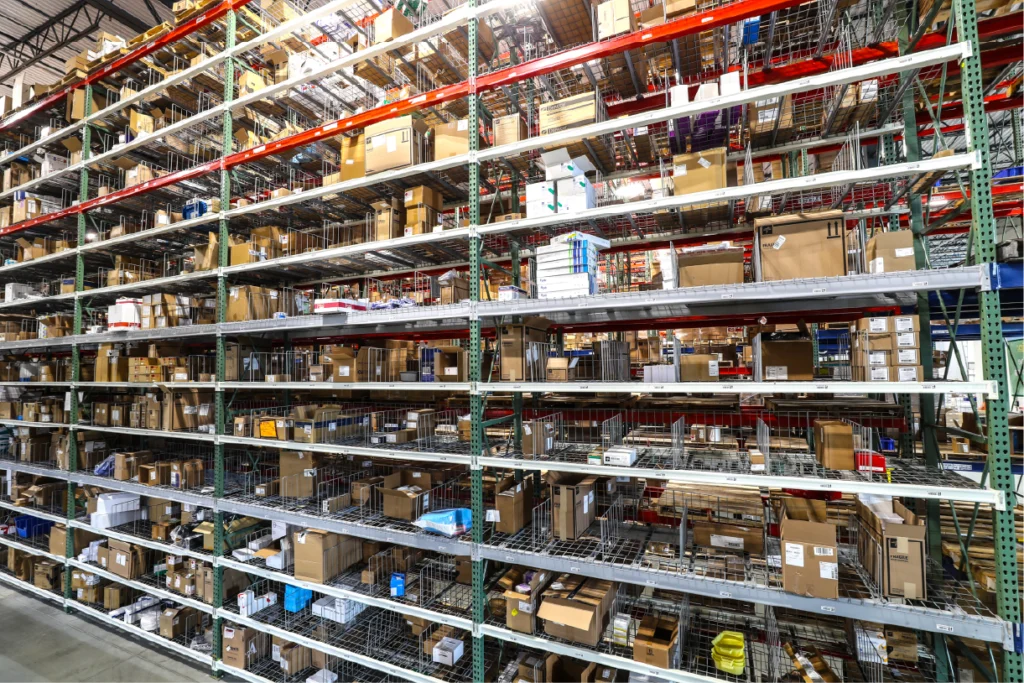
Selective Rack with Wire Decking and Dividers for Order Picking
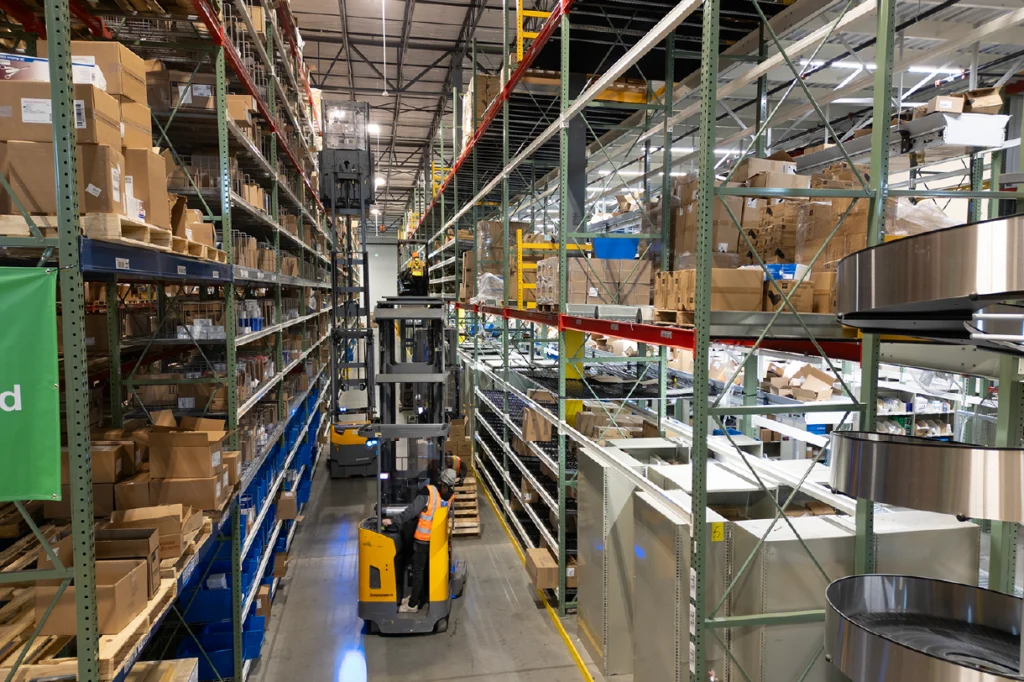
The reserve storage area utilizes selective pallet rack configured back-to-back to support both pallet storage and active case-picking operations. The system provides direct access to stored inventory while supporting replenishment flow into downstream picking areas.
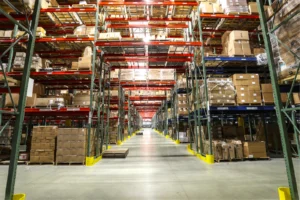
Selective Rack with End Row Guards
Several rack sections are equipped with wire decking and wire dividers to support organized case storage and split-case picking directly from the rack structure. Dividers help separate SKU locations while improving visibility and pick organization within active fulfillment zones.
The rack system also supports full-case picking for higher-volume SKUs that can move directly from reserve storage into outbound fulfillment flow without requiring additional handling inside the pick module.
Stand-up reach trucks support pallet movement throughout the reserve storage area, while man-up order pickers allow operators to efficiently access elevated picking locations across multiple rack levels.
End-of-row guards help protect rack structures in high-traffic travel aisles where repeated lift truck movement is part of daily operation.
Multi-Level Pick Module Supports Complex Order Profiles
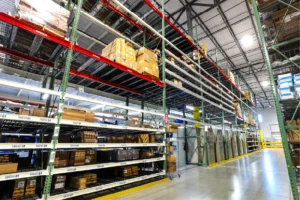
Load Aisle for Pick Module
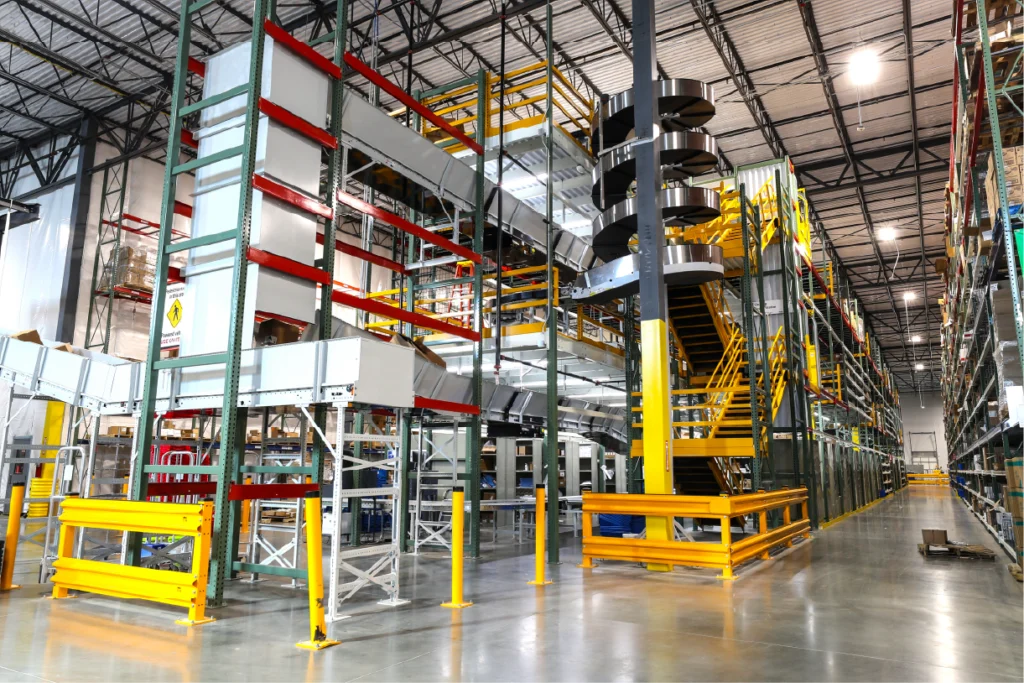
The three-level pick module was designed to support multiple picking methods within a compact operational footprint. Decked walkways create organized access throughout the elevated pick zones while allowing conveyor routing to move continuously through the structure.
Within the pick module, storage methods were matched to inventory movement:
- Pallet flow for faster-moving case-pick inventory
- Carton flow for split-case and each-pick fulfillment
- Industrial shelving for slower-moving SKUs
By combining multiple storage methods within the same pick structure, the system supports a broad range of inventory movement patterns while helping reduce picker travel throughout the operation.
Conveyor Routing Keeps Orders Moving
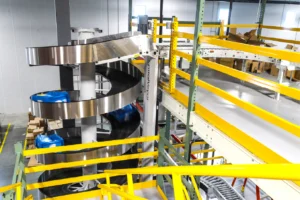
Infeed Conveyor for Multi-Level Pick Module
Conveyor integration plays a central role in maintaining continuous fulfillment flow throughout the facility.
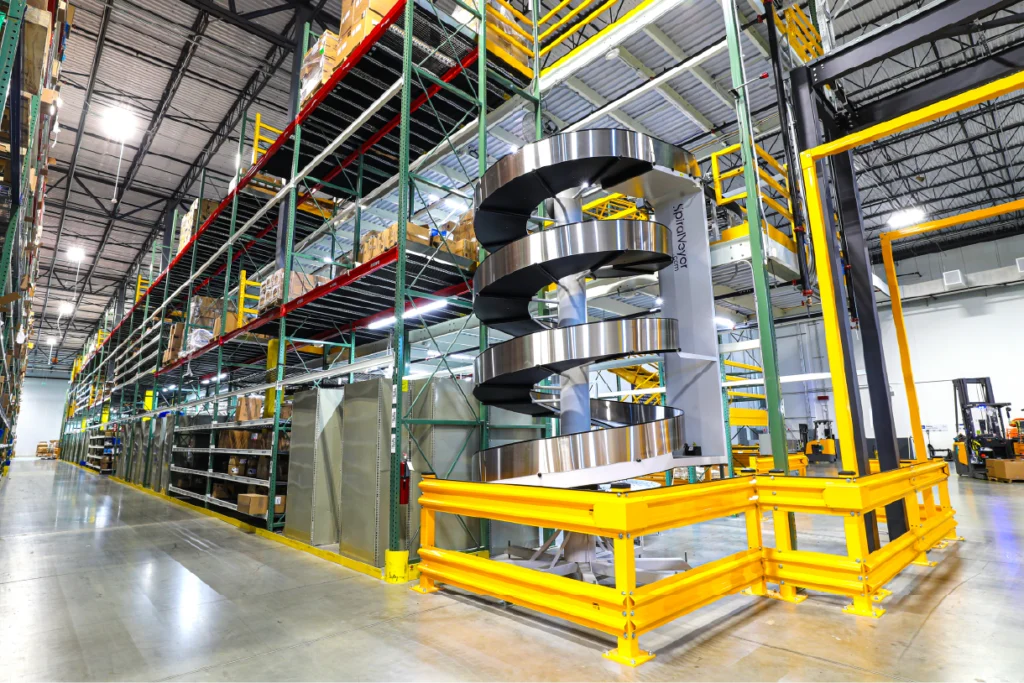
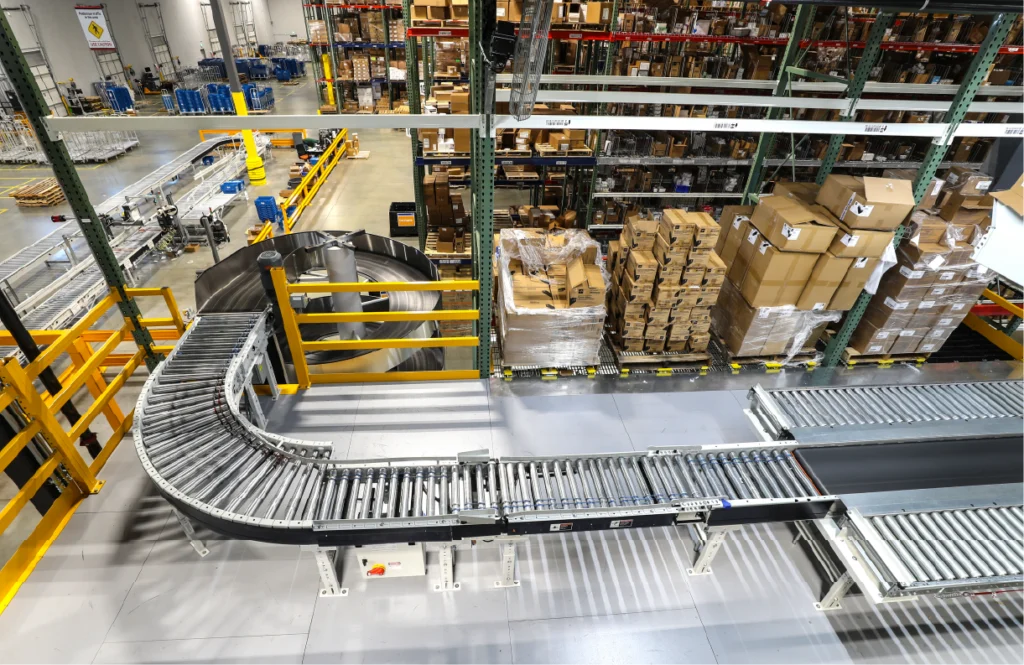
Totes enter the elevated pick areas through spiral infeed conveyors that route containers into active picking zones across all three levels. Conveyor lines move through the pick module while automated divert systems direct totes through the appropriate fulfillment paths as orders progress through the system.
As picks are completed, finished totes are routed through takeaway spiral conveyors back to ground-level powered conveyor lines for downstream handling.
The conveyor system helps minimize unnecessary operator travel while supporting continuous order movement between picking zones, replenishment activity, and final handling areas.
Supporting Workflow Beyond Picking
Additional conveyor automation helps support operational efficiency beyond the primary picking process.
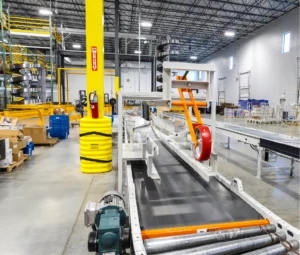
Automated Attached Lid Tote Closing
Additional workflow support included:
- Overhead empty-carton takeaway conveyor
- Automated attached-lid tote closing
- Powered conveyor for downstream handling
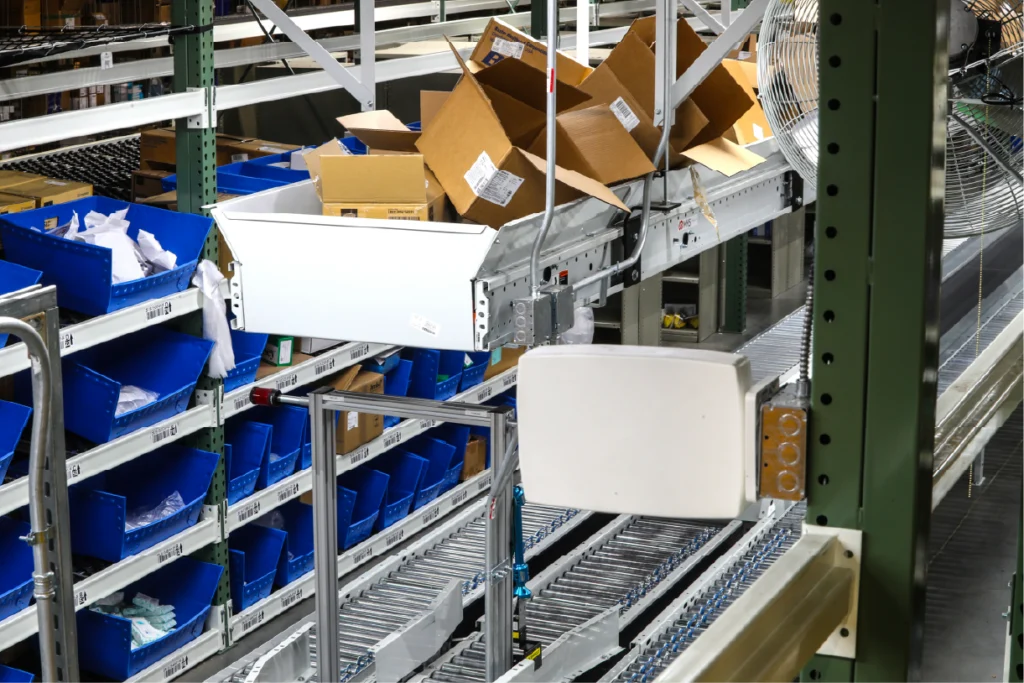
An overhead empty-carton takeaway conveyor removes discarded boxes from active pick areas, helping reduce clutter within work zones while supporting cleaner aisle conditions throughout the module.
Completed totes move through an automated lidding station designed for attached-lid containers (ALCs). As totes travel along the powered conveyor, synchronized guide components and roller pressure systems automatically close and secure tote lids before final handling.
Once sealed, completed totes continue through the downstream fulfillment flow, where they can be manually removed for staging and distribution.
While these systems operate in the background, they play an important role in supporting organized workflow, reducing interruptions inside active pick zones, and helping maintain consistent fulfillment movement across the facility.
Integrated Systems Designed Around Fulfillment Flow
The most effective fulfillment systems are designed around flow, connecting reserve storage, active pick locations, conveyor routing, and downstream order handling into one coordinated strategy.
This project combined selective pallet rack, flow storage, shelving, conveyor integration, and multi-level picking into a fulfillment system designed to support continuous product movement and organized order processing across multiple inventory profiles.
Talk To Apex About Your Order Fulfillment Operation
Whether you’re planning a new distribution facility, expanding fulfillment capacity, or evaluating ways to improve inventory flow, Apex can help design integrated storage and material handling systems built around your operation.
Check out the Project Gallery
 |
 |
|
 |
 |
|
 |
